
Kelp DAO rsETH Bridge Exploit Results in $292 Million Loss
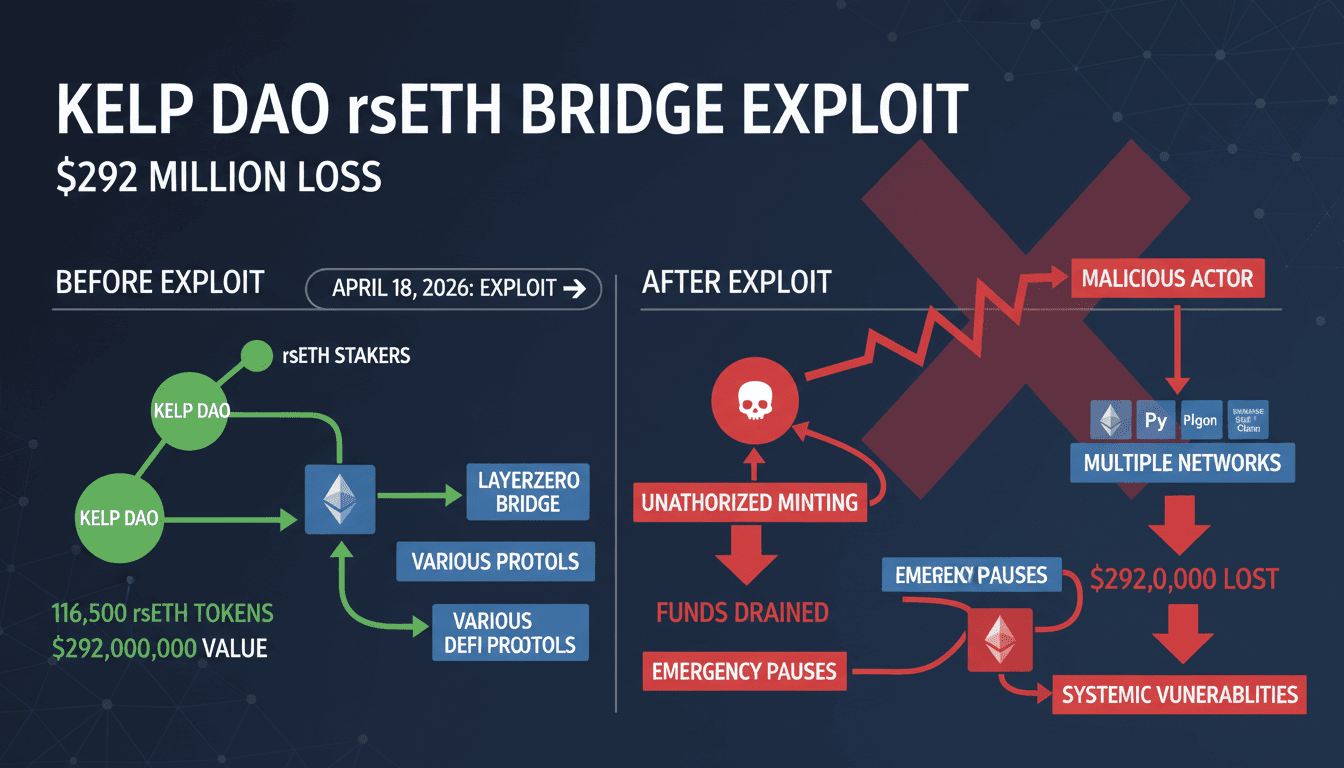
Here's what it means for you.
If you’re involved in DeFi, this incident highlights the critical importance of security in cross-chain protocols.
Why it matters
This exploit underscores systemic vulnerabilities in decentralized finance, potentially shaking investor confidence and liquidity across the sector.
What happened (in 30 seconds)
- On April 18, 2026, Kelp DAO's cross-chain bridge was exploited, draining 116,500 rsETH tokens valued at approximately $292 million.
- LayerZero's verification mechanism was misconfigured, allowing unauthorized token minting across Ethereum and over 20 layer-2 networks.
- Emergency pauses were triggered in major protocols like Aave and Lido, leading to significant reductions in total value locked (TVL) and community fears about the future of DeFi.
The context you actually need
- Surge in DeFi vulnerabilities: This incident follows a series of hacks in 2026, including a $285 million exploit of Drift Protocol, raising alarms about security in the DeFi space.
- Kelp DAO's reliance on LayerZero: The rsETH token, backed by EigenLayer restaked ether, utilized LayerZero's cross-chain infrastructure, which, while innovative, exposed it to single-point verification failures.
- Community response: The hack prompted declarations of "DeFi is dead" and critiques of the modular security model, highlighting the need for more robust safety measures in decentralized finance.
What's really happening
At 17:35 UTC on April 18, 2026, an attacker successfully exploited a vulnerability in LayerZero's cross-chain messaging system. By tricking the system into validating a fraudulent instruction, the attacker drained 116,500 rsETH to a controlled address. This exploit was particularly damaging due to the nature of LayerZero's architecture, which relies on decentralized verification across multiple chains. The misconfiguration allowed the attacker to bypass security checks that would typically prevent such unauthorized actions.
Kelp DAO acted swiftly, activating its emergency pauser multisig at 18:21 UTC, which successfully thwarted two subsequent attempts to exploit the system further. However, the damage was already done. By 20:10 UTC, Kelp DAO publicly announced the incident, pausing all rsETH contracts and initiating a thorough investigation with LayerZero and external auditors.
The aftermath saw the stolen rsETH being used as collateral on Aave V3, where the attacker borrowed approximately $196 million in WETH, creating significant bad debt. This led to a dramatic drop in Aave's total value locked (TVL), which fell from $26.4 billion to around $20 billion within a day. The AAVE token also suffered, declining by 16-18% as panic spread through the DeFi community.
Protocols like SparkLend, Fluid, and Lido were forced to pause related markets, while Ethena temporarily halted LayerZero bridges to mitigate further risks. The incident has raised serious questions about the security of cross-chain protocols and the overall resilience of the DeFi ecosystem, with many in the community calling for a reevaluation of security standards and practices.
Who feels it first (and how)
- DeFi investors: Those holding rsETH or involved in affected protocols face immediate financial losses and liquidity issues.
- Developers and protocol teams: Increased scrutiny and pressure to enhance security measures and protocols.
- Lending platforms: Significant outflows and bad debt assessments could lead to tighter lending conditions and reduced liquidity.
- Regulatory bodies: As incidents like this gain attention, there may be increased calls for regulatory oversight in the DeFi space.
What to watch next
- Security audits: Increased demand for comprehensive security audits across DeFi protocols will likely emerge as a response to this exploit, impacting operational costs and timelines.
- Market recovery: Monitoring the recovery of affected protocols and their strategies to regain user trust will be crucial for the future of DeFi.
- Community sentiment: Watch for shifts in community sentiment regarding DeFi's viability, as ongoing discussions about security and trust could influence investment and participation levels.
The exploit resulted in a loss of $292 million and significant impacts on multiple DeFi protocols.
Increased scrutiny and demand for enhanced security measures across DeFi protocols will follow.
The long-term effects on investor confidence and the overall health of the DeFi ecosystem remain uncertain.
Frequently Asked Questions
- Why it matters?
- This exploit underscores systemic vulnerabilities in decentralized finance, potentially shaking investor confidence and liquidity across the sector.
- What happened (in 30 seconds)?
- On April 18, 2026, Kelp DAO's cross-chain bridge was exploited, draining 116,500 rsETH tokens valued at approximately $292 million. LayerZero's verification mechanism was misconfigured, allowing unauthorized token minting across Ethereum and over 20 layer-2 networks. Emergency pauses were triggered in major protocols like Aave and Lido, leading to significant reductions in total value locked (TVL) and community fears about the future of DeFi.
- What's really happening?
- At 17:35 UTC on April 18, 2026, an attacker successfully exploited a vulnerability in LayerZero's cross-chain messaging system. By tricking the system into validating a fraudulent instruction, the attacker drained 116,500 rsETH to a controlled address. This exploit was particularly damaging due to the nature of LayerZero's architecture, which relies on decentralized verification across multiple chains. The misconfiguration allowed the attacker to bypass security checks that would typically preve
- Who feels it first (and how)?
- DeFi investors: Those holding rsETH or involved in affected protocols face immediate financial losses and liquidity issues. Developers and protocol teams: Increased scrutiny and pressure to enhance security measures and protocols. Lending platforms: Significant outflows and bad debt assessments could lead to tighter lending conditions and reduced liquidity. Regulatory bodies: As incidents like this gain attention, there may be increased calls for regulatory oversight in the DeFi space.
- What to watch next?
- Security audits: Increased demand for comprehensive security audits across DeFi protocols will likely emerge as a response to this exploit, impacting operational costs and timelines. Market recovery: Monitoring the recovery of affected protocols and their strategies to regain user trust will be crucial for the future of DeFi. Community sentiment: Watch for shifts in community sentiment regarding DeFi's viability, as ongoing discussions about security and trust could influence investment and
Covers blockchain, cryptocurrency news, project analysis, and market insights.
"CoinDesk is a well-established cryptocurrency and blockchain news provider, offering comprehensive insights, market data, and industry research."
— A47 Editor
'DeFi is dead': crypto community scrambles after this year's biggest hack exposes contagion risk
The decentralized finance (DeFi) sector is facing a crisis following a significant exploit that has led to fears of contagion, prompting billions to withdraw from various DeFi platforms. This incident has raised alarms about the structural vulnerabil...
Technology business and AI-related headlines.
"Data-driven tech newsroom with global scope."
— A47 Editor
Crypto Hack Worth $290 Million Triggers DeFi Contagion Shock
Hackers exploited a cross-chain bridge on Saturday, draining nearly $300 million from a key piece of decentralized finance infrastructure, which has triggered a ripple effect across multiple crypto platforms. This incident highlights vulnerabilities ...
Technology business news, market impacts, and innovation trends.
"Bloomberg is a premier financial and tech news provider, respected for its in-depth reporting and analytical rigor."
— A47 Editor
Crypto Hack Worth $290 Million Triggers DeFi Contagion Shock
Hackers exploited a cross-chain bridge on Saturday, draining nearly $300 million from a crucial component of decentralized finance infrastructure, leading to a significant ripple effect across various crypto platforms. This incident highlights vulner...