
NASA prepares for potential solar storm risks during Artemis 2 lunar mission
Here's what it means for you.
Understanding NASA's mitigation protocols can inform your approach to risk management in high-stakes projects.
What happened
Artemis 2 astronauts risk exposure to solar storms during their April 2026 lunar mission.
The Context
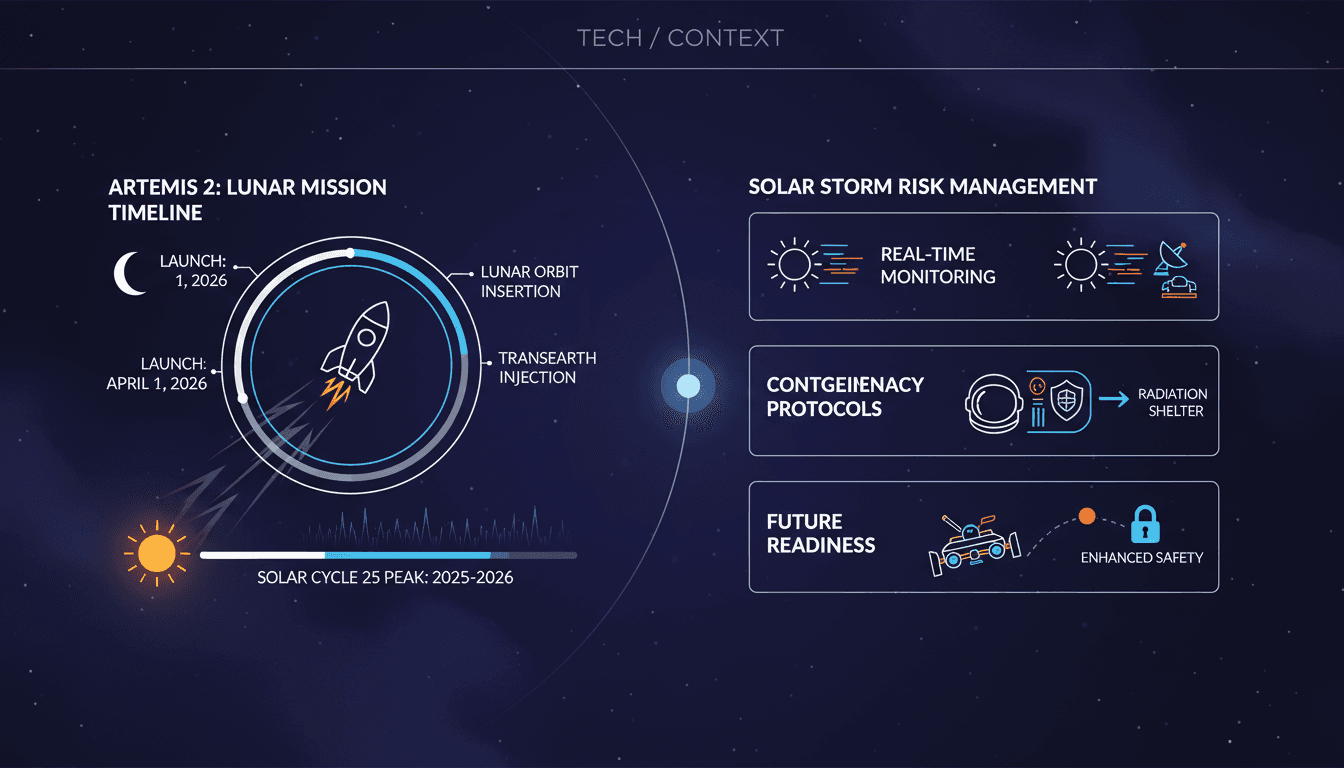
- Mission Overview: The crew will orbit the Moon for about 10 days, starting April 1, 2026, placing them outside Earth's protective magnetosphere.
- Radiation Monitoring: NASA employs real-time monitoring and sheltering protocols, utilizing data from the uncrewed Artemis 1 mission to ensure astronaut safety.
- Solar Activity: With Solar Cycle 25 peaking in 2025–2026, the frequency of solar flares and coronal mass ejections is expected to increase, heightening risks.
The Number
— This is the maximum radiation dose that astronauts could face during a significant solar storm, which NASA aims to keep below safety limits through effective shielding.
Takeaway
As the mission approaches, continued vigilance and advanced monitoring technologies will be crucial for astronaut safety and mission success.
Space science news, astronomy updates, and spaceflight developments.
"Space.com delivers space science news, astronomy updates, and spaceflight developments with engaging coverage."
— A47 Editor
What will happen if Artemis 2 astronauts get hit by a solar storm during NASA's ambitious moon mission?
NASA's Artemis 2 mission, scheduled for launch on April 1, 2026, aims to send astronauts on a lunar flyby, marking the first crewed lunar mission in over 50 years. Concerns have been raised about the potential impact of solar storms on the astronauts...
Science and technology stories including AI.
"Longstanding science magazine with thoughtful AI coverage."
— A47 Editor
Space weather could threaten NASA’s Artemis II astronauts during their trip to the moon
NASA's Artemis II mission, set to launch on April 1, 2026, faces potential threats from space weather, particularly solar storms, which could endanger the astronauts during their lunar journey. The agency is implementing protective measures to mitiga...
Scientific research, technology, environment, and society.
"Scientific American is one of the oldest and most authoritative science magazines, known for deep dives into science, technology, and society."
— A47 Editor
Space weather could threaten NASA’s Artemis II astronauts during their trip to the moon
NASA's Artemis II mission, set to launch on April 1, 2026, faces potential threats from space weather, particularly solar storms, which could endanger the astronauts during their lunar journey. The agency is implementing protective measures to mitiga...
Reports on climate change, environmental science, sustainability, and nature.
"BBC News is widely regarded as a reputable international news organization, known for its impartial tone and public service mandate."
— A47 Editor
Could weather conditions stop Artemis II Moon launch?
NASA is preparing for the Artemis II mission, which aims to launch the first crewed journey around the Moon in over 50 years. However, the launch, scheduled for April 1, 2026, may be affected by weather conditions, raising concerns about potential de...
Space science news, astronomy updates, and spaceflight developments.
"Space.com delivers space science news, astronomy updates, and spaceflight developments with engaging coverage."
— A47 Editor
Could bad space weather endanger the Artemis 2 moon astronauts?
Space weather experts are intensifying their efforts to refine forecasts ahead of the Artemis 2 mission, which is set to launch on April 1, 2026, sending four astronauts around the moon and back to Earth. Concerns have been raised about potential ris...