
Oil Prices Surge as Tanker Traffic Plummets in Strait of Hormuz
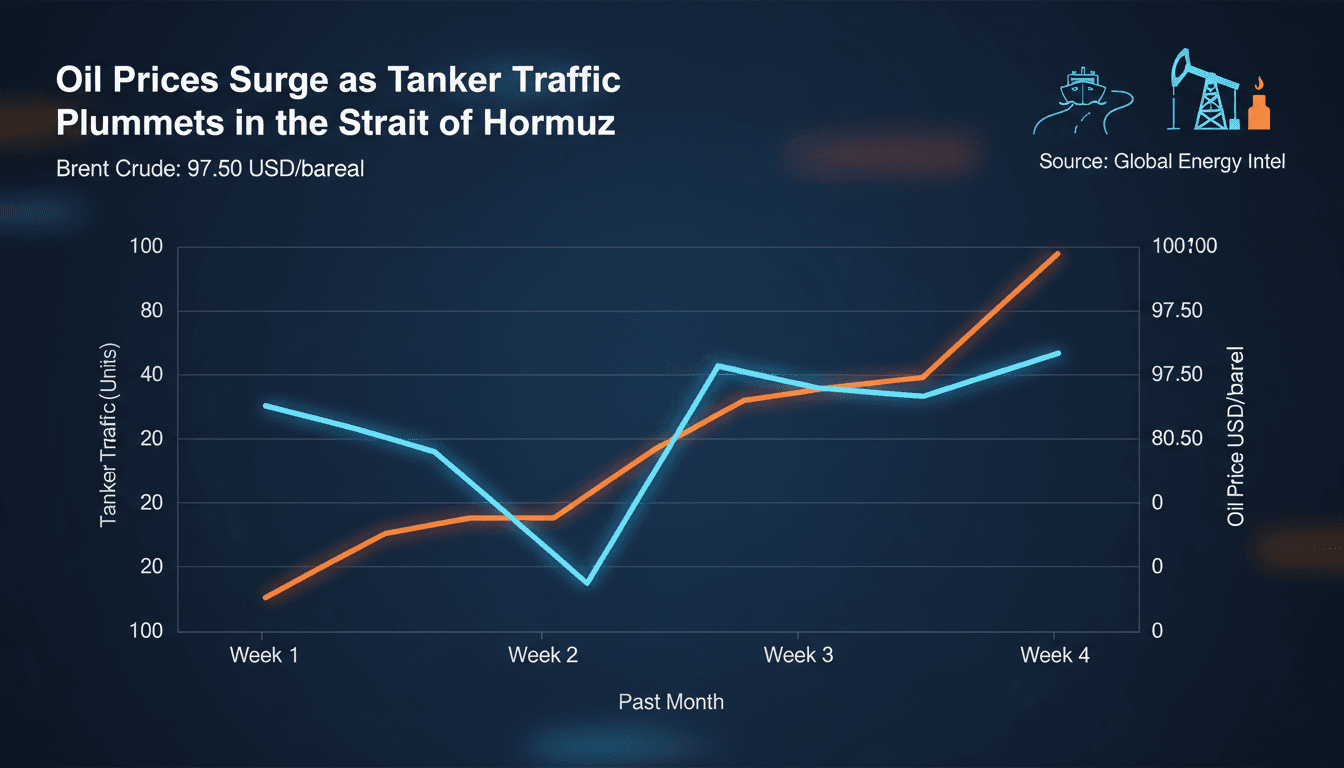
Here's what it means for you.
If you rely on oil for your business or daily commute, expect higher costs as supply disruptions continue.
Why it matters
Rising oil prices directly impact global markets, inflation rates, and energy costs for consumers and businesses alike.
What happened (in 30 seconds)
- Oil prices surged on April 10, 2026, with Brent crude up 2.09% to $97.50 per barrel and West Texas Intermediate up 2.02% to $99.25 per barrel.
- Tanker traffic through the Strait of Hormuz remains critically low, below 10% of normal levels, due to geopolitical tensions and Iranian territorial restrictions.
- Saudi Arabia's oil production dropped by 600,000 barrels per day following attacks on energy infrastructure, exacerbating supply fears.
The context you actually need
- The Strait of Hormuz is a vital chokepoint, handling 20% of global oil trade, making its stability crucial for energy markets.
- Geopolitical tensions escalated in March 2026, leading to a near-closure of the strait and significant drops in tanker traffic, which have not fully recovered despite a ceasefire.
- Saudi Arabia's energy infrastructure has been targeted, causing production declines and raising concerns about the reliability of oil supplies from the region.
What's really happening
On April 10, 2026, oil prices experienced a notable increase as the market reacted to ongoing disruptions in tanker traffic through the Strait of Hormuz. This strait is a critical passage for oil shipments, accounting for approximately 20% of the world's oil trade. The recent surge in prices—Brent crude rising to $97.50 per barrel and West Texas Intermediate reaching $99.25—reflects heightened concerns over supply stability amid geopolitical tensions.
The backdrop of this price increase is a complex interplay of factors. In March 2026, tensions between the U.S. and Iran escalated significantly, leading to military actions, including Israeli-American strikes. These actions resulted in a near-complete halt of tanker traffic through the strait, with movements dropping by over 90%. Although a ceasefire was initiated in early April, it has not restored normal operations, as Iran has enforced strict territorial water restrictions, warning vessels to remain within its waters.
Compounding these issues, on April 9, Saudi Arabia reported attacks on its energy infrastructure, leading to a production decline of 600,000 barrels per day and a reduction of 700,000 barrels per day in east-west pipeline flow. This dual threat of reduced tanker traffic and diminished Saudi output has created a precarious situation for global oil markets. Analysts are increasingly concerned that these disruptions could persist, leading to further price increases.
The implications of rising oil prices are far-reaching. For producers like ADNOC in the UAE, higher prices translate to increased revenues, which can bolster the local economy. However, for consumers and businesses, the rising costs of fuel and shipping can strain budgets and impact operational expenses. As oil prices climb, the risk of inflation also rises, affecting everything from transportation costs to the price of goods.
The situation remains fluid, with market participants closely monitoring developments in the Strait of Hormuz and the broader geopolitical landscape. The combination of reduced tanker traffic and Saudi production cuts creates a volatile environment, where prices could continue to rise if stability is not restored.
Who feels it first (and how)
- Consumers: Higher fuel prices will increase transportation and commuting costs.
- Businesses: Companies reliant on oil for operations will face rising expenses, impacting profitability.
- Energy producers: Firms like ADNOC will benefit from increased revenues but may also face operational challenges due to regional instability.
- Global markets: Investors will react to price fluctuations, potentially leading to broader economic impacts.
What to watch next
- Tanker traffic levels: Monitoring the recovery of tanker movements through the Strait of Hormuz will provide insights into supply stability.
- Saudi production reports: Updates on Saudi Arabia's oil output will indicate the extent of ongoing disruptions and their impact on global prices.
- Geopolitical developments: Any changes in U.S.-Iran relations or new military actions could further influence oil supply and pricing.
Oil prices have risen due to reduced tanker traffic and Saudi production cuts.
Continued geopolitical tensions will keep oil prices volatile in the near term.
The duration of the ceasefire and its effectiveness in restoring normal tanker operations remains uncertain.
Frequently Asked Questions
- Why it matters?
- Rising oil prices directly impact global markets, inflation rates, and energy costs for consumers and businesses alike.
- What happened (in 30 seconds)?
- Oil prices surged on April 10, 2026, with Brent crude up 2.09% to $97.50 per barrel and West Texas Intermediate up 2.02% to $99.25 per barrel. Tanker traffic through the Strait of Hormuz remains critically low, below 10% of normal levels, due to geopolitical tensions and Iranian territorial restrictions. Saudi Arabia's oil production dropped by 600,000 barrels per day following attacks on energy infrastructure, exacerbating supply fears.
- What's really happening?
- On April 10, 2026, oil prices experienced a notable increase as the market reacted to ongoing disruptions in tanker traffic through the Strait of Hormuz. This strait is a critical passage for oil shipments, accounting for approximately 20% of the world's oil trade. The recent surge in prices—Brent crude rising to $97.50 per barrel and West Texas Intermediate reaching $99.25—reflects heightened concerns over supply stability amid geopolitical tensions. The backdrop of this price increase is a co
- Who feels it first (and how)?
- Consumers: Higher fuel prices will increase transportation and commuting costs. Businesses: Companies reliant on oil for operations will face rising expenses, impacting profitability. Energy producers: Firms like ADNOC will benefit from increased revenues but may also face operational challenges due to regional instability. Global markets: Investors will react to price fluctuations, potentially leading to broader economic impacts.
- What to watch next?
- Tanker traffic levels: Monitoring the recovery of tanker movements through the Strait of Hormuz will provide insights into supply stability. Saudi production reports: Updates on Saudi Arabia's oil output will indicate the extent of ongoing disruptions and their impact on global prices. Geopolitical developments: Any changes in U.S.-Iran relations or new military actions could further influence oil supply and pricing.
Arabic-language UAE newspaper coverage focused on domestic affairs, public institutions, business, society, and regional developments.
"Al Khaleej coverage generally reflects a mainstream UAE editorial lens with strong attention to public affairs, institutions, and regional developments."
— A47 Editor
النفط يرتفع مع بطء حركة الناقلات في «هرمز»
Oil prices rose on Friday, driven by renewed concerns over supply disruptions from Saudi Arabia following recent attacks. The slowdown in tanker movements through the Strait of Hormuz has heightened fears regarding the stability of oil shipments from...
Arabic-language digital news outlet covering UAE, regional, and international developments with broad general-news coverage.
"Al Ain News coverage typically blends UAE-focused reporting with wider Arab regional and international news."
— A47 Editor
النفط يصعد وتوقعات بوصوله إلى 190 دولارا حال استمرار سيطرة إيران على هرمز
Oil prices rose in early trading on Friday as markets assess the risk premium stemming from the ongoing closure of the Strait of Hormuz, despite a fragile truce between the United States and Iran.