
World Bank Proposes Up to $100 Billion Aid for Middle East War Impacted Countries
Here's what it means for you.
If you’re in a developing country, the World Bank's proposed funding could stabilize your economy and mitigate rising costs.
Why it matters
This funding initiative aims to cushion the economic fallout from the ongoing Middle East conflict, which has global implications for energy prices and inflation.
What happened (in 30 seconds)
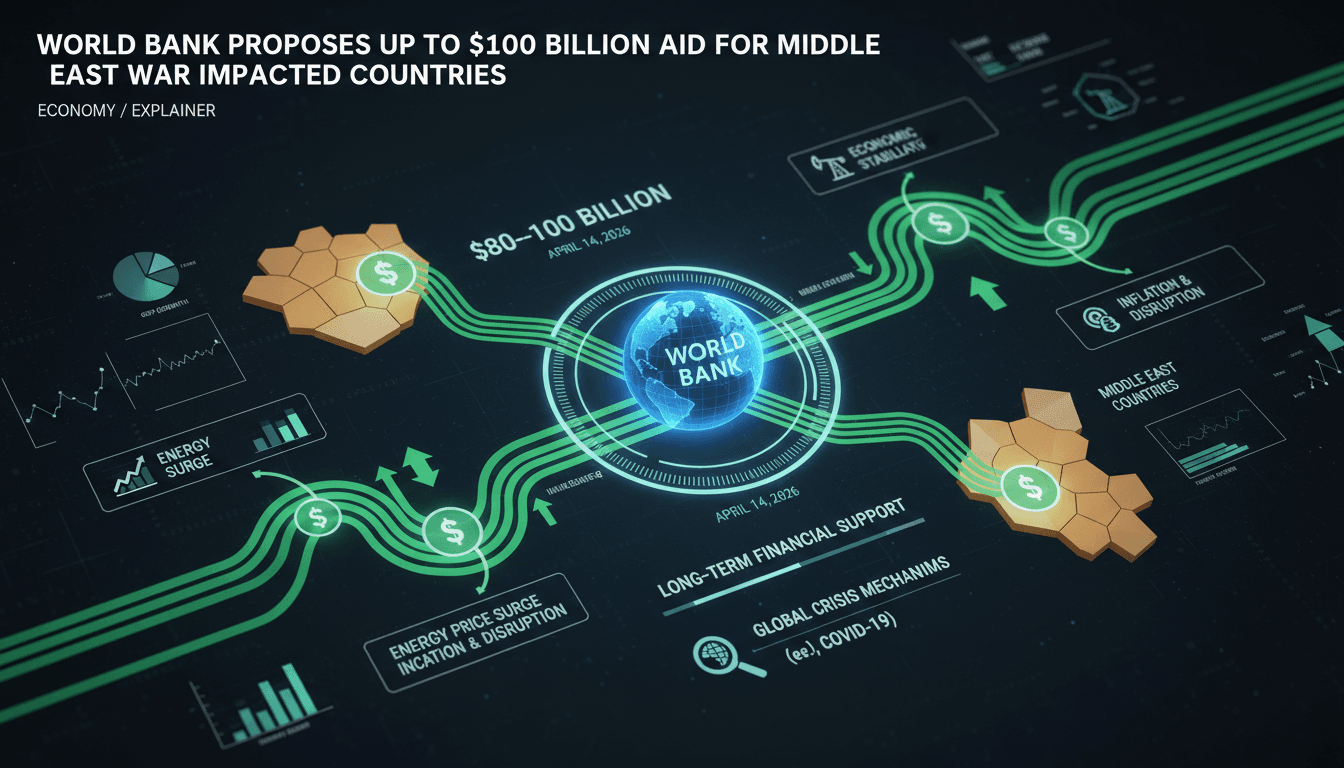
- On April 14, 2026, World Bank President Ajay Banga announced a potential mobilization of $80–100 billion in funding for countries affected by the Middle East war.
- The funding aims to address economic repercussions such as energy price surges and growth slowdowns, surpassing previous pandemic-era support.
- Developing countries are expected to face the most acute impacts, necessitating rapid financial responses.
The context you actually need
- The 2026 Middle East war has escalated tensions, particularly between Iran and the UAE, leading to missile strikes and the closure of the Strait of Hormuz.
- Global oil prices have surged due to supply disruptions, exacerbating inflationary pressures that were already present in many economies.
- The IMF has downgraded global growth forecasts, indicating that developing economies, heavily reliant on imported energy and food, are particularly vulnerable.
What's really happening
The World Bank's proposed funding package is a strategic response to the economic turmoil triggered by the ongoing Middle East conflict. President Ajay Banga outlined a graduated crisis response toolkit during the IMF-World Bank Spring Meetings, which includes an initial allocation of $20–25 billion through the crisis response window. This funding is designed to provide immediate relief, allowing countries to access up to 10% of existing programs within a matter of months.
Following this initial phase, an additional $30–40 billion is expected to be allocated through program reallocations over the next six months, targeting a total of $80–100 billion over a 15-month period. This approach mirrors the rapid financial responses seen during the COVID-19 pandemic, where swift action was necessary to stabilize economies facing unprecedented challenges.
The urgency of this funding proposal is underscored by the IMF's recent downgrade of global growth forecasts, which now reflect the adverse impacts of the conflict. Kristalina Georgieva, the IMF Managing Director, emphasized that while a rapid recovery is possible if hostilities cease soon, the longer the conflict persists, the more severe the economic consequences will be. This highlights the interconnectedness of global economies, where instability in one region can have ripple effects worldwide.
The proposed funding is not just a financial lifeline; it represents a broader strategy to stabilize economies that are already grappling with inflation and supply chain disruptions. The World Bank's focus on targeted, temporary measures—such as energy price interventions—over broad subsidies aims to curb inflation while ensuring that the most vulnerable populations receive the support they need.
As the situation evolves, the World Bank's ability to mobilize these funds will depend on the ongoing assessment of the conflict's impact and the effectiveness of the proposed measures. The potential for further utilization of the Bank's balance sheet indicates a readiness to adapt to worsening scenarios, ensuring that financial support remains available as needed.
Who feels it first (and how)
- Developing countries: Economies heavily reliant on energy imports will face immediate inflationary pressures.
- Energy sector workers: Job stability may be threatened due to rising costs and potential layoffs in affected industries.
- Consumers: Individuals in impacted regions will experience higher prices for fuel and essential goods.
What to watch next
- Funding disbursement timelines: Monitoring when and how quickly the World Bank allocates the proposed funds will indicate the urgency of the response.
- Global oil price trends: Fluctuations in oil prices will signal the ongoing impact of the conflict and the effectiveness of the proposed measures.
- Economic recovery indicators: Tracking growth forecasts and inflation rates in developing countries will reveal the broader economic implications of the funding.
The World Bank has proposed a funding package of up to $100 billion for war-impacted countries.
Developing economies will experience heightened inflation and economic instability due to the conflict.
The long-term effectiveness of the funding in stabilizing economies remains to be seen.
Frequently Asked Questions
- Why it matters?
- This funding initiative aims to cushion the economic fallout from the ongoing Middle East conflict, which has global implications for energy prices and inflation.
- What happened (in 30 seconds)?
- On April 14, 2026, World Bank President Ajay Banga announced a potential mobilization of $80–100 billion in funding for countries affected by the Middle East war. The funding aims to address economic repercussions such as energy price surges and growth slowdowns, surpassing previous pandemic-era support. Developing countries are expected to face the most acute impacts, necessitating rapid financial responses.
- What's really happening?
- The World Bank's proposed funding package is a strategic response to the economic turmoil triggered by the ongoing Middle East conflict. President Ajay Banga outlined a graduated crisis response toolkit during the IMF-World Bank Spring Meetings, which includes an initial allocation of $20–25 billion through the crisis response window. This funding is designed to provide immediate relief, allowing countries to access up to 10% of existing programs within a matter of months. Following this initia
- Who feels it first (and how)?
- Developing countries: Economies heavily reliant on energy imports will face immediate inflationary pressures. Energy sector workers: Job stability may be threatened due to rising costs and potential layoffs in affected industries. Consumers: Individuals in impacted regions will experience higher prices for fuel and essential goods.
- What to watch next?
- Funding disbursement timelines: Monitoring when and how quickly the World Bank allocates the proposed funds will indicate the urgency of the response. Global oil price trends: Fluctuations in oil prices will signal the ongoing impact of the conflict and the effectiveness of the proposed measures. Economic recovery indicators: Tracking growth forecasts and inflation rates in developing countries will reveal the broader economic implications of the funding.
Arabic-language UAE newspaper coverage focused on domestic affairs, public institutions, business, society, and regional developments.
"Al Khaleej coverage generally reflects a mainstream UAE editorial lens with strong attention to public affairs, institutions, and regional developments."
— A47 Editor
100 مليار دولار من البنك الدولي للدول المتضررة من الحرب
On Tuesday, Ajay Banga, the President of the World Bank, announced that the institution could potentially raise between $80 billion to $100 billion to support countries severely affected by the repercussions of war in the Middle East over the next 15...
Jordanian news and regional updates.
"Roya News is a Jordanian outlet focused on breaking news and local affairs."
— A47 Editor
البنك الدولي: 100 مليار دولار تمويلات محتملة للدول المتضررة من الحرب
The World Bank has indicated the potential for $100 billion in funding for countries affected by war, particularly if the conflict persists and financial needs escalate. This funding is aimed at addressing the urgent financial requirements of member ...
Macro commentary, policy analysis, growth/inflation themes, and global outlooks.
"Contextual macro coverage that complements day-to-day market headlines."
— A47 Editor
World Bank could provide up to $100 billion in funds for countries hit by war, Banga says
World Bank President Ajay Banga announced that the institution could provide up to $100 billion in funding to assist countries affected by ongoing conflicts, particularly in the Middle East and Iran. This financial support aims to address the economi...