
Iran Enforces Controversial Tolls on Strait of Hormuz Shipping Post Ceasefire
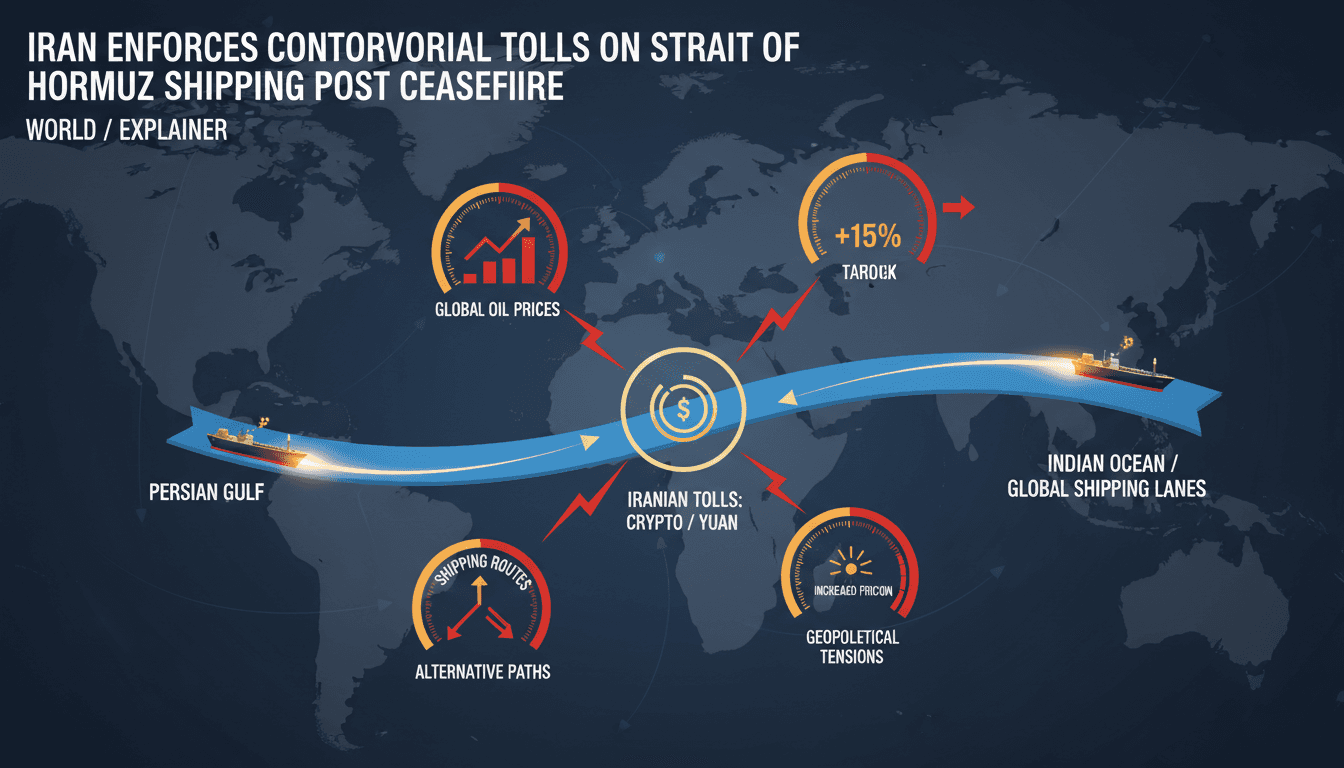
Here's what it means for you.
Expect rising oil prices and supply chain disruptions as Iran enforces tolls on a critical shipping route.
Why it matters
The Strait of Hormuz is a vital chokepoint for global oil trade, affecting prices and supply chains worldwide.
What happened (in 30 seconds)
- April 9, 2026: Iran begins enforcing tolls of up to $2 million per oil tanker transiting the Strait of Hormuz.
- April 8, 2026: A fragile two-week ceasefire is agreed upon following intense US-Iran conflict.
- February 28, 2026: US-Israel airstrikes trigger Iran's blockade of the Strait, which handles 20% of the world's oil supply.
The context you actually need
- 20 million barrels of oil are transited daily through the Strait of Hormuz, making it a critical artery for global energy supply.
- International law, specifically UNCLOS, prohibits tolls on international straits, raising questions about Iran's legal standing.
- Iran's economic needs post-conflict have led to the toll imposition as a revenue measure, despite the potential for international backlash.
What's really happening
The recent toll imposition by Iran on vessels transiting the Strait of Hormuz is a strategic maneuver born from a complex interplay of military, economic, and geopolitical factors. Following the US-Israel Operation Epic Fury, which targeted Iranian missile sites, Iran's response included a blockade of the Strait, a critical chokepoint for global oil trade. This blockade has significant implications, as approximately 20 million barrels of oil pass through this narrow passage daily, accounting for about 20% of global oil supply.
In late March 2026, Iran's parliament approved legislation to impose tolls on vessels, citing the need for revenue to support post-war reconstruction efforts. This decision comes despite the fact that such tolls are generally prohibited under international law, specifically the United Nations Convention on the Law of the Sea (UNCLOS). The Iranian government is leveraging its control over this vital shipping route to extract economic benefits, effectively weaponizing access to the Strait as a form of economic leverage.
The tolls, demanded in cryptocurrency or yuan, have sparked outrage among international shipping firms and governments, particularly the United States, which has called for toll-free access. The situation has led to significant disruptions in global shipping, with major firms like Maersk halting transits through the Strait. The economic implications are profound, as oil prices have surged, nearing $100 per barrel, driven by fears of supply shortages and increased shipping costs.
Moreover, the UAE and Saudi Arabia are exploring alternative pipeline routes to bypass the Strait, which could further complicate regional dynamics and impact global oil markets. The enforcement of these tolls is not just a matter of revenue for Iran but also a strategic move to assert its influence in the region following a period of military conflict. As negotiations continue, the international community is closely monitoring the situation, with potential implications for global energy security and geopolitical stability.
Who feels it first (and how)
- Shipping companies: Facing increased costs and potential delays, impacting operational budgets.
- Oil producers: Higher transportation costs may lead to increased oil prices, affecting profit margins.
- Consumers: Rising fuel prices could lead to higher costs for goods and services, impacting household budgets.
- UAE residents: Elevated fuel prices and supply risks as the UAE relies on the Strait for oil imports.
What to watch next
- Negotiations in Islamabad: Ongoing talks could lead to a resolution or further escalation, impacting shipping routes.
- Oil price fluctuations: Watch for changes in oil prices as tolls affect supply dynamics and market reactions.
- Alternative routes: The development of bypass pipelines by UAE and Saudi Arabia could reshape regional trade patterns.
The Strait of Hormuz is crucial for global oil supply, with 20 million barrels transiting daily.
Oil prices will remain volatile as the situation develops, influenced by toll enforcement and geopolitical tensions.
The long-term implications of Iran's tolls on international shipping and regional stability remain uncertain.
Frequently Asked Questions
- Why it matters?
- The Strait of Hormuz is a vital chokepoint for global oil trade, affecting prices and supply chains worldwide.
- What happened (in 30 seconds)?
- April 9, 2026: Iran begins enforcing tolls of up to $2 million per oil tanker transiting the Strait of Hormuz. April 8, 2026: A fragile two-week ceasefire is agreed upon following intense US-Iran conflict. February 28, 2026: US-Israel airstrikes trigger Iran's blockade of the Strait, which handles 20% of the world's oil supply.
- What's really happening?
- The recent toll imposition by Iran on vessels transiting the Strait of Hormuz is a strategic maneuver born from a complex interplay of military, economic, and geopolitical factors. Following the US-Israel Operation Epic Fury, which targeted Iranian missile sites, Iran's response included a blockade of the Strait, a critical chokepoint for global oil trade. This blockade has significant implications, as approximately 20 million barrels of oil pass through this narrow passage daily, accounting for
- Who feels it first (and how)?
- Shipping companies: Facing increased costs and potential delays, impacting operational budgets. Oil producers: Higher transportation costs may lead to increased oil prices, affecting profit margins. Consumers: Rising fuel prices could lead to higher costs for goods and services, impacting household budgets. UAE residents: Elevated fuel prices and supply risks as the UAE relies on the Strait for oil imports.
- What to watch next?
- Negotiations in Islamabad: Ongoing talks could lead to a resolution or further escalation, impacting shipping routes. Oil price fluctuations: Watch for changes in oil prices as tolls affect supply dynamics and market reactions. Alternative routes: The development of bypass pipelines by UAE and Saudi Arabia could reshape regional trade patterns.
European coverage of Middle East politics and security issues.
"France 24 offers international reporting with a European editorial perspective."
— A47 Editor
Who profits from the Iran war? Strait of Hormuz toll talk fuels outrage
The recent press conference by the White House spokesperson highlighted the reopening of the Strait of Hormuz, a crucial oil shipping lane, while simultaneously calling on Iran to reopen it, reflecting ongoing confusion surrounding the ceasefire deal...
Coverage of current events and conflicts in the Middle East.
"France 24 is viewed as a globally focused outlet with balanced coverage and a European perspective."
— A47 Editor
Who profits from the Iran war? Strait of Hormuz toll talk fuels outrage
The recent press conference by the White House spokesperson highlighted the reopening of the Strait of Hormuz, a crucial oil shipping lane, while simultaneously calling on Iran to reopen it, reflecting ongoing confusion surrounding the ceasefire deal...
Global political, business, and cultural coverage from WSJ international desks.
"The Wall Street Journal offers extensive international reporting with a reputation for financial insight and a center-right editorial stance."
— A47 Editor
What’s Happening in the Strait of Hormuz Since the Cease-Fire?
Following a recent ceasefire agreement between the United States and Iran, limited maritime traffic has resumed in the Strait of Hormuz, with Iran imposing tolls of up to $2 million per ship. This development marks a cautious reopening of a critical ...