
Saudi Energy Facilities Attacked Reducing Oil Production Capacity by 600,000 Barrels per Day
Here's what it means for you.
Rising oil prices and potential fuel shortages are on the horizon, impacting your daily costs and economic stability.
Why it matters
The disruption of Saudi oil production capacity poses significant risks to global oil markets and economic stability.
What happened (in 30 seconds)
- Missile and drone strikes on April 8–9, 2026, targeted Saudi energy infrastructure, halting operations at multiple facilities.
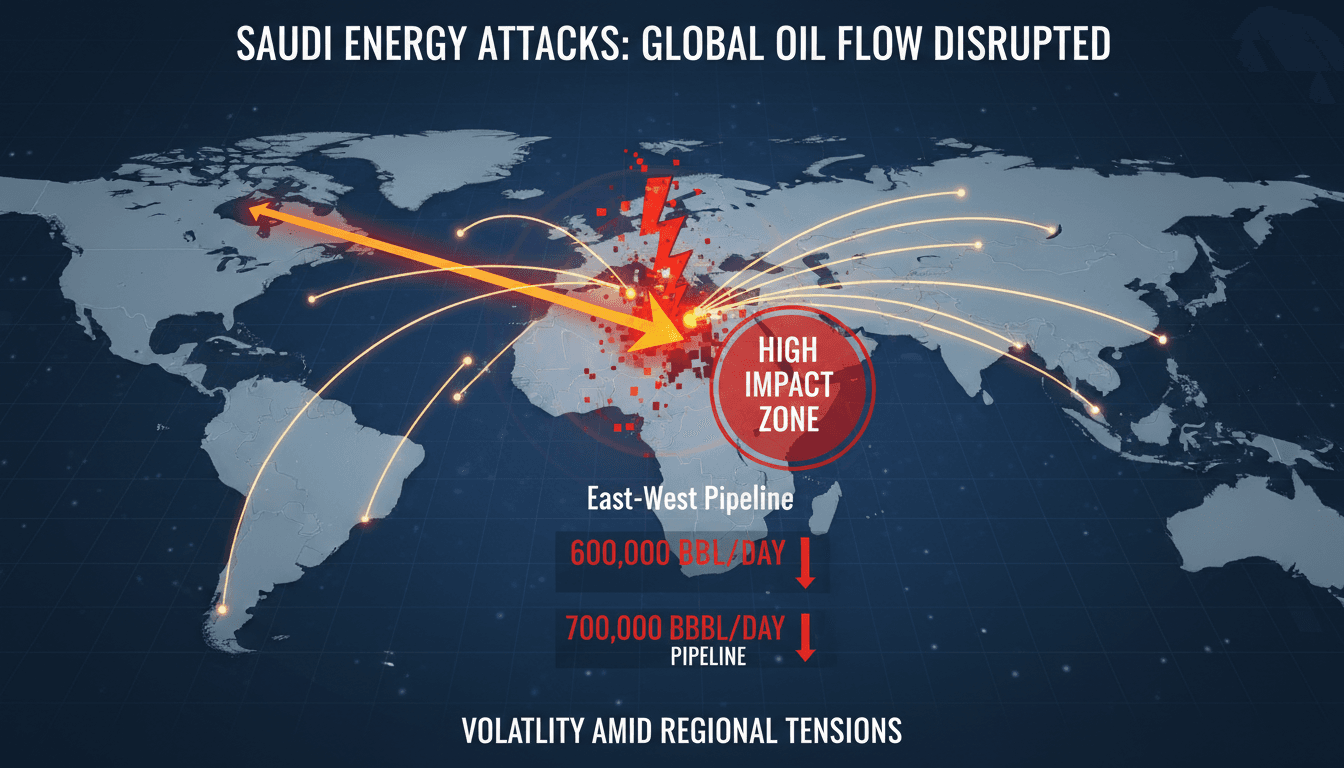
- Oil production capacity was reduced by approximately 600,000 barrels per day, while the East-West pipeline throughput fell by 700,000 barrels per day.
- One security personnel was killed and seven others were wounded during the attacks, which occurred amid ongoing regional conflict.
The context you actually need
- Ongoing conflict: The attacks are part of a broader escalation in the U.S.-Israeli war with Iran, which began in late February 2026, leading to increased Iranian strikes on Gulf energy sites.
- Strategic importance: The East-West pipeline has become essential for Saudi Arabia's crude exports, especially with disruptions in the Strait of Hormuz, carrying up to 7 million barrels per day.
- Ceasefire failure: Despite a ceasefire announcement on April 7, the attacks continued, indicating a volatile security environment in the region.
What's really happening
The recent missile and drone strikes on Saudi Arabian energy facilities represent a significant escalation in the ongoing conflict between Iran and U.S.-aligned Gulf states. The attacks, which occurred just hours after a ceasefire was announced, highlight the fragility of regional stability and the ongoing threat to critical energy infrastructure.
Saudi Arabia's Energy Ministry reported a reduction in oil production capacity by 600,000 barrels per day, with major facilities like the Manifa oilfield and Khurais refinery directly impacted. The East-West pipeline, crucial for transporting crude oil to the Red Sea port of Yanbu, also saw a throughput reduction of 700,000 barrels per day. This pipeline is vital for Saudi Arabia's export strategy, especially given the heightened risks in the Strait of Hormuz, where shipping lanes are frequently threatened.
The immediate aftermath of these attacks has led to halted operations at several key facilities, resulting in significant inventory depletion. The Energy Ministry's warning of prolonged supply risks indicates that the impacts of these strikes will not be short-lived. Analysts have noted that Brent crude prices rose by 1.2% to $95.92 per barrel following the news, reflecting market anxiety over tightening oil supplies.
The broader implications of these attacks extend beyond immediate production cuts. They signal a potential shift in energy security dynamics in the region, as Gulf states may need to reassess their defense and energy strategies in light of ongoing threats. The attacks also underscore the vulnerability of energy infrastructure to geopolitical conflicts, which can lead to rapid price fluctuations and supply chain disruptions that ripple through global markets.
As the situation evolves, the likelihood of further attacks or retaliatory measures could exacerbate existing tensions, leading to increased volatility in oil prices and potential shortages in refined products. The interconnectedness of global oil markets means that disruptions in Saudi Arabia will have far-reaching consequences, affecting economies and consumers worldwide.
Who feels it first (and how)
- Consumers: Higher fuel prices and potential shortages in gasoline and other refined products.
- Businesses: Increased operational costs for industries reliant on oil, particularly transportation and logistics.
- Investors: Volatility in oil markets may affect stock prices and investment strategies, particularly in energy sectors.
- Governments: Economic strain due to rising energy costs could lead to inflationary pressures and impact fiscal policies.
What to watch next
- Oil price trends: Monitor Brent crude prices for indications of ongoing market volatility and supply tightness.
- Security developments: Keep an eye on regional security updates, particularly regarding Iranian military actions and Saudi defense responses.
- Supply chain impacts: Watch for reports on fuel shortages or increased costs in the UAE and surrounding regions, as these will directly affect consumers.
Saudi oil production capacity has been reduced by 600,000 barrels per day due to the attacks.
Continued volatility in oil prices as markets react to ongoing geopolitical tensions.
The long-term impact on global oil supply and potential retaliatory actions from Saudi Arabia or its allies.
Frequently Asked Questions
- Why it matters?
- The disruption of Saudi oil production capacity poses significant risks to global oil markets and economic stability.
- What happened (in 30 seconds)?
- Missile and drone strikes on April 8–9, 2026, targeted Saudi energy infrastructure, halting operations at multiple facilities. Oil production capacity was reduced by approximately 600,000 barrels per day, while the East-West pipeline throughput fell by 700,000 barrels per day. One security personnel was killed and seven others were wounded during the attacks, which occurred amid ongoing regional conflict.
- What's really happening?
- The recent missile and drone strikes on Saudi Arabian energy facilities represent a significant escalation in the ongoing conflict between Iran and U.S.-aligned Gulf states. The attacks, which occurred just hours after a ceasefire was announced, highlight the fragility of regional stability and the ongoing threat to critical energy infrastructure. Saudi Arabia's Energy Ministry reported a reduction in oil production capacity by 600,000 barrels per day, with major facilities like the Manifa oil
- Who feels it first (and how)?
- Consumers: Higher fuel prices and potential shortages in gasoline and other refined products. Businesses: Increased operational costs for industries reliant on oil, particularly transportation and logistics. Investors: Volatility in oil markets may affect stock prices and investment strategies, particularly in energy sectors. Governments: Economic strain due to rising energy costs could lead to inflationary pressures and impact fiscal policies.
- What to watch next?
- Oil price trends: Monitor Brent crude prices for indications of ongoing market volatility and supply tightness. Security developments: Keep an eye on regional security updates, particularly regarding Iranian military actions and Saudi defense responses. Supply chain impacts: Watch for reports on fuel shortages or increased costs in the UAE and surrounding regions, as these will directly affect consumers.
Oil, metals, and agriculture: supply/demand headlines, OPEC chatter, inventories, and price action.
"Solid tape for energy and metals traders tracking macro and micro catalysts."
— A47 Editor
Attacks cut Saudi oil output and East-West pipeline flow, state news agency says
Recent attacks have significantly reduced Saudi Arabia's oil output and disrupted the flow through its East-West pipeline, as reported by the state news agency. The kingdom has lost approximately 600,000 barrels per day due to these incidents, highli...
Global news coverage with extensive reporting on Middle Eastern conflicts and geopolitics.
"Al Jazeera is a Qatar-based broadcaster known for wide regional coverage and alternative perspectives."
— A47 Editor
Saudi Arabia says operational activities halted at several energy sites
Saudi Arabia has announced the suspension of operational activities at several energy sites following a series of attacks on its energy infrastructure, which have resulted in significant disruptions and a reduced oil supply. A Saudi official indicate...
Comprehensive coverage of Middle Eastern and global issues.
"Al Jazeera is a prominent voice from the Global South, especially the Middle East, with an emphasis on underreported stories."
— A47 Editor
Saudi Arabia says operational activities halted at several energy sites
Saudi Arabia has announced the halting of operational activities at several energy sites due to attacks on its facilities, which have led to a reduced supply and hindered recovery efforts, according to a Saudi official.