
Artemis II Crew Observes Total Solar Eclipse During Lunar Flyby
Here's what it means for you.
The Artemis II mission's successful eclipse observation could enhance our understanding of solar activity, influencing global satellite operations and climate research.
Why it matters
This milestone in crewed space exploration underscores the importance of international collaboration in advancing scientific knowledge and technological capabilities.
What happened (in 30 seconds)
- The Artemis II crew observed a total solar eclipse on April 6, 2026, while flying over the far side of the Moon aboard the Orion spacecraft.
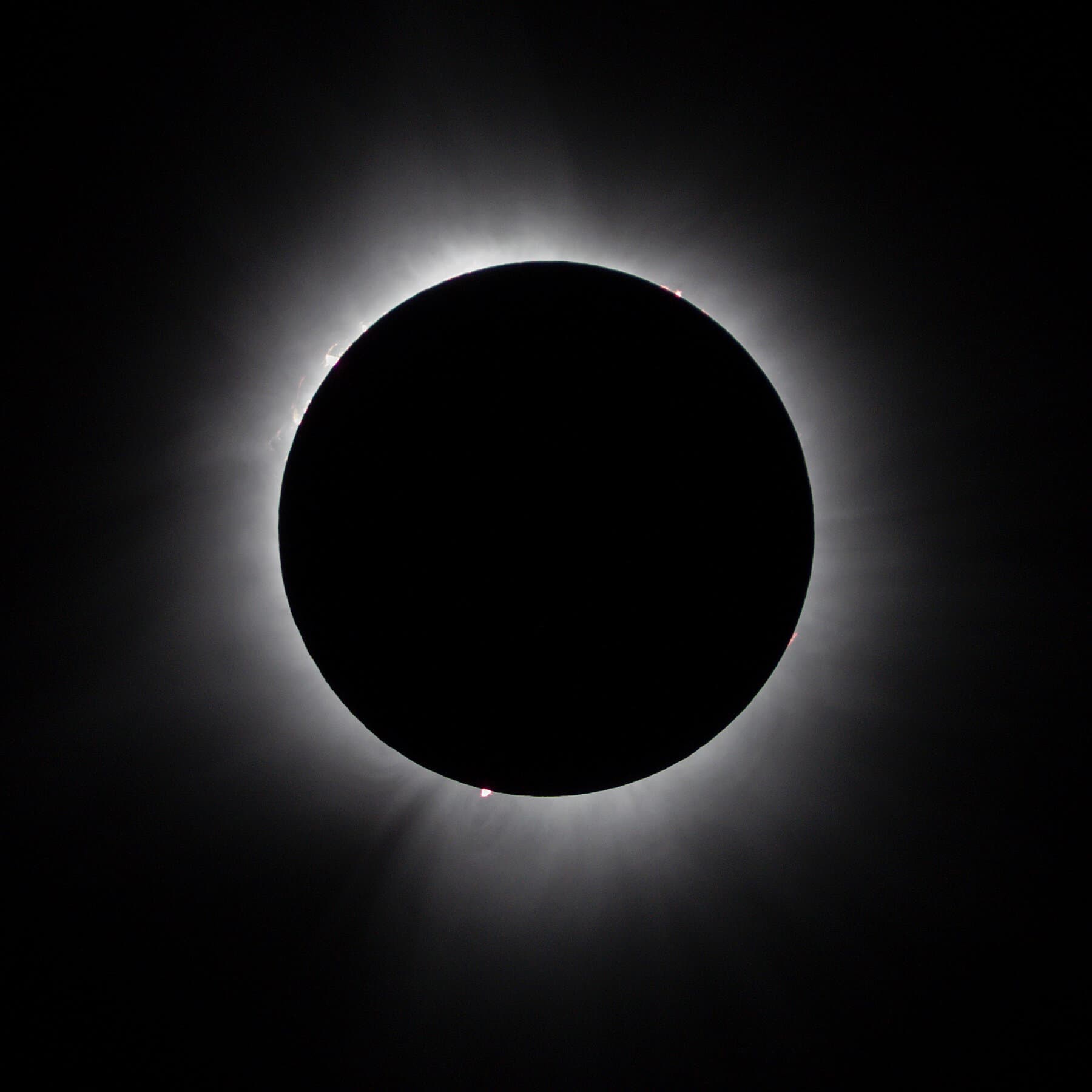
- During a 40-minute communications blackout, the crew witnessed the Moon occulting the Sun, allowing for unique observations of the solar corona.
- The mission is part of NASA's Artemis program, aimed at establishing a sustainable lunar presence and preparing for future Mars missions.
The context you actually need
- Artemis II is the first crewed flight of the Orion spacecraft, following the uncrewed Artemis I test in 2022, marking a significant step in NASA's lunar exploration strategy.
- The precise timing of the launch on April 1, 2026, was strategically chosen to align with the solar eclipse, showcasing NASA's capability in mission planning and execution.
- International cooperation is evident with Canadian astronaut Jeremy Hansen's participation, reflecting a renewed focus on collaborative space exploration efforts.
What's really happening
The Artemis II mission, launched on April 1, 2026, represents a pivotal moment in human spaceflight, not only for NASA but for global space exploration. The mission's trajectory was meticulously planned to coincide with a total solar eclipse, allowing the crew to observe the solar corona from a unique vantage point—approximately 4,000 miles from the lunar surface. This event is significant for several reasons.
First, the ability to study the solar corona during an eclipse provides invaluable data for understanding solar activity, which has direct implications for satellite operations and communication systems on Earth. Solar flares and coronal mass ejections can disrupt satellite signals and power grids, making this research critical for mitigating risks associated with space weather.
Second, the Artemis II mission is a demonstration of NASA's commitment to returning humans to the Moon and eventually preparing for Mars missions. This mission is not merely a scientific endeavor; it is a stepping stone toward establishing a sustainable human presence on the Moon, which is essential for future deep-space exploration. The successful execution of this mission enhances the credibility of NASA's Artemis program and strengthens international partnerships in space exploration.
Moreover, the mission's success has broader implications for the commercial space sector. As NASA continues to push the boundaries of human spaceflight, private companies are likely to follow suit, investing in technologies and services that support lunar and Martian exploration. This could lead to innovations in various sectors, including telecommunications, materials science, and robotics, ultimately benefiting consumers and industries on Earth.
The crew's experience during the eclipse, coupled with the data collected, will contribute to a deeper understanding of the solar system and our place within it. As images and data from the mission are analyzed, they will inform future missions and enhance our knowledge of celestial phenomena.
In summary, the Artemis II mission is not just about reaching new frontiers; it is about leveraging those frontiers to advance scientific knowledge and technological capabilities that will have lasting impacts on life on Earth.
Who feels it first (and how)
- Scientists and researchers: They will gain access to new data on solar activity, enhancing their studies and models.
- Satellite operators: Improved understanding of solar weather will help mitigate risks associated with satellite disruptions.
- Space industry professionals: The mission's success may lead to increased investment and innovation in commercial space ventures.
- General public: Increased interest in space exploration could inspire educational initiatives and public engagement in STEM fields.
What to watch next
- Data releases from NASA: Watch for the analysis of images and data from the eclipse, which could reveal new insights into solar activity.
- International collaboration announcements: Look for new partnerships or missions that may arise from the success of Artemis II, particularly in lunar exploration.
- Commercial space sector developments: Monitor investments and innovations in the private sector that may be spurred by NASA's advancements.
The Artemis II mission successfully observed a total solar eclipse from the far side of the Moon.
The data collected will enhance our understanding of solar activity and its effects on Earth.
The long-term impacts on commercial space ventures and international collaboration in lunar exploration remain to be seen.
Frequently Asked Questions
- Why it matters?
- This milestone in crewed space exploration underscores the importance of international collaboration in advancing scientific knowledge and technological capabilities.
- What happened (in 30 seconds)?
- The Artemis II crew observed a total solar eclipse on April 6, 2026, while flying over the far side of the Moon aboard the Orion spacecraft. During a 40-minute communications blackout, the crew witnessed the Moon occulting the Sun, allowing for unique observations of the solar corona. The mission is part of NASA's Artemis program, aimed at establishing a sustainable lunar presence and preparing for future Mars missions.
- What's really happening?
- The Artemis II mission, launched on April 1, 2026, represents a pivotal moment in human spaceflight, not only for NASA but for global space exploration. The mission's trajectory was meticulously planned to coincide with a total solar eclipse, allowing the crew to observe the solar corona from a unique vantage point—approximately 4,000 miles from the lunar surface. This event is significant for several reasons. First, the ability to study the solar corona during an eclipse provides invaluable da
- Who feels it first (and how)?
- Scientists and researchers: They will gain access to new data on solar activity, enhancing their studies and models. Satellite operators: Improved understanding of solar weather will help mitigate risks associated with satellite disruptions. Space industry professionals: The mission's success may lead to increased investment and innovation in commercial space ventures. General public: Increased interest in space exploration could inspire educational initiatives and public engagement in STE
- What to watch next?
- Data releases from NASA: Watch for the analysis of images and data from the eclipse, which could reveal new insights into solar activity. International collaboration announcements: Look for new partnerships or missions that may arise from the success of Artemis II, particularly in lunar exploration. Commercial space sector developments: Monitor investments and innovations in the private sector that may be spurred by NASA's advancements.
Space science news, astronomy updates, and spaceflight developments.
"Space.com delivers space science news, astronomy updates, and spaceflight developments with engaging coverage."
— A47 Editor
'Audible screams of delight' from NASA scientists over micrometeorite impacts on the moon witnessed by Artemis 2 astronauts
NASA scientists expressed excitement over the Artemis 2 astronauts' recent observations during their lunar flyby, particularly regarding the micrometeorite impacts that produced visible flashes on the moon's surface. This historic mission, which laun...
Pan-Arab news coverage spanning politics, business, sports, and regional affairs.
"Asharq Al-Awsat reflects a broad Arab editorial perspective with strong attention to regional geopolitics."
— A47 Editor
مشهد نادر... روّاد «أرتيميس 2» يرصدون ارتطام نيازك بسطح القمر
The four astronauts of NASA's Artemis 2 mission had the rare opportunity to witness meteor impacts on the lunar surface during their recent exploration. This significant event occurred as they conducted various observations, marking a historic moment...
Scientific research, space, environment, and health coverage.
"The New York Times is a globally recognized newspaper offering authoritative reporting with a center-left editorial stance."
— A47 Editor
The crew will see a solar eclipse while on the far side of the moon.
The Artemis II crew is set to witness a solar eclipse while orbiting the far side of the Moon, an event that differs from the anticipated Great American Eclipse of April 2024. This mission, which launched on April 1, 2026, marks the first crewed luna...