
Accounting Firms Implement AI Agents to Automate Routine Audits
Here's what it means for you.
As AI transforms auditing, expect shifts in job roles and skill requirements across the accounting sector.
Why it matters
The integration of AI in auditing addresses critical talent shortages while reshaping the future of work in finance.
What happened (in 30 seconds)
- KPMG is piloting AI agents for routine audit testing, starting summer 2026, to enhance efficiency.
- Over 300,000 accountants have left the U.S. profession recently, prompting firms to adopt AI solutions.
- Full AI deployment in audits is projected by 2027, with similar initiatives from other Big Four firms.
The context you actually need
- Talent shortages in accounting have intensified since 2022, with burnout driving many professionals away from the field.
- AI advancements have evolved from basic data analysis to orchestration agents capable of managing multiple tasks autonomously.
- Regulatory pressures for accurate audits are pushing firms to adopt technology that enhances compliance and efficiency.
What's really happening
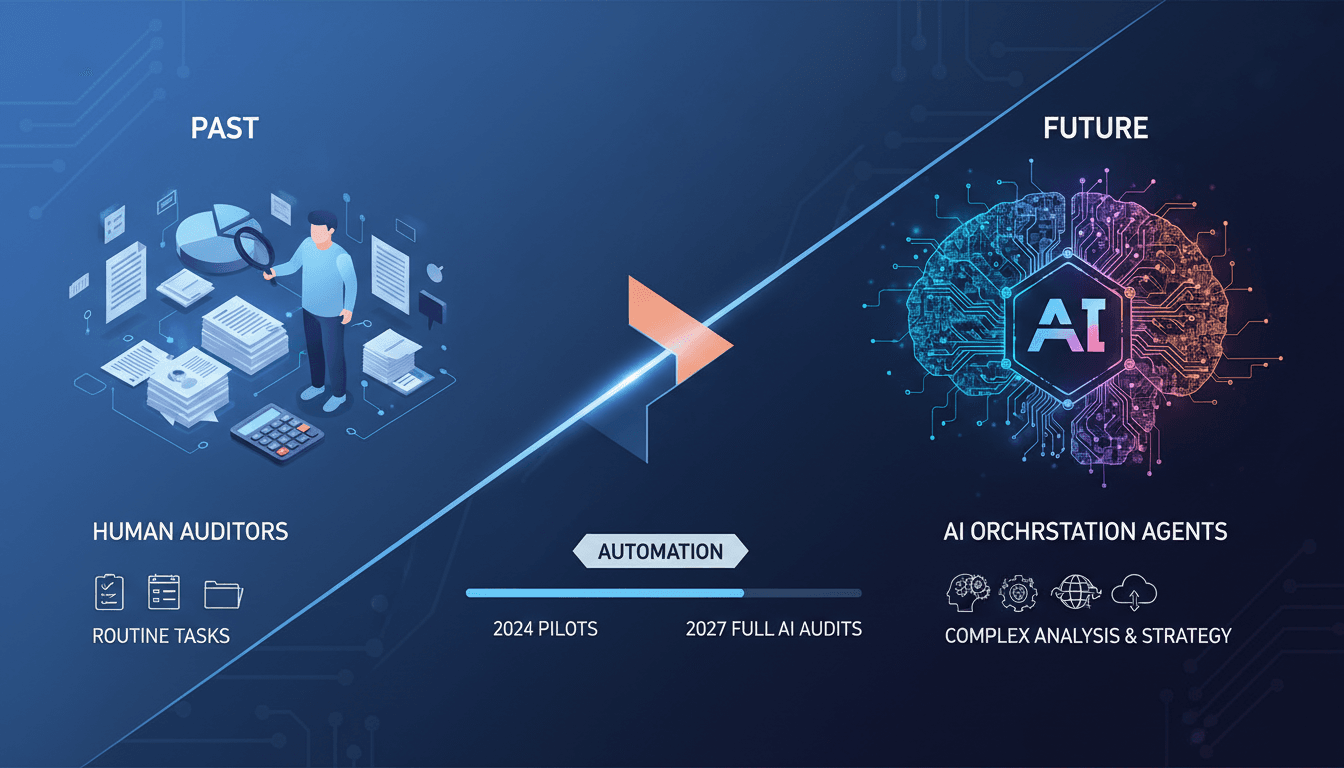
The auditing industry is undergoing a significant transformation as firms like KPMG pilot AI orchestration agents to handle routine tasks such as payroll, expenses, and revenue contract testing. This shift is largely driven by a persistent talent shortage, with over 300,000 accountants leaving the U.S. profession in recent years due to burnout and a lack of new entrants. As firms grapple with these challenges, they are increasingly turning to AI to fill the gap.
Historically, accounting firms have utilized basic AI for data analysis, but the introduction of orchestration agents marks a new phase in the automation of auditing processes. These agents can autonomously execute a series of tasks, allowing human auditors to concentrate on more complex, judgment-based work. This not only enhances efficiency but also addresses the ongoing talent crisis in the industry. KPMG's pilot program, set to launch in summer 2026, is a direct response to these pressures, with full deployment of AI-driven audits anticipated by 2027.
The implications of this shift are profound. As AI takes over routine testing, the role of human auditors will evolve. They will be tasked with overseeing AI outputs and engaging in more strategic decision-making processes. This transition necessitates a reevaluation of skills within the profession, as firms will need to upskill their workforce to adapt to the changing landscape. In fact, 84% of firms are adjusting their entry-level hiring practices to align with these new requirements.
Moreover, the regulatory environment is also evolving. While there have been no specific regulatory responses to KPMG's pilot yet, oversight frameworks are anticipated to develop as AI becomes more integrated into auditing practices. The market is already responding, with accelerated investments in AI technologies. In the UAE, for instance, finance functions are allocating 10% of their IT budgets to AI, reflecting a broader trend of embracing technology to enhance compliance and operational efficiency.
As the industry moves forward, the focus will be on balancing the benefits of AI with the need for human oversight, ensuring that audits remain accurate and reliable while leveraging technological advancements.
Who feels it first (and how)
- Accountants: Those in routine audit roles will see their tasks automated, requiring a shift to more complex responsibilities.
- Big Four firms: KPMG and its competitors will lead the charge in AI adoption, influencing industry standards.
- Regulatory bodies: As AI becomes prevalent, oversight agencies will need to adapt regulations to ensure compliance and accuracy.
What to watch next
- Pilot program outcomes: Monitor KPMG's pilot results in summer 2026 to gauge effectiveness and potential industry-wide adoption.
- Upskilling initiatives: Watch for trends in training programs as firms adjust to new skill requirements for auditors.
- Regulatory developments: Keep an eye on evolving oversight frameworks as AI integration in auditing becomes more widespread.
AI is being deployed to automate routine auditing tasks, addressing talent shortages.
Human auditors will transition to more strategic roles, focusing on complex decision-making.
The full impact of AI on regulatory frameworks and compliance measures remains to be seen.
Frequently Asked Questions
- Why it matters?
- The integration of AI in auditing addresses critical talent shortages while reshaping the future of work in finance.
- What happened (in 30 seconds)?
- KPMG is piloting AI agents for routine audit testing, starting summer 2026, to enhance efficiency. Over 300,000 accountants have left the U.S. profession recently, prompting firms to adopt AI solutions. Full AI deployment in audits is projected by 2027, with similar initiatives from other Big Four firms.
- What's really happening?
- The auditing industry is undergoing a significant transformation as firms like KPMG pilot AI orchestration agents to handle routine tasks such as payroll, expenses, and revenue contract testing. This shift is largely driven by a persistent talent shortage, with over 300,000 accountants leaving the U.S. profession in recent years due to burnout and a lack of new entrants. As firms grapple with these challenges, they are increasingly turning to AI to fill the gap. Historically, accounting firms h
- Who feels it first (and how)?
- Accountants: Those in routine audit roles will see their tasks automated, requiring a shift to more complex responsibilities. Big Four firms: KPMG and its competitors will lead the charge in AI adoption, influencing industry standards. Regulatory bodies: As AI becomes prevalent, oversight agencies will need to adapt regulations to ensure compliance and accuracy.
- What to watch next?
- Pilot program outcomes: Monitor KPMG's pilot results in summer 2026 to gauge effectiveness and potential industry-wide adoption. Upskilling initiatives: Watch for trends in training programs as firms adjust to new skill requirements for auditors. Regulatory developments: Keep an eye on evolving oversight frameworks as AI integration in auditing becomes more widespread.
U.S. business news, corporate developments, and economy.
"The Wall Street Journal is respected for deep financial and economic reporting with a center-right editorial perspective."
— A47 Editor
In This Critical Part of Audits, the Accountant’s Role Is Shrinking Fast
KPMG has initiated a pilot program that removes human involvement from routine testing processes, such as payroll and expenses, by increasing the use of AI agents. This shift marks a significant change in the auditing landscape, where technology is t...
Tech business coverage, major deals, product launches, and Silicon Valley trends.
"WSJ’s tech section offers authoritative reporting on the intersection of technology and business, including exclusive industry analysis."
— A47 Editor
In This Critical Part of Audits, the Accountant’s Role Is Shrinking Fast
KPMG has initiated a pilot program that reduces human involvement in routine audit tasks, such as payroll and expense testing, by increasing reliance on AI agents. This shift marks a significant change in the auditing process, reflecting a broader tr...