
Xi Jinping Promotes Demand-Driven Growth for China's Services Sector
Here's what it means for you.
If you're in the global services market, China's shift could redefine competitive dynamics and consumer behavior.
Why it matters
This strategy aims to rebalance China's economy, impacting global supply chains and consumer markets.
What happened (in 30 seconds)
- Xi Jinping issued a directive on April 7, 2026, at a national conference, advocating for a demand-driven growth model in the services sector.
- Premier Li Qiang emphasized the need for specialization in R&D and technology services to meet demographic shifts.
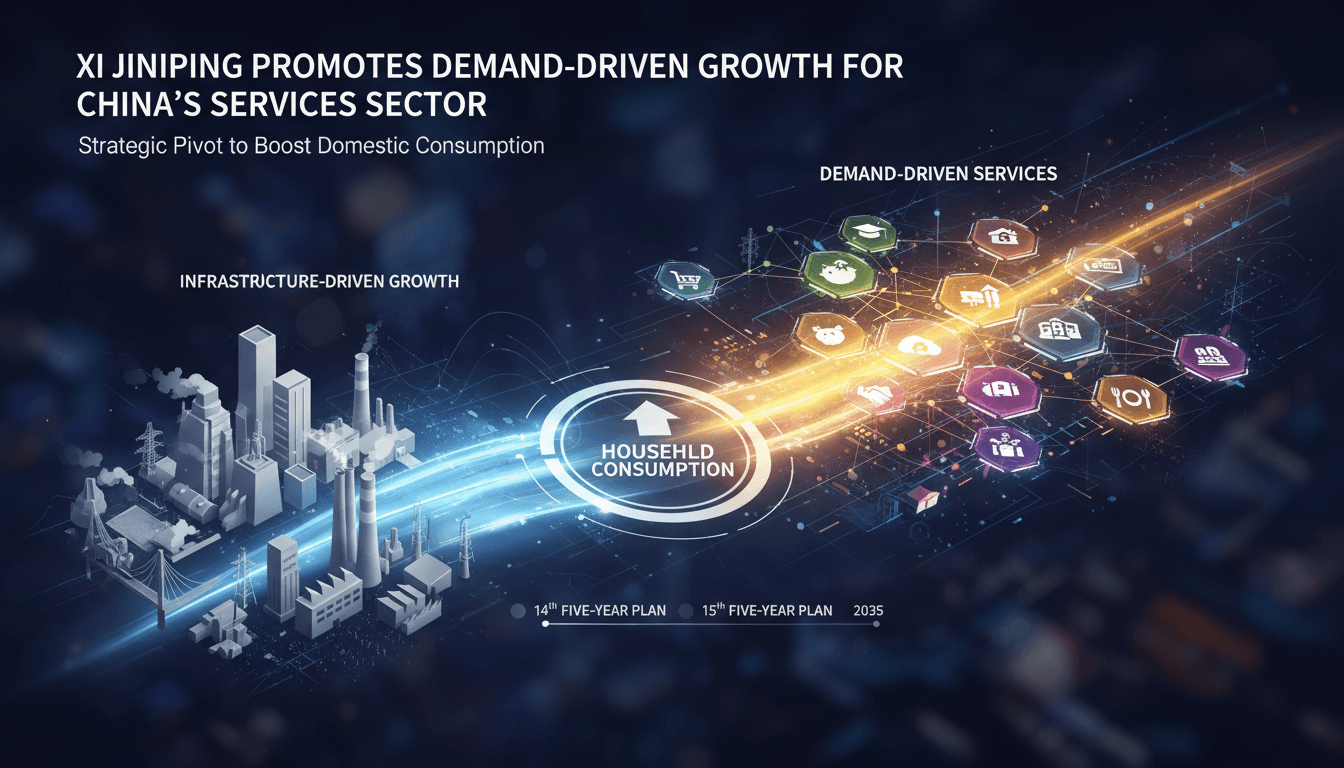
- China's economy is transitioning from infrastructure-driven growth to a focus on household consumption, with services expected to play a crucial role.
The context you actually need
- Soft consumer demand has plagued China's economy, with per-capita services consumption at just 46.1% of total spending in 2025, compared to the US's 70%.
- The 15th Five-Year Plan (2026–2030) prioritizes increasing household consumption's share of GDP, aiming for a significant shift towards services.
- Technological empowerment and expanded openness are central to developing "China service" brands and enhancing their position in global value chains.
What's really happening
The directive from Xi Jinping marks a pivotal shift in China's economic strategy, moving away from traditional infrastructure investment towards a more nuanced focus on services. This change is driven by a recognition that past efforts to stimulate demand through infrastructure have not yielded the desired consumer spending levels. With per-capita services consumption lagging significantly behind that of developed economies, the Chinese government is now prioritizing the services sector as a key driver of economic growth.
The emphasis on demand-driven development suggests a strategic pivot to stimulate consumer spending directly, rather than relying on government-led infrastructure projects. This approach aims to cultivate a vibrant services market that can support household consumption, which currently stands at around 40% of GDP. By focusing on sectors such as R&D, design, and technology services, the government is not only addressing current consumer needs but also preparing for demographic shifts that will require a more sophisticated service offering.
Furthermore, the call for "expanded openness" indicates a willingness to integrate more fully with global markets, potentially inviting foreign investment and expertise into China's burgeoning services sector. This could lead to the emergence of "China service" brands that compete on the global stage, enhancing the overall quality and variety of services available to consumers.
However, this transition is not without its challenges. The government will need to navigate existing market inefficiencies and consumer hesitancy to spend. The success of this strategy hinges on the ability to foster an environment where consumers feel confident in their purchasing decisions, which may require additional reforms in consumer protection and service quality standards.
As the services sector expands, it will likely create new job opportunities and shift the labor market dynamics, particularly in urban areas. This could lead to a more skilled workforce, but it may also exacerbate inequalities if certain demographics are left behind in this transition.
Who feels it first (and how)
- Service industry professionals: Workers in sectors like hospitality, tech, and design will see increased demand for their skills.
- Consumers: Households may benefit from improved service offerings and potentially lower prices due to increased competition.
- Investors: Those in the global services market may find new opportunities in China as the country opens up and invests in its services sector.
What to watch next
- Consumer spending trends: Monitoring changes in household consumption patterns will indicate the effectiveness of the new strategy.
- Foreign investment levels: An increase in foreign investment in China's services sector could signal confidence in the market's potential.
- Service quality improvements: Tracking advancements in service offerings will reveal how well the sector is adapting to consumer needs.
Xi Jinping's directive emphasizes demand-driven growth in the services sector.
Increased specialization in R&D and technology services will emerge as a response to demographic shifts.
The exact timeline for significant changes in consumer behavior and spending patterns remains uncertain.
Frequently Asked Questions
- Why it matters?
- This strategy aims to rebalance China's economy, impacting global supply chains and consumer markets.
- What happened (in 30 seconds)?
- Xi Jinping issued a directive on April 7, 2026, at a national conference, advocating for a demand-driven growth model in the services sector. Premier Li Qiang emphasized the need for specialization in R&D and technology services to meet demographic shifts. China's economy is transitioning from infrastructure-driven growth to a focus on household consumption, with services expected to play a crucial role.
- What's really happening?
- The directive from Xi Jinping marks a pivotal shift in China's economic strategy, moving away from traditional infrastructure investment towards a more nuanced focus on services. This change is driven by a recognition that past efforts to stimulate demand through infrastructure have not yielded the desired consumer spending levels. With per-capita services consumption lagging significantly behind that of developed economies, the Chinese government is now prioritizing the services sector as a key
- Who feels it first (and how)?
- Service industry professionals: Workers in sectors like hospitality, tech, and design will see increased demand for their skills. Consumers: Households may benefit from improved service offerings and potentially lower prices due to increased competition. Investors: Those in the global services market may find new opportunities in China as the country opens up and invests in its services sector.
- What to watch next?
- Consumer spending trends: Monitoring changes in household consumption patterns will indicate the effectiveness of the new strategy. Foreign investment levels: An increase in foreign investment in China's services sector could signal confidence in the market's potential. Service quality improvements: Tracking advancements in service offerings will reveal how well the sector is adapting to consumer needs.
Regional and international reporting focused on Middle Eastern politics, diplomacy, and economics.
"Asharq Al-Awsat is a Saudi-owned international newspaper reflecting mainstream Gulf political perspectives."
— A47 Editor
China’s Xi Urges Demand‑Driven Growth in Services Sector
Chinese President Xi Jinping has emphasized the importance of demand-driven growth in the services sector, highlighting the need for innovation and consumer engagement to bolster economic recovery. This call comes as China seeks to adapt its economic...
Macro commentary, policy analysis, growth/inflation themes, and global outlooks.
"Contextual macro coverage that complements day-to-day market headlines."
— A47 Editor
China’s Xi urges demand‑driven growth in services sector
Chinese President Xi Jinping has called for a demand-driven growth strategy in the services sector, emphasizing the need to enhance domestic consumption as part of the country's economic recovery efforts. This initiative aligns with China's broader g...