
Artemis II Astronauts Complete Historic Lunar Flyby and Prepare for Earth Return
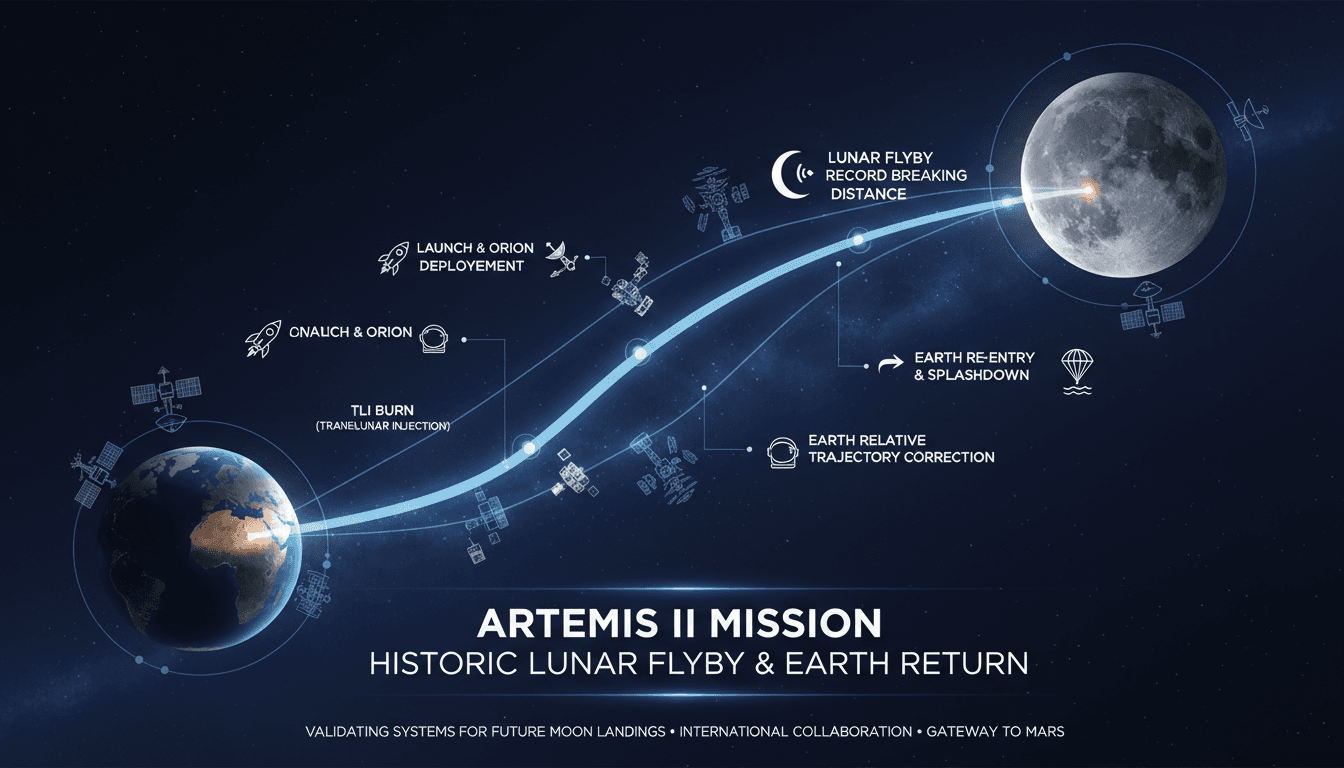
Here's what it means for you.
The Artemis II mission sets the stage for future lunar exploration, impacting industries from aerospace to education.
Why it matters
The success of Artemis II reinforces international collaboration in space and advances technologies that could benefit various sectors on Earth.
What happened (in 30 seconds)
- Artemis II launched on April 1, 2026, marking NASA's first crewed lunar flight since 1972.
- Astronauts reached a record distance of 252,756 miles from Earth during the mission's lunar flyby on April 6, 2026.
- The crew is en route to Earth, with a splashdown scheduled for April 10, 2026, after validating critical life support and navigation systems.
The context you actually need
- NASA's Artemis program aims to establish a sustainable human presence on the Moon, building on prior uncrewed missions.
- International collaboration is a key component, with partners like Canada actively participating in the Artemis Accords.
- Technological advancements from this mission will influence future space missions and have potential applications in various industries on Earth.
What's really happening
The Artemis II mission is a pivotal step in NASA's broader Artemis program, which aims to return humans to the Moon and eventually establish a sustainable presence there. This mission is particularly significant as it is the first crewed lunar flight since Apollo 17 in 1972, marking a revival of human exploration beyond low Earth orbit. The mission launched from Kennedy Space Center aboard the Space Launch System (SLS) rocket, achieving translunar injection and entering the Moon's gravitational influence within days.
During the mission, the crew reached a record distance of 252,756 miles from Earth, experiencing unique phenomena such as a communications blackout while behind the Moon and a total solar eclipse. These experiences not only validate the spacecraft's systems but also provide invaluable data for future missions, including Artemis III, which aims to land astronauts on the lunar surface.
The Artemis program is not just about exploration; it represents a strategic initiative to foster international collaboration in space. Countries participating in the Artemis Accords, like Canada, are contributing to the mission, which enhances diplomatic ties and shared technological advancements. This collaboration is crucial as global competition in space heats up, with countries like China and Russia also pursuing ambitious lunar and Martian missions.
The implications of Artemis II extend beyond space exploration. The technologies developed for this mission, including advancements in life support systems, navigation, and reentry protocols, have potential applications in various industries on Earth, such as aerospace, telecommunications, and even healthcare. As these technologies mature, they could lead to innovations that enhance safety, efficiency, and sustainability in multiple sectors.
Moreover, the mission has sparked public interest in space exploration, particularly in regions like Dubai, where local media coverage has highlighted the UAE's involvement in the Artemis Accords. This growing interest could inspire future generations to pursue careers in STEM fields, further driving innovation and economic growth.
Who feels it first (and how)
- Aerospace engineers: Increased demand for advanced technologies and systems developed during the mission.
- Educational institutions: Opportunities to inspire students and integrate space exploration into curricula.
- International partners: Countries involved in the Artemis Accords will benefit from shared knowledge and technology.
- Investors in tech startups: Potential for new ventures based on technologies developed for lunar missions.
What to watch next
- Artemis III preparations: The timeline and developments leading to the next lunar landing will be crucial for understanding the future of lunar exploration.
- Technological advancements: Innovations stemming from Artemis II that could impact industries on Earth, particularly in aerospace and telecommunications.
- Public engagement initiatives: How NASA and international partners promote space exploration to inspire the next generation of scientists and engineers.
The Artemis II mission successfully validated critical systems for future lunar missions.
Increased international collaboration in space exploration as countries recognize the benefits of working together.
The long-term impacts of Artemis II on global space policy and market dynamics in the aerospace sector.
Frequently Asked Questions
- Why it matters?
- The success of Artemis II reinforces international collaboration in space and advances technologies that could benefit various sectors on Earth.
- What happened (in 30 seconds)?
- Artemis II launched on April 1, 2026, marking NASA's first crewed lunar flight since 1972. Astronauts reached a record distance of 252,756 miles from Earth during the mission's lunar flyby on April 6, 2026. The crew is en route to Earth, with a splashdown scheduled for April 10, 2026, after validating critical life support and navigation systems.
- What's really happening?
- The Artemis II mission is a pivotal step in NASA's broader Artemis program, which aims to return humans to the Moon and eventually establish a sustainable presence there. This mission is particularly significant as it is the first crewed lunar flight since Apollo 17 in 1972, marking a revival of human exploration beyond low Earth orbit. The mission launched from Kennedy Space Center aboard the Space Launch System (SLS) rocket, achieving translunar injection and entering the Moon's gravitational
- Who feels it first (and how)?
- Aerospace engineers: Increased demand for advanced technologies and systems developed during the mission. Educational institutions: Opportunities to inspire students and integrate space exploration into curricula. International partners: Countries involved in the Artemis Accords will benefit from shared knowledge and technology. Investors in tech startups: Potential for new ventures based on technologies developed for lunar missions.
- What to watch next?
- Artemis III preparations: The timeline and developments leading to the next lunar landing will be crucial for understanding the future of lunar exploration. Technological advancements: Innovations stemming from Artemis II that could impact industries on Earth, particularly in aerospace and telecommunications. Public engagement initiatives: How NASA and international partners promote space exploration to inspire the next generation of scientists and engineers.
Conservative-leaning political and national coverage.
"The Washington Times is a conservative-leaning newspaper known for its political coverage and advocacy of right-of-center viewpoints."
— A47 Editor
Artemis II astronauts describe their lunar voyage as surreal and profound ahead of Earth return
The Artemis II astronauts are nearing their return to Earth after a historic lunar voyage, reflecting on their surreal experiences during the mission, which included a flyby of the moon's far side. They are preparing for a fiery re-entry as they conc...
News across North, Central, and South America including politics and economics.
"France 24 is viewed as a globally focused outlet with balanced coverage and a European perspective."
— A47 Editor
NASA's Artemis II: conspiracy theories take off about ‘staged’ green screen
NASA's Artemis II mission is concluding its historic lunar flyby, with astronauts having traveled farther from Earth than any humans before. As the crew prepares for re-entry, conspiracy theories have emerged online, suggesting the mission was staged...