
Macron Leads Coalition of 15 Countries for Defensive Mission in Strait of Hormuz Following US-Iran Ceasefire
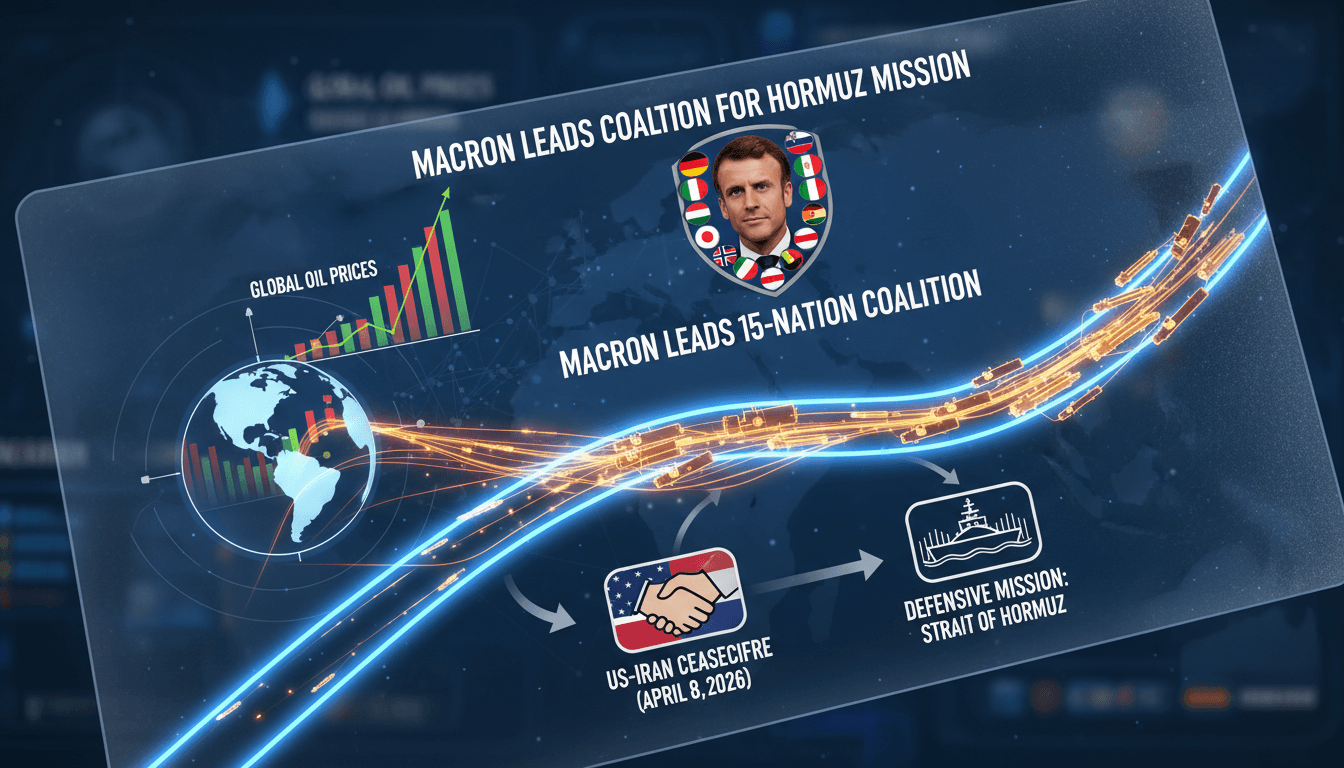
Here's what it means for you.
If you rely on global shipping routes for business, the resumption of navigation through the Strait of Hormuz could stabilize oil prices and shipping costs.
Why it matters
The Strait of Hormuz is a critical chokepoint for global oil supplies, with 20% of the world's oil transiting through it daily.
What happened (in 30 seconds)
- Emmanuel Macron announced that nearly 15 countries are mobilizing for a defensive mission to ensure safe navigation through the Strait of Hormuz.
- A two-week ceasefire between the United States and Iran was agreed upon, allowing for managed maritime traffic.
- The Strait of Hormuz has been partially closed since late February due to escalating military tensions, impacting global oil supply.
The context you actually need
- The Strait of Hormuz crisis began on February 28, 2026, when Iran restricted maritime traffic amid rising tensions with the US and Israel.
- International diplomatic efforts have been ongoing, with discussions involving over 40 countries seeking non-military solutions to the crisis.
- Oil prices surged during the conflict but began to stabilize following the ceasefire announcement, indicating market relief.
What's really happening
The announcement by French President Emmanuel Macron marks a significant pivot in international maritime security efforts, particularly in the context of the ongoing tensions between the US and Iran. The Strait of Hormuz, a narrow waterway through which approximately 20% of the world's oil supply passes, has been a focal point of geopolitical conflict. Since late February, Iran's restrictions on maritime traffic have effectively closed the strait to most commercial shipping, leading to a surge in oil prices and heightened global economic uncertainty.
The ceasefire agreement reached on April 7-8, 2026, between the US and Iran has created a temporary pause in hostilities, allowing for the possibility of safe passage through the strait. This development is crucial not only for oil markets but also for global trade, as the strait is a vital route for shipping goods. The coordinated defensive mission led by France aims to ensure that navigation can resume safely, thereby stabilizing the region and alleviating the economic pressures felt worldwide.
The involvement of nearly 15 countries under French leadership indicates a collective international response to the crisis, emphasizing the importance of multilateral cooperation in addressing security challenges. This mission is framed as "purely defensive," which suggests that the participating nations are focusing on maintaining peace and security rather than engaging in military confrontation. The coordination with Iran also highlights a nuanced approach to diplomacy, where managing safe passage is prioritized over escalating tensions.
As oil prices began to plunge following the ceasefire announcement, Gulf states, including the UAE, expressed cautious optimism about the potential for a full reopening of the Strait of Hormuz. However, the situation remains delicate, with Iran claiming a victory in securing managed transit while US officials stress the need for ongoing negotiations. The focus now shifts to diplomatic coordination rather than immediate naval deployments, indicating a preference for dialogue over military action.
This evolving scenario underscores the interconnectedness of global markets and the ripple effects that geopolitical events can have on local economies. For regions like Dubai, which depend heavily on Gulf shipping routes, the implications are significant. The decline in UAE crude exports by 55% and the suspension of nominations for Hormuz-transit crude grades have already strained the local economy, elevating fuel costs and impacting trade.
Who feels it first (and how)
- Shipping companies: They will experience immediate impacts on operational costs and shipping schedules.
- Oil traders: Fluctuations in oil prices will directly affect their trading strategies and profit margins.
- Businesses reliant on oil: Industries that depend on stable oil prices, such as transportation and manufacturing, will feel the effects of any price volatility.
- Local economies in the Gulf: Regions like Dubai, which rely on trade and oil exports, will be affected by changes in shipping routes and costs.
What to watch next
- Diplomatic negotiations: Continued discussions between the US and Iran will be crucial in determining the long-term stability of maritime traffic through the Strait of Hormuz.
- Oil price trends: Monitoring fluctuations in oil prices will provide insights into market reactions to the ceasefire and the effectiveness of the defensive mission.
- Shipping traffic levels: An increase in maritime traffic through the Strait of Hormuz will signal a return to normalcy in global trade, impacting various sectors.
The Strait of Hormuz is critical for global oil supply, with 20% of it transiting daily.
Oil prices will stabilize if maritime traffic resumes safely.
The long-term effectiveness of the ceasefire and the defensive mission in maintaining peace in the region.
Frequently Asked Questions
- Why it matters?
- The Strait of Hormuz is a critical chokepoint for global oil supplies, with 20% of the world's oil transiting through it daily.
- What happened (in 30 seconds)?
- Emmanuel Macron announced that nearly 15 countries are mobilizing for a defensive mission to ensure safe navigation through the Strait of Hormuz. A two-week ceasefire between the United States and Iran was agreed upon, allowing for managed maritime traffic. The Strait of Hormuz has been partially closed since late February due to escalating military tensions, impacting global oil supply.
- What's really happening?
- The announcement by French President Emmanuel Macron marks a significant pivot in international maritime security efforts, particularly in the context of the ongoing tensions between the US and Iran. The Strait of Hormuz, a narrow waterway through which approximately 20% of the world's oil supply passes, has been a focal point of geopolitical conflict. Since late February, Iran's restrictions on maritime traffic have effectively closed the strait to most commercial shipping, leading to a surge i
- Who feels it first (and how)?
- Shipping companies: They will experience immediate impacts on operational costs and shipping schedules. Oil traders: Fluctuations in oil prices will directly affect their trading strategies and profit margins. Businesses reliant on oil: Industries that depend on stable oil prices, such as transportation and manufacturing, will feel the effects of any price volatility. Local economies in the Gulf: Regions like Dubai, which rely on trade and oil exports, will be affected by changes in shipping rou
- What to watch next?
- Diplomatic negotiations: Continued discussions between the US and Iran will be crucial in determining the long-term stability of maritime traffic through the Strait of Hormuz. Oil price trends: Monitoring fluctuations in oil prices will provide insights into market reactions to the ceasefire and the effectiveness of the defensive mission. Shipping traffic levels: An increase in maritime traffic through the Strait of Hormuz will signal a return to normalcy in global trade, impacting various secto
Arabic-language UAE newspaper coverage focused on domestic affairs, public institutions, business, society, and regional developments.
"Al Khaleej coverage generally reflects a mainstream UAE editorial lens with strong attention to public affairs, institutions, and regional developments."
— A47 Editor
ماكرون: 15 دولة تخطط لتسهيل استئناف الملاحة بمضيق هرمز
French President Emmanuel Macron announced that approximately 15 countries are planning to facilitate the resumption of navigation through the Strait of Hormuz following a ceasefire declaration between the United States and Iran.
Regional coverage and analysis focused on politics, diplomacy, and business across the Middle East.
"Al-Monitor is known for analytical reporting on Middle East politics and policy developments."
— A47 Editor
More than 15 countries planning to facilitate Strait of Hormuz access, Macron says
French President Emmanuel Macron announced that over 15 countries are collaborating to facilitate the resumption of maritime traffic through the Strait of Hormuz, a crucial passage for global oil supply, following a ceasefire agreement between the Un...
Oil, metals, and agriculture: supply/demand headlines, OPEC chatter, inventories, and price action.
"Solid tape for energy and metals traders tracking macro and micro catalysts."
— A47 Editor
More than 15 countries planning to facilitate Strait of Hormuz access, Macron says
French President Emmanuel Macron announced that over 15 countries are planning to facilitate access to the Strait of Hormuz, a vital maritime route for global oil shipments. This initiative comes amid rising tensions in the region and aims to ensure ...