
South Korea initiates blockchain deposit token pilot for government spending
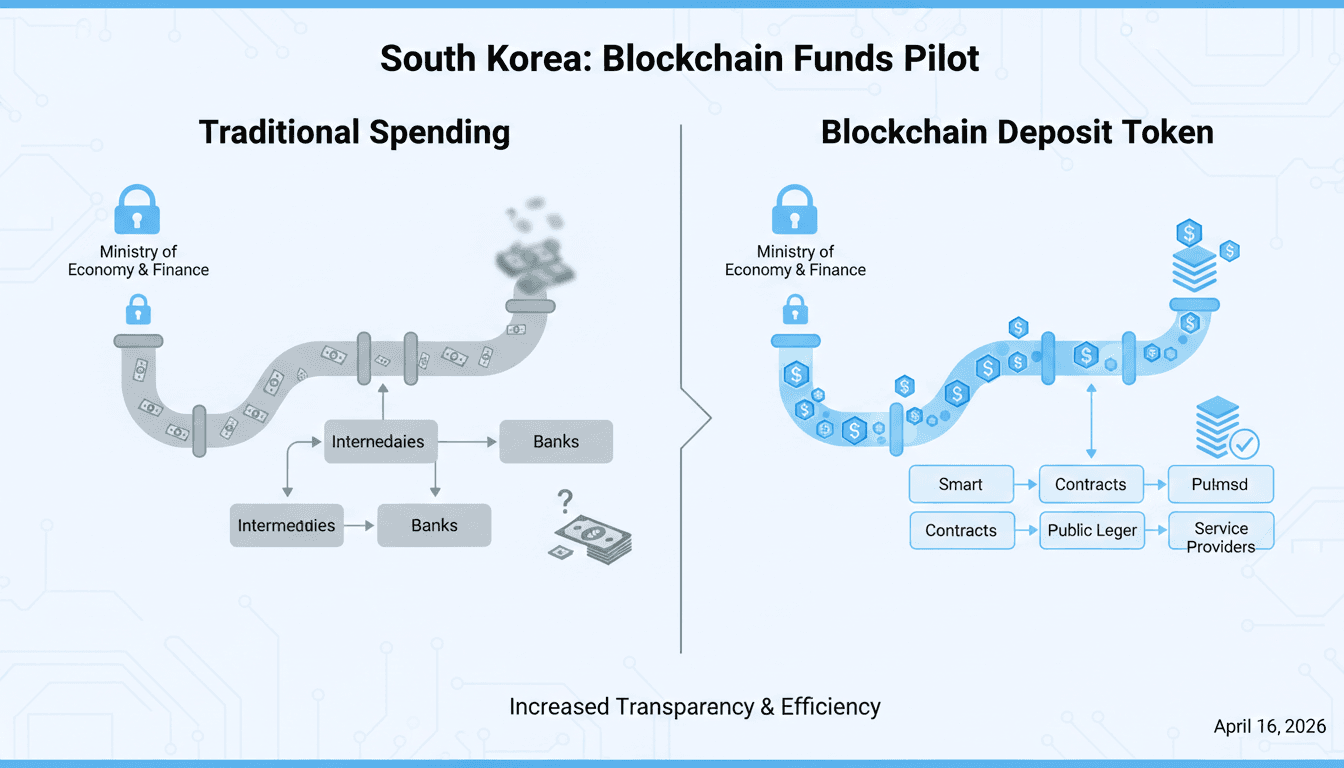
Here's what it means for you.
If you work in finance or public administration, this pilot could redefine how government expenditures are managed and tracked.
Why it matters
This initiative represents a significant step toward integrating blockchain technology into public finance, potentially influencing global standards for fiscal transparency.
What happened (in 30 seconds)
- On April 16, 2026, South Korea's Ministry of Economy and Finance announced a pilot project for blockchain-based deposit tokens.
- The pilot aims to replace government expense credit cards in Sejong-si by Q4 2026, enhancing transparency and reducing costs.
- This follows a previous pilot with the Ministry of Environment, indicating a broader trend of blockchain adoption in public finance.
The context you actually need
- South Korea has been testing fintech innovations through regulatory sandboxes since 2019, allowing for controlled experimentation with new technologies.
- The Ministry of Environment's earlier pilot focused on blockchain applications for subsidies and electric vehicle charging, showcasing a growing interest in digital solutions for public services.
- Discussions around the Digital Asset Basic Act are ongoing, reflecting a geopolitical push for efficient digital asset frameworks amid evolving global financial landscapes.
What's really happening
The pilot project announced by South Korea's Ministry of Economy and Finance is a strategic move to modernize government spending through blockchain technology. By utilizing permissioned blockchain deposit tokens, the initiative aims to streamline the execution of national treasury funds, replacing traditional government-purchased credit and debit cards. This shift is mandated by the Treasury Funds Management Act, which seeks to enhance fiscal management and accountability.
Key features of the blockchain deposit tokens include programmable settlements, which allow for preset amounts, specific spending categories, and expiration periods. This capability not only facilitates real-time reporting but also increases transparency in government expenditures. By eliminating intermediaries and associated card-processing fees, the pilot is expected to reduce costs significantly, making public spending more efficient.
The pilot's implementation in Sejong-si is particularly noteworthy as it represents a localized test of a broader national strategy. The Ministry of Economy and Finance's collaboration with the Ministry of Environment on previous blockchain applications indicates a commitment to exploring innovative solutions for public finance. This pilot is part of a larger trend where governments worldwide are increasingly looking to blockchain for its potential to enhance transparency, reduce fraud, and improve the efficiency of public services.
As South Korea moves forward with this initiative, it reflects a growing recognition of the importance of digital assets in modern governance. The pilot is not just about adopting new technology; it is about reshaping the way government interacts with financial systems and citizens. The implications of this pilot could extend beyond South Korea, influencing other nations to consider similar approaches to public finance.
Who feels it first (and how)
- Public sector employees in finance and administration will need to adapt to new systems and processes.
- Technology providers in the blockchain space may see increased demand for solutions tailored to government needs.
- Taxpayers and citizens could benefit from improved transparency and accountability in government spending.
What to watch next
- Implementation timeline: Keep an eye on the Q4 2026 rollout to see how effectively the pilot is executed and any challenges that arise.
- Regulatory developments: Watch for updates on the Digital Asset Basic Act, as its passage could further influence blockchain adoption in public finance.
- International reactions: Observe how other countries respond to South Korea's pilot, as it may inspire similar initiatives globally.
The pilot is approved and scheduled for implementation in Q4 2026.
Other countries may follow South Korea's lead in exploring blockchain for public finance.
The long-term impact on government efficiency and public trust remains to be seen.
Frequently Asked Questions
- Why it matters?
- This initiative represents a significant step toward integrating blockchain technology into public finance, potentially influencing global standards for fiscal transparency.
- What happened (in 30 seconds)?
- On April 16, 2026, South Korea's Ministry of Economy and Finance announced a pilot project for blockchain-based deposit tokens. The pilot aims to replace government expense credit cards in Sejong-si by Q4 2026, enhancing transparency and reducing costs. This follows a previous pilot with the Ministry of Environment, indicating a broader trend of blockchain adoption in public finance.
- What's really happening?
- The pilot project announced by South Korea's Ministry of Economy and Finance is a strategic move to modernize government spending through blockchain technology. By utilizing permissioned blockchain deposit tokens, the initiative aims to streamline the execution of national treasury funds, replacing traditional government-purchased credit and debit cards. This shift is mandated by the Treasury Funds Management Act, which seeks to enhance fiscal management and accountability. Key features of the
- Who feels it first (and how)?
- Public sector employees in finance and administration will need to adapt to new systems and processes. Technology providers in the blockchain space may see increased demand for solutions tailored to government needs. Taxpayers and citizens could benefit from improved transparency and accountability in government spending.
- What to watch next?
- Implementation timeline: Keep an eye on the Q4 2026 rollout to see how effectively the pilot is executed and any challenges that arise. Regulatory developments: Watch for updates on the Digital Asset Basic Act, as its passage could further influence blockchain adoption in public finance. International reactions: Observe how other countries respond to South Korea's pilot, as it may inspire similar initiatives globally.
News and analysis on Bitcoin, altcoins, and blockchain innovation.
"Bitcoinist delivers news and analysis on Bitcoin, altcoins, and blockchain innovation with a focus on market trends and industry updates."
— A47 Editor
Blockchain Is South Korea’s New Fiscal Weapon — A Blow To Privacy?
South Korea is launching a pilot project to replace government expense credit cards with blockchain-based deposit tokens, as announced by the Ministry of Finance and Economy. This initiative aims to enhance the efficiency of national treasury fund ma...
Real-time updates, analysis, and reports on the blockchain and cryptocurrency sectors.
"Crypto News delivers real-time updates, analysis, and reports on the blockchain and cryptocurrency sectors."
— A47 Editor
South Korea to trial tokenized bank deposits for government operational spending
South Korea is set to trial tokenized bank deposits for government operational spending, aiming to enhance transparency and efficiency in public sector expenditures. The initiative, announced by the Ministry of Economy and Finance, will take place wi...
Covers blockchain, cryptocurrency news, project analysis, and market insights.
"CoinDesk is a well-established cryptocurrency and blockchain news provider, offering comprehensive insights, market data, and industry research."
— A47 Editor
South Korea to test blockchain deposit tokens for government spending in Q4
South Korea is set to pilot blockchain deposit tokens for government spending in the fourth quarter of 2026, allowing for programmable payments with spending limits and industry restrictions. This initiative aims to enhance efficiency in public secto...