
U.S. Senate's Digital Asset Market Clarity Act Faces Legislative Delays Yet Remains Viable
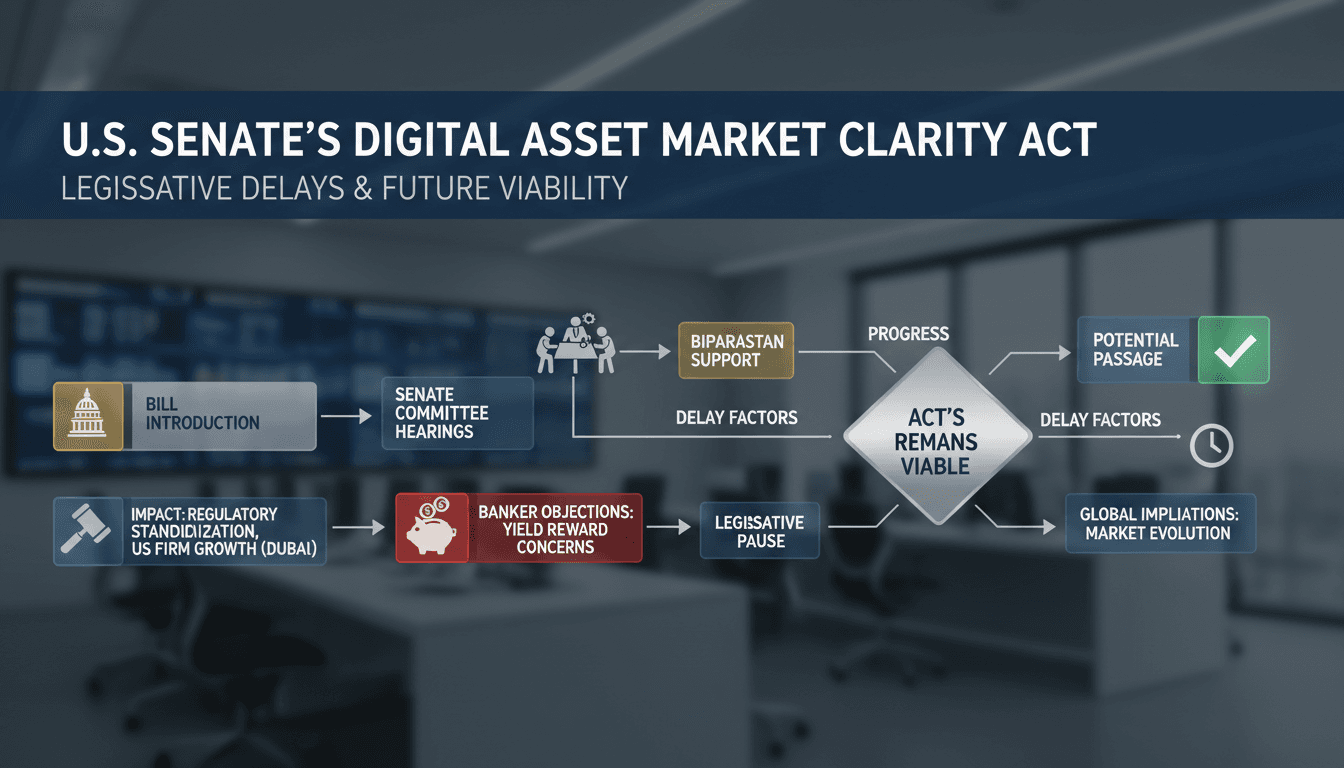
Here's what it means for you.
If you’re involved in the cryptocurrency sector, the ongoing legislative developments could significantly impact your operations and compliance strategies.
Why it matters
The Clarity Act aims to establish a comprehensive regulatory framework for the U.S. cryptocurrency industry, which could set global standards and influence international markets.
What happened (in 30 seconds)
- April 21, 2026: The Digital Asset Market Clarity Act remains on track for potential passage despite delays due to banker objections.
- Key Provisions: The Act addresses market structure, DeFi protections, and stablecoin yield provisions, building on the previous GENIUS Act.
- Current Status: The markup was postponed, with a targeted May committee action and a 50% chance of enactment by the end of 2026.
The context you actually need
- Legislative Background: The Clarity Act follows the 2025 GENIUS Act, which regulated stablecoins but left yield rewards programs unresolved due to banker concerns.
- Geopolitical Factors: The U.S. regulatory landscape is influenced by international competition, particularly from crypto-friendly jurisdictions like Dubai.
- Market Dynamics: Ongoing negotiations reflect tensions between traditional banking interests and the evolving cryptocurrency landscape, impacting the future of digital asset regulations.
What's really happening
The Digital Asset Market Clarity Act, spearheaded by Senator Thom Tillis and supported by bipartisan efforts, seeks to create a structured regulatory environment for the cryptocurrency industry. This legislation is crucial as it aims to clarify the rules governing digital assets, which have been a source of confusion and contention among regulators, lawmakers, and industry participants.
The Act builds on the 2025 GENIUS Act, which primarily focused on stablecoins but deferred discussions on yield rewards programs that traditional bankers view as competitive threats to their deposit bases. The current legislative push is complicated by banker objections to passive rewards, which they argue could undermine the banking system. A compromise reached in March 2026 allows for activity-based incentives, akin to credit card rewards, but the broader implications of these provisions remain contentious.
As the Senate Banking and Agriculture Committees navigate these complexities, the timeline for the Clarity Act has become compressed. The April markup was postponed to allow for further negotiations between Senator Tillis and banking lobbyists, indicating the delicate balance lawmakers must strike between fostering innovation in the cryptocurrency space and addressing the concerns of traditional financial institutions.
The stakes are high, as the outcome of this legislation could set a precedent for how digital assets are regulated not just in the U.S., but globally. If passed, the Clarity Act could standardize practices across jurisdictions, potentially benefiting U.S.-based firms and creating a more predictable environment for international operations. Conversely, delays in passage could sustain the appeal of crypto-friendly jurisdictions like Dubai, where regulatory clarity is already more favorable.
The ongoing discussions also reflect broader geopolitical dynamics, particularly in the wake of the 2024 elections, where the White House has shown support for non-deposit rewards. This political backdrop adds another layer of complexity to the legislative process, as competing priorities within the Senate, including funding for the Department of Homeland Security and midterm nominations, vie for attention.
Who feels it first (and how)
- Cryptocurrency Firms: Companies like Coinbase are directly impacted by regulatory clarity, influencing their operational strategies and compliance costs.
- Banking Institutions: Traditional banks are concerned about competitive threats posed by yield rewards in the crypto space, affecting their lobbying efforts.
- Investors: Individuals and institutional investors in the crypto market will feel the effects of regulatory changes on market stability and investment opportunities.
- Regulatory Bodies: The SEC and CFTC will need to adapt to new frameworks, impacting their enforcement and oversight strategies.
What to watch next
- May Committee Action: The upcoming markup in May will be critical in determining the Act's trajectory and could signal bipartisan support or further delays.
- Banking Lobby Response: Watch for reactions from banking lobbyists, as their influence could shape the final provisions of the Act, particularly regarding yield rewards.
- International Regulatory Trends: Keep an eye on how U.S. regulatory clarity influences global markets, especially in crypto-friendly regions like Dubai, which may attract firms seeking favorable conditions.
The Clarity Act aims to establish a regulatory framework for digital assets in the U.S.
The odds of the Act's passage in 2026 are estimated at 50%, influenced by ongoing negotiations and competing legislative priorities.
The long-term impact of the Act on the global cryptocurrency landscape remains uncertain, particularly regarding international compliance and competition.
Frequently Asked Questions
- Why it matters?
- The Clarity Act aims to establish a comprehensive regulatory framework for the U.S. cryptocurrency industry, which could set global standards and influence international markets.
- What happened (in 30 seconds)?
- April 21, 2026: The Digital Asset Market Clarity Act remains on track for potential passage despite delays due to banker objections. Key Provisions: The Act addresses market structure, DeFi protections, and stablecoin yield provisions, building on the previous GENIUS Act. Current Status: The markup was postponed, with a targeted May committee action and a 50% chance of enactment by the end of 2026.
- What's really happening?
- The Digital Asset Market Clarity Act, spearheaded by Senator Thom Tillis and supported by bipartisan efforts, seeks to create a structured regulatory environment for the cryptocurrency industry. This legislation is crucial as it aims to clarify the rules governing digital assets, which have been a source of confusion and contention among regulators, lawmakers, and industry participants. The Act builds on the 2025 GENIUS Act, which primarily focused on stablecoins but deferred discussions on yie
- Who feels it first (and how)?
- Cryptocurrency Firms: Companies like Coinbase are directly impacted by regulatory clarity, influencing their operational strategies and compliance costs. Banking Institutions: Traditional banks are concerned about competitive threats posed by yield rewards in the crypto space, affecting their lobbying efforts. Investors: Individuals and institutional investors in the crypto market will feel the effects of regulatory changes on market stability and investment opportunities. Regulatory Bodies: The
- What to watch next?
- May Committee Action: The upcoming markup in May will be critical in determining the Act's trajectory and could signal bipartisan support or further delays. Banking Lobby Response: Watch for reactions from banking lobbyists, as their influence could shape the final provisions of the Act, particularly regarding yield rewards. International Regulatory Trends: Keep an eye on how U.S. regulatory clarity influences global markets, especially in crypto-friendly regions like Dubai, which may attract fi
Covers blockchain, cryptocurrency news, project analysis, and market insights.
"CoinDesk is a well-established cryptocurrency and blockchain news provider, offering comprehensive insights, market data, and industry research."
— A47 Editor
Crypto's great hope in Senate's Clarity Act still has a path to survive tight calendar
The Senate's Clarity Act, aimed at establishing a regulatory framework for cryptocurrencies, continues to face delays primarily due to ongoing debates surrounding stablecoin yields. As the Senate's calendar tightens, the bill's advancement is uncerta...
News and analysis on Bitcoin, altcoins, and blockchain innovation.
"Bitcoinist delivers news and analysis on Bitcoin, altcoins, and blockchain innovation with a focus on market trends and industry updates."
— A47 Editor
What To Know About This Week’s CLARITY Act Push—And Why Mid-May Is Now Key
The Senate is nearing a critical juncture for the CLARITY Act, a bill aimed at establishing a regulatory framework for cryptocurrencies in the U.S., with key negotiations taking place this week that could determine its advancement or further delays i...
Real-time updates, analysis, and reports on the blockchain and cryptocurrency sectors.
"Crypto News delivers real-time updates, analysis, and reports on the blockchain and cryptocurrency sectors."
— A47 Editor
CLARITY Act may miss April markup as talks over stablecoin rewards continue
The Senate markup of the CLARITY Act, aimed at establishing a regulatory framework for cryptocurrencies, may be postponed to May due to ongoing disputes over stablecoin yields. Senator Thom Tillis has suggested this delay to Senate Banking Chair Tim ...
Research, news, and analysis on blockchain startups, DeFi, and regulations.
"Crypto Briefing provides research, news, and analysis on blockchain startups, DeFi, and crypto regulations with investor-focused coverage."
— A47 Editor
Senator Tillis urges delay of CLARITY Act amid stablecoin yield disputes
Senator Thom Tillis has called for a delay in the CLARITY Act, citing ongoing disputes over stablecoin yields, which has led to increased regulatory uncertainty in the cryptocurrency market. This delay could hinder innovation and market confidence in...
Covers Bitcoin plus altcoin news, market updates, and educational resources.
"Bitcoin.com provides news, market data, and guides focused on Bitcoin and the wider crypto industry."
— A47 Editor
US Lawmakers Urged to Advance CLARITY Act as Digital Chamber Pushes Senate Markup
US lawmakers are being urged to advance the CLARITY Act, which aims to establish a regulatory framework for cryptocurrency, as the Digital Chamber pushes for a Senate markup. This comes amid ongoing negotiations and a critical deadline approaching in...
Real-time updates, analysis, and reports on the blockchain and cryptocurrency sectors.
"Crypto News delivers real-time updates, analysis, and reports on the blockchain and cryptocurrency sectors."
— A47 Editor
U.S. CLARITY Act stablecoin bill faces May delay amid bank pushback
The U.S. CLARITY Act, aimed at establishing a regulatory framework for stablecoins, is facing a potential delay until May due to pushback from banks regarding stablecoin yields. This conflict arises despite a White House report indicating that bannin...