
World Bank Plans $80–100 Billion Support for Countries Affected by Middle East War
Here's what it means for you.
If you're in a developing economy, this funding could stabilize your local market and mitigate inflationary pressures.
Why it matters
This funding initiative aims to counteract the economic fallout from the ongoing Middle East war, which has global implications for energy prices and growth.
What happened (in 30 seconds)
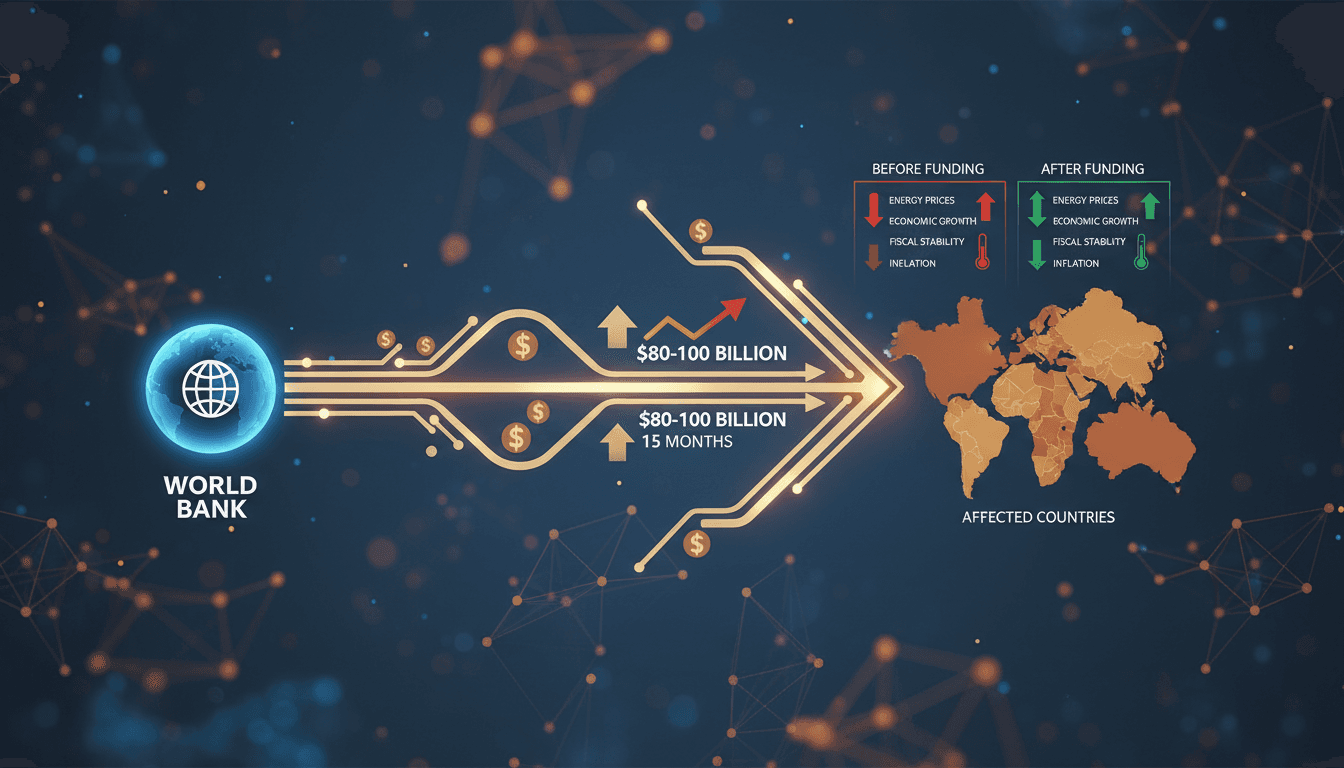
- World Bank President Ajay Banga announced on April 14, 2026, a potential mobilization of $80–100 billion for countries affected by the Middle East war.
- Funding will be allocated over 15 months, with an immediate $20–25 billion available through a crisis response window.
- This initiative surpasses the $70 billion provided during the COVID-19 pandemic, targeting developing economies facing inflation and fiscal strains.
The context you actually need
- The Middle East war began on February 28, 2026, leading to energy supply disruptions and oil price spikes, which have affected global economic forecasts.
- The IMF downgraded global growth projections for 2026 to 3.1%, with emerging markets expected to grow at 3.9%, reflecting increased currency pressures.
- The World Bank's funding strategy includes immediate disbursements and reallocations to support the hardest-hit nations, emphasizing a coordinated multilateral response.
What's really happening
On April 14, 2026, during the IMF-World Bank Spring Meetings in Washington, D.C., President Ajay Banga outlined a comprehensive funding strategy aimed at addressing the economic challenges posed by the ongoing Middle East conflict. The World Bank's commitment to mobilizing $80–100 billion over the next 15 months is a significant response to the escalating crisis, which has already disrupted energy supplies and caused inflationary pressures across various economies.
The funding will be structured in tiers, with an immediate allocation of $20–25 billion available through a crisis response window. This mechanism allows for 10% advance drawdowns from approved programs, enabling countries to access funds quickly. Following this initial phase, the World Bank plans to reallocate an additional $30–40 billion within six months, depending on the evolving situation. If the conflict persists, supplementary resources will be drawn from the World Bank's balance sheet, ensuring that support continues as needed.
This approach not only aims to stabilize economies but also seeks to mitigate the broader impacts of the war, which has already led to oil prices soaring to a baseline of $82 per barrel. The geopolitical tensions have prompted the IMF to revise its global growth forecasts downward, indicating a ripple effect that could affect markets worldwide. The World Bank's proactive stance is designed to counteract these negative trends, particularly in developing nations that are often the most vulnerable to external shocks.
The announcement comes at a time when many countries are grappling with heightened inflation and fiscal strains, exacerbated by the war's economic fallout. By surpassing the $70 billion allocated during the COVID-19 pandemic, the World Bank is signaling its commitment to supporting nations in crisis, reinforcing the importance of multilateral cooperation in addressing global challenges.
Who feels it first (and how)
- Developing economies: Countries in the Middle East and beyond facing inflation and fiscal challenges will be the primary beneficiaries of this funding.
- Local businesses: Enterprises in affected regions may receive immediate financial support to stabilize operations and retain employees.
- Consumers: Individuals in these economies could see relief from rising prices and improved access to essential services.
What to watch next
- Funding disbursement timelines: Monitoring how quickly the World Bank can mobilize the initial $20–25 billion will indicate the urgency of the response.
- Oil price fluctuations: Continued volatility in oil prices will affect economic stability in both developed and developing nations, influencing inflation rates.
- Regional economic growth forecasts: Updates from the IMF and World Bank on growth projections for affected regions will provide insight into the effectiveness of the funding.
The World Bank's commitment to mobilizing $80–100 billion for war-affected countries.
Increased inflationary pressures in developing economies if funding is delayed or insufficient.
The long-term impact of the funding on global economic stability and growth rates.
Frequently Asked Questions
- Why it matters?
- This funding initiative aims to counteract the economic fallout from the ongoing Middle East war, which has global implications for energy prices and growth.
- What happened (in 30 seconds)?
- World Bank President Ajay Banga announced on April 14, 2026, a potential mobilization of $80–100 billion for countries affected by the Middle East war. Funding will be allocated over 15 months, with an immediate $20–25 billion available through a crisis response window. This initiative surpasses the $70 billion provided during the COVID-19 pandemic, targeting developing economies facing inflation and fiscal strains.
- What's really happening?
- On April 14, 2026, during the IMF-World Bank Spring Meetings in Washington, D.C., President Ajay Banga outlined a comprehensive funding strategy aimed at addressing the economic challenges posed by the ongoing Middle East conflict. The World Bank's commitment to mobilizing $80–100 billion over the next 15 months is a significant response to the escalating crisis, which has already disrupted energy supplies and caused inflationary pressures across various economies. The funding will be structure
- Who feels it first (and how)?
- Developing economies: Countries in the Middle East and beyond facing inflation and fiscal challenges will be the primary beneficiaries of this funding. Local businesses: Enterprises in affected regions may receive immediate financial support to stabilize operations and retain employees. Consumers: Individuals in these economies could see relief from rising prices and improved access to essential services.
- What to watch next?
- Funding disbursement timelines: Monitoring how quickly the World Bank can mobilize the initial $20–25 billion will indicate the urgency of the response. Oil price fluctuations: Continued volatility in oil prices will affect economic stability in both developed and developing nations, influencing inflation rates. Regional economic growth forecasts: Updates from the IMF and World Bank on growth projections for affected regions will provide insight into the effectiveness of the funding.
Arabic-language UAE newspaper coverage focused on domestic affairs, public institutions, business, society, and regional developments.
"Al Khaleej coverage generally reflects a mainstream UAE editorial lens with strong attention to public affairs, institutions, and regional developments."
— A47 Editor
100 مليار دولار من البنك الدولي للدول المتضررة من الحرب
On Tuesday, Ajay Banga, the President of the World Bank, announced that the institution could potentially raise between $80 billion to $100 billion to support countries severely affected by the repercussions of war in the Middle East over the next 15...
Jordanian news and regional updates.
"Roya News is a Jordanian outlet focused on breaking news and local affairs."
— A47 Editor
البنك الدولي: 100 مليار دولار تمويلات محتملة للدول المتضررة من الحرب
The World Bank has indicated the potential for $100 billion in funding for countries affected by war, particularly if the conflict persists and financial needs escalate. This funding is aimed at addressing the urgent financial requirements of member ...
Regional coverage and analysis focused on politics, diplomacy, and business across the Middle East.
"Al-Monitor is known for analytical reporting on Middle East politics and policy developments."
— A47 Editor
World Bank could provide up to $100 billion in funds for countries hit by war, Banga says
The World Bank, under President Ajay Banga, announced it could mobilize between $80 billion and $100 billion in funding over the next 15 months to assist countries severely affected by the ongoing war in the Middle East. This potential funding surpas...
Macro commentary, policy analysis, growth/inflation themes, and global outlooks.
"Contextual macro coverage that complements day-to-day market headlines."
— A47 Editor
World Bank could provide up to $100 billion in funds for countries hit by war, Banga says
World Bank President Ajay Banga announced that the institution could provide up to $100 billion in funding to assist countries affected by ongoing conflicts, particularly in the Middle East and Iran. This financial support aims to address the economi...