
European Stock Markets Surge Over 3% Following U.S.-Iran Ceasefire Announcement
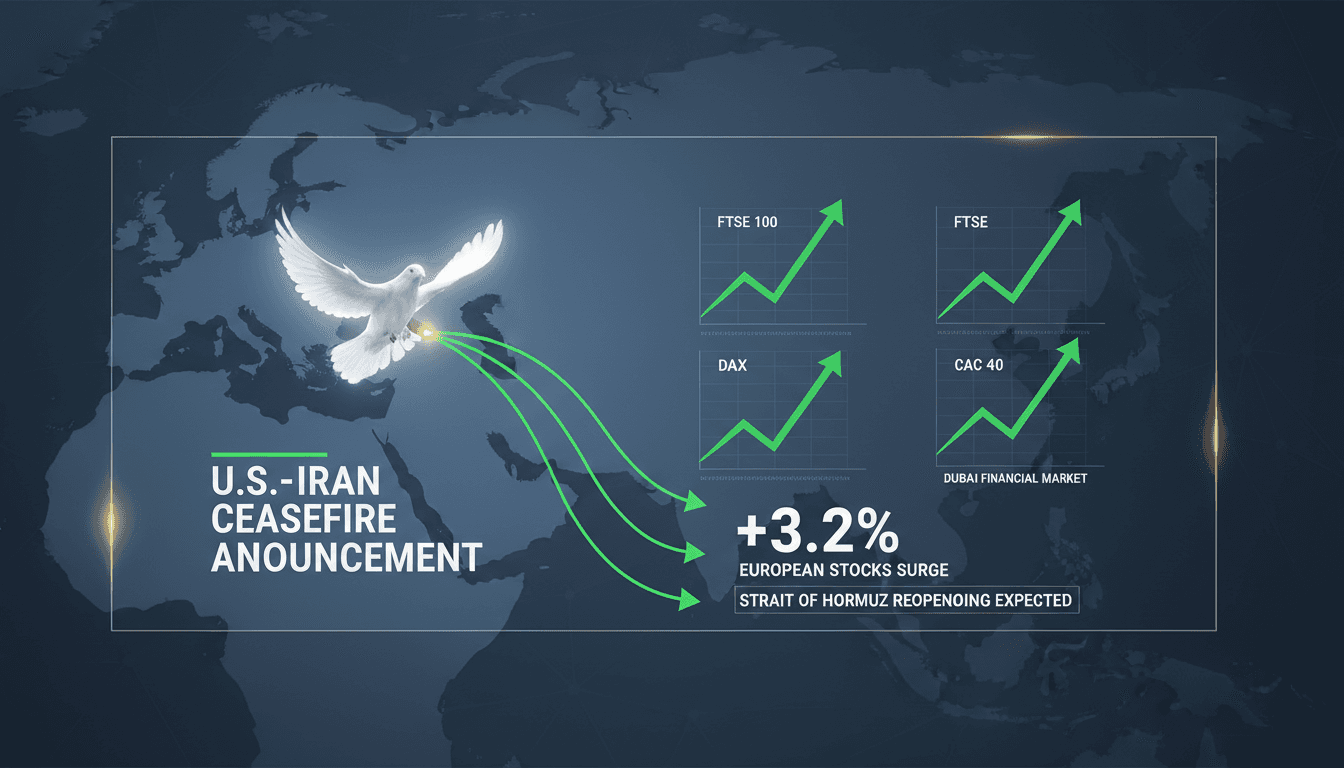
Here's what it means for you.
If you’re invested in European or UAE markets, this ceasefire could stabilize your portfolio and reduce energy costs.
Why it matters
The ceasefire announcement has significant implications for global energy markets and investor confidence, impacting economic stability across Europe and the Middle East.
What happened (in 30 seconds)
- European stock indices surged over 3% following a two-week ceasefire announcement between the U.S. and Iran.
- The STOXX 600 index rose 3.6% to 611.73 points, with Germany's DAX up 4.6% and the UK's FTSE 100 up 2.3%.
- Brent crude oil prices plummeted 15% below $100/barrel, easing inflationary pressures.
The context you actually need
- Tensions escalated on February 28, 2026, when a U.S.-Israeli military campaign against Iran led to the closure of the Strait of Hormuz, disrupting 20% of global oil flows.
- Energy prices surged as a result, with Brent crude exceeding previous peaks, causing sharp declines in European stock indices and increased market volatility.
- Investor sentiment fluctuated throughout March, with partial recoveries on de-escalation hopes, but uncertainty persisted until the ceasefire announcement.
What's really happening
The recent ceasefire between the U.S. and Iran marks a pivotal moment in a conflict that has significantly impacted global markets and energy supplies. Following the military campaign initiated on February 28, 2026, the closure of the Strait of Hormuz by Iran led to a dramatic disruption in oil flows, which in turn caused Brent crude prices to soar and European stock markets to tumble. The STOXX 600 index, for instance, experienced significant declines as investors reacted to the escalating tensions and the potential for prolonged conflict.
On April 8, 2026, President Donald Trump announced a two-week ceasefire, conditional on Iran reopening the Strait of Hormuz and refraining from further attacks on civilian infrastructure. This announcement was met with immediate enthusiasm in the markets, as evidenced by the sharp increases in major European indices. The STOXX 600 index rose by 3.6%, while Germany's DAX increased by 4.6% and the UK's FTSE 100 by 2.3%. This surge reflects a restored investor confidence, driven by the expectation of stabilized energy supplies and reduced geopolitical risk.
The implications of this ceasefire extend beyond immediate market reactions. A reopening of the Strait of Hormuz, through which approximately 20% of the world's oil transits, would alleviate supply chain disruptions and help stabilize energy prices. With Brent crude futures dropping 15% below $100/barrel, the potential for lower energy costs could ease inflationary pressures that have been affecting consumers and businesses alike.
Moreover, sectors such as banking and travel saw gains of 5-7%, indicating a broader recovery across the European economy. The decline in eurozone bond yields further illustrates the market's optimism, as investors shifted their focus towards growth prospects rather than risk aversion. In the UAE, stock markets, including the Dubai Financial Market, also surged, reversing prior losses exceeding $120 billion since the conflict's onset. This reflects a regional anticipation of lower energy costs and stabilized trade, which could benefit various sectors in the Gulf.
As the ceasefire holds, the focus will shift to the conditions set forth in the agreement and the broader geopolitical landscape. Investors will be closely monitoring developments regarding the Strait of Hormuz and any further actions taken by both the U.S. and Iran. The underlying mechanisms driving this market rally are rooted in the interconnectedness of global energy supplies and investor sentiment, which can shift rapidly in response to geopolitical events.
Who feels it first (and how)
- Investors in European stock markets: They benefit from increased market confidence and potential gains in stock values.
- Energy sector stakeholders: Companies reliant on stable oil prices will see reduced volatility and improved profit margins.
- Consumers in the EU and UAE: Lower energy costs could translate to reduced living expenses and increased disposable income.
What to watch next
- Strait of Hormuz reopening: Monitoring the status of the Strait will be crucial as it directly impacts global oil supply and prices.
- U.S. and Iranian diplomatic engagements: Future negotiations or escalations could influence market stability and investor confidence.
- Economic indicators in Europe: Watch for data releases on inflation and growth, as these will reflect the broader impact of the ceasefire on the economy.
European stock markets surged following the ceasefire announcement.
Energy prices will stabilize if the Strait of Hormuz reopens.
The long-term implications of the ceasefire on U.S.-Iran relations and regional stability.
Frequently Asked Questions
- Why it matters?
- The ceasefire announcement has significant implications for global energy markets and investor confidence, impacting economic stability across Europe and the Middle East.
- What happened (in 30 seconds)?
- European stock indices surged over 3% following a two-week ceasefire announcement between the U.S. and Iran. The STOXX 600 index rose 3.6% to 611.73 points, with Germany's DAX up 4.6% and the UK's FTSE 100 up 2.3%. Brent crude oil prices plummeted 15% below $100/barrel, easing inflationary pressures.
- What's really happening?
- The recent ceasefire between the U.S. and Iran marks a pivotal moment in a conflict that has significantly impacted global markets and energy supplies. Following the military campaign initiated on February 28, 2026, the closure of the Strait of Hormuz by Iran led to a dramatic disruption in oil flows, which in turn caused Brent crude prices to soar and European stock markets to tumble. The STOXX 600 index, for instance, experienced significant declines as investors reacted to the escalating tens
- Who feels it first (and how)?
- Investors in European stock markets: They benefit from increased market confidence and potential gains in stock values. Energy sector stakeholders: Companies reliant on stable oil prices will see reduced volatility and improved profit margins. Consumers in the EU and UAE: Lower energy costs could translate to reduced living expenses and increased disposable income.
- What to watch next?
- Strait of Hormuz reopening: Monitoring the status of the Strait will be crucial as it directly impacts global oil supply and prices. U.S. and Iranian diplomatic engagements: Future negotiations or escalations could influence market stability and investor confidence. Economic indicators in Europe: Watch for data releases on inflation and growth, as these will reflect the broader impact of the ceasefire on the economy.
Market-moving headlines impacting equities, bonds, and related risk assets.
"Real-time catalysts and volatility drivers across indices and sectors."
— A47 Editor
European stocks surge after U.S., Iran, and Israel agree to temporary ceasefire
European stocks surged following the announcement of a temporary ceasefire agreement between the U.S., Iran, and Israel, which aims to ease military tensions in the region. This development has sparked optimism among investors, leading to a notable i...
Pan-Arab news coverage spanning politics, business, sports, and regional affairs.
"Asharq Al-Awsat reflects a broad Arab editorial perspective with strong attention to regional geopolitics."
— A47 Editor
أسهم أوروبا تقفز 3 % بعد إعلان وقف إطلاق النار في الشرق الأوسط
European stocks surged by more than 3% on Wednesday following the announcement of a two-week ceasefire in the Middle East, which has restored confidence in global markets.
Arabic-language UAE newspaper coverage focused on domestic affairs, public institutions, business, society, and regional developments.
"Al Khaleej coverage generally reflects a mainstream UAE editorial lens with strong attention to public affairs, institutions, and regional developments."
— A47 Editor
الأسهم الأوروبية تقفز 4% بعد قرار وقف الحرب أسبوعين
European stocks surged by 4% on Wednesday, as global markets reacted positively to the announcement of a conditional ceasefire agreement between the United States and Iran. This development has alleviated some of the tensions that have been affecting...