
Iran's Mosaic Doctrine Resilience Amid US-Israel Strikes and Ukraine-Hungary Aid Dispute
Here's what it means for you.
The escalating geopolitical tensions could impact global energy prices and supply chains, affecting your cost of living and business operations.
Why it matters
These developments are reshaping energy markets and diplomatic relations, which could lead to higher costs and instability in various sectors.
What happened (in 30 seconds)
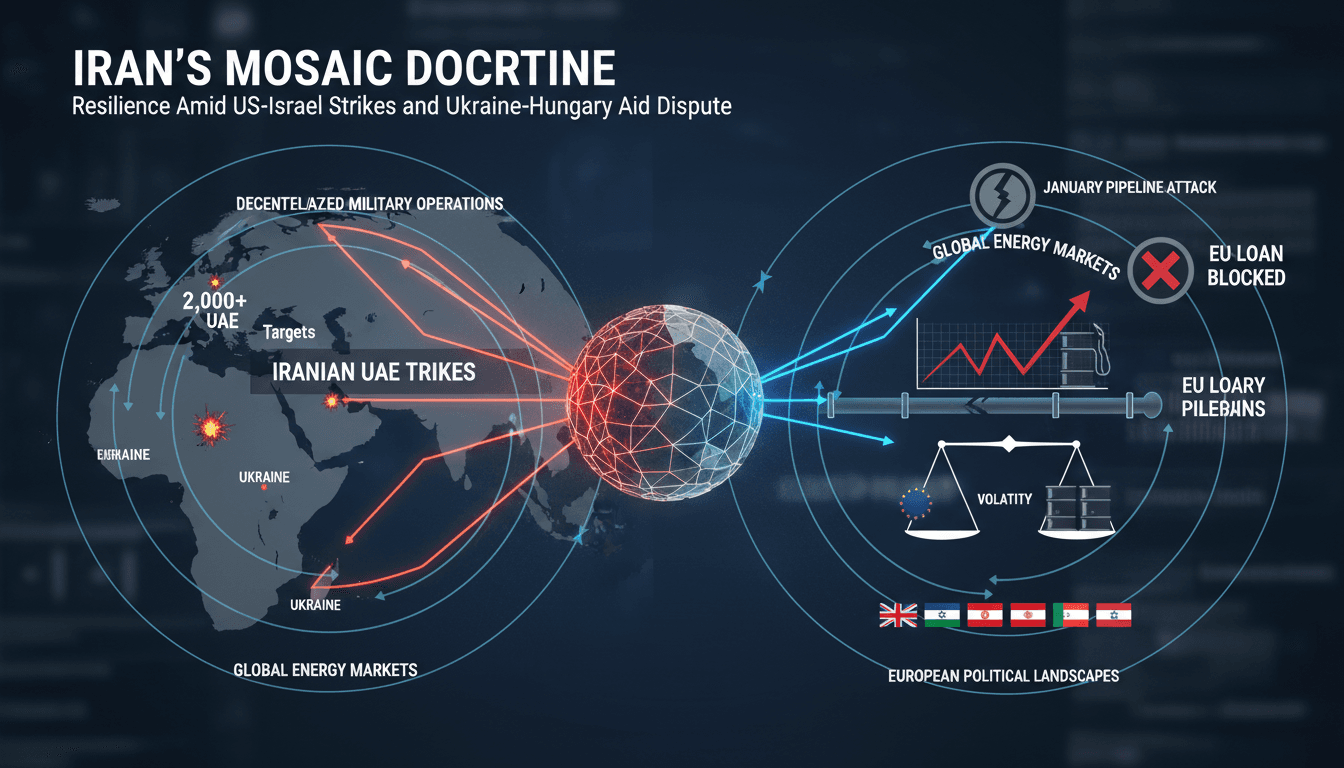
- Iran activated its 'Mosaic Doctrine' in response to US-Israel strikes, launching over 2,000 retaliatory strikes on Gulf energy facilities.
- Hungarian Prime Minister Viktor Orbán blocked a €90 billion EU loan to Ukraine amid rising tensions over a pipeline dispute, leveraging his position ahead of elections.
- The term 'Hungary-splaining' emerged to describe the government's media tactics that frame opposition as foreign-influenced, intensifying domestic political strife.
The context you actually need
- Iran's 'Mosaic Doctrine' was designed for decentralized military operations, allowing for resilience against leadership decapitation, particularly relevant in ongoing conflicts.
- The Ukraine-Hungary feud intensified after a Russian strike on the Druzhba pipeline, complicating EU aid and highlighting regional energy vulnerabilities.
- Media narratives in Hungary are increasingly dominated by pro-government messaging, affecting public perception and political discourse ahead of critical elections.
What's really happening
The geopolitical landscape is undergoing a significant transformation, driven by Iran's strategic military doctrine and the complex interplay of European politics. Iran's 'Mosaic Doctrine' allows for decentralized military operations, which has proven effective in the current US-Israel-Iran conflict that began on February 28, 2026. Following the assassination of key Iranian leaders, Iran retaliated with extensive drone and missile strikes on Gulf energy sites, including the UAE, which has experienced over 2,000 strikes since the conflict began. This aggressive response is not just a show of military might but a calculated strategy to maintain operational continuity despite leadership losses.
Simultaneously, the tensions between Ukraine and Hungary have escalated due to a blocked €90 billion EU loan, which Orbán leveraged to strengthen his political position ahead of Hungary's April elections. The backdrop of a January 2026 Russian strike on the Druzhba pipeline, which transports oil through Ukraine to Hungary, has exacerbated these tensions. Orbán's media strategy, characterized by 'Hungary-splaining,' aims to consolidate power by framing opposition narratives as foreign interference, thus rallying nationalistic sentiments among voters.
The implications of these events extend beyond regional politics. The conflict has triggered a spike in global oil prices, reaching $118 per barrel, as energy markets react to instability in the Gulf. This energy crisis is projected to displace over 1 million people in Lebanon, highlighting the humanitarian costs of geopolitical strife. Furthermore, the potential for a new 'Arab NATO' is emerging as Gulf states seek to reduce reliance on US military support, indicating a shift in regional alliances and security dynamics.
As these events unfold, the interconnectedness of global markets means that consumers and businesses worldwide will feel the impact. Rising energy costs could lead to inflationary pressures, affecting everything from transportation to production costs. The situation remains fluid, with the potential for further escalation or diplomatic resolutions that could reshape the geopolitical landscape.
Who feels it first (and how)
- Energy consumers: Increased fuel prices will directly impact household budgets and transportation costs.
- Businesses reliant on energy: Higher operational costs may lead to reduced profit margins and potential layoffs.
- Political analysts and strategists: The evolving narratives in Hungary and Ukraine will shape future electoral strategies and diplomatic relations.
- Residents of Gulf states: Frequent missile interceptions and heightened security measures will affect daily life and economic stability.
What to watch next
- Energy price fluctuations: Monitor global oil prices for signs of further increases or stabilization, as this will affect economic conditions worldwide.
- Hungarian elections: The outcome of the April elections could shift Hungary's stance within the EU and impact its relations with Ukraine.
- Iran's military responses: Keep an eye on Iran's military actions and any potential escalations in the Gulf, which could disrupt global energy supplies.
Iran's military doctrine allows for decentralized operations, making it resilient to leadership losses.
Energy prices will remain volatile as geopolitical tensions persist, affecting global markets.
The long-term impact of Hungary's electoral outcomes on EU relations and regional stability remains uncertain.
Frequently Asked Questions
- Why it matters?
- These developments are reshaping energy markets and diplomatic relations, which could lead to higher costs and instability in various sectors.
- What happened (in 30 seconds)?
- Iran activated its 'Mosaic Doctrine' in response to US-Israel strikes, launching over 2,000 retaliatory strikes on Gulf energy facilities. Hungarian Prime Minister Viktor Orbán blocked a €90 billion EU loan to Ukraine amid rising tensions over a pipeline dispute, leveraging his position ahead of elections. The term 'Hungary-splaining' emerged to describe the government's media tactics that frame opposition as foreign-influenced, intensifying domestic political strife.
- What's really happening?
- The geopolitical landscape is undergoing a significant transformation, driven by Iran's strategic military doctrine and the complex interplay of European politics. Iran's 'Mosaic Doctrine' allows for decentralized military operations, which has proven effective in the current US-Israel-Iran conflict that began on February 28, 2026. Following the assassination of key Iranian leaders, Iran retaliated with extensive drone and missile strikes on Gulf energy sites, including the UAE, which has experi
- Who feels it first (and how)?
- Energy consumers: Increased fuel prices will directly impact household budgets and transportation costs. Businesses reliant on energy: Higher operational costs may lead to reduced profit margins and potential layoffs. Political analysts and strategists: The evolving narratives in Hungary and Ukraine will shape future electoral strategies and diplomatic relations. Residents of Gulf states: Frequent missile interceptions and heightened security measures will affect daily life and economic st
- What to watch next?
- Energy price fluctuations: Monitor global oil prices for signs of further increases or stabilization, as this will affect economic conditions worldwide. Hungarian elections: The outcome of the April elections could shift Hungary's stance within the EU and impact its relations with Ukraine. Iran's military responses: Keep an eye on Iran's military actions and any potential escalations in the Gulf, which could disrupt global energy supplies.
European coverage of Middle East politics and security issues.
"France 24 offers international reporting with a European editorial perspective."
— A47 Editor
Iran: The ‘Mosaic Doctrine’, Zelensky V Orban, Hungary-splaining
The recent assassination of Ali Larijani, Iran's top security official, in an Israeli airstrike has escalated tensions between Iran and Israel, with Iran vowing retaliation. This incident follows a series of high-profile killings within Iran's regime...
24/7 international news from a French perspective in multiple languages.
"France 24 is viewed as a globally focused outlet with balanced coverage and a European perspective."
— A47 Editor
Iran: The ‘Mosaic Doctrine’, Zelensky V Orban, Hungary-splaining
The recent assassination of Ali Larijani, Iran's top security official, in an Israeli airstrike has escalated tensions between Iran and Israel, with Iran vowing retaliation. This incident follows a series of high-profile killings within Iran's regime...
Comprehensive coverage of global events, politics, and international issues.
"NBC News is a mainstream outlet known for comprehensive national and international coverage with a centrist to slightly left-leaning editorial tone."
— A47 Editor
Iranians attend a mass funeral for officials killed in the war
Iranians gathered for a mass funeral to honor Ali Larijani, the country's top security official, and other officials killed in an Israeli airstrike, marking a significant escalation in the ongoing conflict between Iran and Israel. The event reflects ...
International coverage from The Guardian's global desks.
"The Guardian is known for its progressive editorial stance and in-depth analysis."
— A47 Editor
US and Israel’s strategy to kill Iran’s top figures may prove counterproductive
Israel has escalated its military operations against Iran by authorizing the assassination of senior Iranian officials, including Ali Larijani, the country's top security chief, in a targeted airstrike. This move is part of a broader strategy aimed a...
English-language reporting on Saudi politics, policy, and society.
"Saudi Gazette reflects mainstream Saudi institutional perspectives."
— A47 Editor
Who was Ali Larijani? Key Iranian figure killed in Israeli strike
Ali Larijani, a prominent Iranian political figure and national security chief, was killed in an Israeli airstrike, marking a significant escalation in the ongoing conflict between Iran and Israel. Larijani had a long career in various key positions ...
Arabic political reporting and analysis.
"Arabic Post is a digital outlet focused on politics and regional affairs."
— A47 Editor
كيف يمكن لاغتيال القادة الإيرانيين أن يرتد على أمريكا و”إسرائيل”؟
On March 17, 2026, Israeli officials celebrated the assassination of Ali Larijani, the Secretary of the Iranian National Council, marking it as a significant intelligence achievement following the deaths of several key Iranian leaders, including Supr...
International coverage of politics, culture, and current affairs.
"BBC News is widely regarded as a reputable international news organization, known for its impartial tone and public service mandate."
— A47 Editor
Death of Ali Larijani deepens crisis at heart of Iran's leadership
The death of Ali Larijani, Iran's influential security chief, has been confirmed following an Israeli airstrike, marking a significant escalation in the ongoing conflict between Iran and Israel. Larijani was a key figure within the Iranian regime, kn...