
US Faces 10 Million Single-Family Housing Shortage According to White House Report
Here's what it means for you.
If you're in the housing market, expect continued pressure on prices and availability as regulatory hurdles complicate new construction.
Why it matters
The U.S. faces a critical housing shortage that could stifle economic growth and exacerbate affordability challenges for millions.
What happened (in 30 seconds)
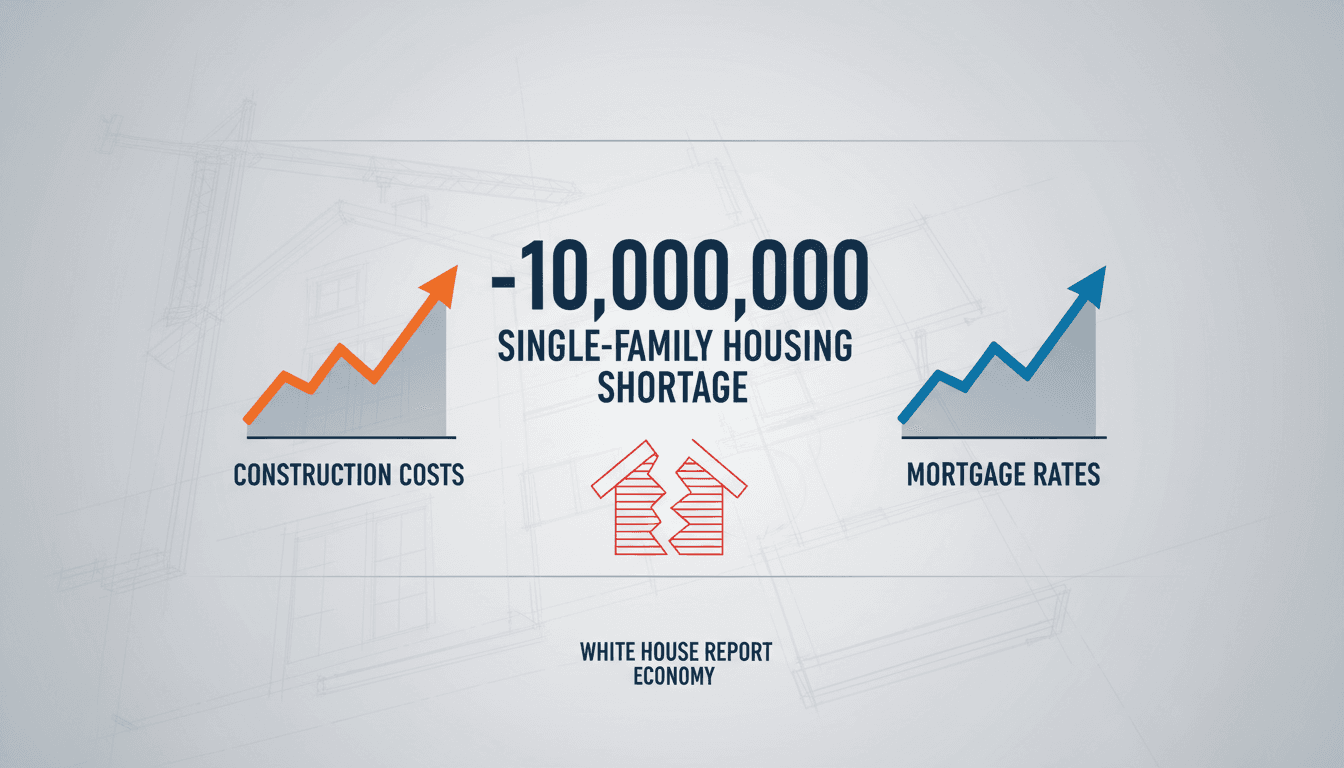
- On April 13, 2026, the White House Council of Economic Advisers reported a nationwide shortage of 10 million single-family homes due to years of underbuilding.
- Escalating home prices, which have surged 82% since 2000, are largely attributed to regulatory burdens and rising construction costs.
- President Trump proposed deregulation measures aimed at facilitating the construction of 13.2 million new homes, potentially boosting GDP and creating jobs.
The context you actually need
- Post-2008 financial crisis, single-family home construction plummeted, leading to a cumulative deficit of homes.
- Regulatory burdens, termed the 'bureaucrat tax,' add over $100,000 to the cost of each new home, while Biden-era green energy standards further inflate expenses.
- Current geopolitical tensions, particularly the Iran war, have driven mortgage rates up to 6.37%, intensifying affordability pressures for potential homebuyers.
What's really happening
The U.S. housing market is grappling with a significant structural imbalance, primarily stemming from a decade of underbuilding that began after the 2008 financial crisis. Historically, the U.S. has seen annual construction rates of 1.5 to 2 million single-family homes. However, post-crisis, these numbers dwindled, leading to a cumulative shortfall of 10 million homes by 2026. This deficit is not merely a statistical anomaly; it reflects a complex interplay of regulatory, economic, and geopolitical factors.
The White House Council of Economic Advisers attributes the housing shortage to what they term the 'bureaucrat tax,' which encompasses various regulatory burdens that inflate construction costs by over $100,000 per home. These costs arise from local zoning restrictions, evolving building codes, and compliance with federal standards, including those related to energy efficiency. The Biden administration's green energy mandates, while aimed at promoting sustainability, have added an estimated $31,000 to the cost of each unit, with long payback periods that deter builders.
In response to these challenges, President Trump has proposed a series of deregulation measures intended to stimulate housing construction. His administration's goal is to facilitate the building of 13.2 million new homes, which could potentially boost GDP growth by 1.3 percentage points annually and create 2 million jobs. However, these proposals come amid rising mortgage rates, which have surged due to geopolitical tensions, particularly the ongoing conflict in Iran. The increase in rates, now at 6.37%, has made homeownership less attainable for many, further complicating the housing landscape.
The mixed reactions to the report highlight the contentious nature of housing policy in the U.S. While some view deregulation as a necessary step to alleviate the housing crisis, others are skeptical, seeing it as a distraction from the core issues of supply and demand. The housing market's response has been cautious, with homebuilder stocks facing pressure from rising rates despite indications of a supply-demand imbalance.
Who feels it first (and how)
- Homebuyers: Facing higher prices and limited options, especially first-time buyers and low-to-middle-income families.
- Homebuilders: Struggling with increased costs and regulatory hurdles, impacting their ability to meet demand.
- Investors: Expatriate investors in regions like Dubai may reconsider U.S. real estate investments due to rising mortgage rates and geopolitical instability.
What to watch next
- Regulatory changes: Keep an eye on the implementation of proposed deregulation measures and their impact on construction timelines and costs.
- Mortgage rates: Monitor fluctuations in mortgage rates, particularly in relation to geopolitical events, as they directly affect affordability and buyer sentiment.
- Job creation: Watch for job growth in the construction sector as new housing initiatives are rolled out, which could signal a shift in the housing market dynamics.
The U.S. is facing a 10 million housing shortage, primarily in single-family homes.
Regulatory reforms will be proposed, but their implementation may be slow and contentious.
The long-term impact of rising mortgage rates on homebuyer demand and overall market stability.
Frequently Asked Questions
- Why it matters?
- The U.S. faces a critical housing shortage that could stifle economic growth and exacerbate affordability challenges for millions.
- What happened (in 30 seconds)?
- On April 13, 2026, the White House Council of Economic Advisers reported a nationwide shortage of 10 million single-family homes due to years of underbuilding. Escalating home prices, which have surged 82% since 2000, are largely attributed to regulatory burdens and rising construction costs. President Trump proposed deregulation measures aimed at facilitating the construction of 13.2 million new homes, potentially boosting GDP and creating jobs.
- What's really happening?
- The U.S. housing market is grappling with a significant structural imbalance, primarily stemming from a decade of underbuilding that began after the 2008 financial crisis. Historically, the U.S. has seen annual construction rates of 1.5 to 2 million single-family homes. However, post-crisis, these numbers dwindled, leading to a cumulative shortfall of 10 million homes by 2026. This deficit is not merely a statistical anomaly; it reflects a complex interplay of regulatory, economic, and geopoliti
- Who feels it first (and how)?
- Homebuyers: Facing higher prices and limited options, especially first-time buyers and low-to-middle-income families. Homebuilders: Struggling with increased costs and regulatory hurdles, impacting their ability to meet demand. Investors: Expatriate investors in regions like Dubai may reconsider U.S. real estate investments due to rising mortgage rates and geopolitical instability.
- What to watch next?
- Regulatory changes: Keep an eye on the implementation of proposed deregulation measures and their impact on construction timelines and costs. Mortgage rates: Monitor fluctuations in mortgage rates, particularly in relation to geopolitical events, as they directly affect affordability and buyer sentiment. Job creation: Watch for job growth in the construction sector as new housing initiatives are rolled out, which could signal a shift in the housing market dynamics.
Corporate leadership, finance, technology, and market trends.
"Fortune covers financial trends, leadership, and innovation with a pragmatic editorial approach."
— A47 Editor
Trump’s White House: America is short 10 million houses
The White House has reported a significant housing shortage in the United States, estimating a deficit of at least 10 million single-family homes. This shortage is attributed to ongoing supply constraints and is seen as a critical issue affecting the...
Global news coverage with extensive reporting on Middle Eastern conflicts and geopolitics.
"Al Jazeera is a Qatar-based broadcaster known for wide regional coverage and alternative perspectives."
— A47 Editor
New White House report has plans to fix US housing shortage of 10 million
A new report from the White House outlines a comprehensive plan to address the significant housing shortage in the United States, estimated at 10 million homes. The report emphasizes the importance of increased home construction to support the middle...
Comprehensive coverage of Middle Eastern and global issues.
"Al Jazeera is a prominent voice from the Global South, especially the Middle East, with an emphasis on underreported stories."
— A47 Editor
New White House report has plans to fix US housing shortage of 10 million
A new report from the White House outlines a comprehensive plan to address the significant housing shortage in the United States, which currently stands at 10 million homes. The report emphasizes the importance of increased home construction as a mea...
Macro commentary, policy analysis, growth/inflation themes, and global outlooks.
"Contextual macro coverage that complements day-to-day market headlines."
— A47 Editor
US housing shortage is at least 10 million single-family homes, White House says
The White House has reported that the United States is facing a housing shortage of at least 10 million single-family homes, highlighting significant challenges in the housing market. This shortage is exacerbated by ongoing supply constraints, which ...