
Trump Administration Plans to Punish NATO Allies Amid US-Iran Conflict Escalation
Here's what it means for you.
If you’re in the UAE or Europe, brace for economic shifts as geopolitical tensions reshape markets.
Why it matters
The escalating conflict between the US and Iran, coupled with NATO's internal strains, threatens global stability and economic performance.
What happened (in 30 seconds)
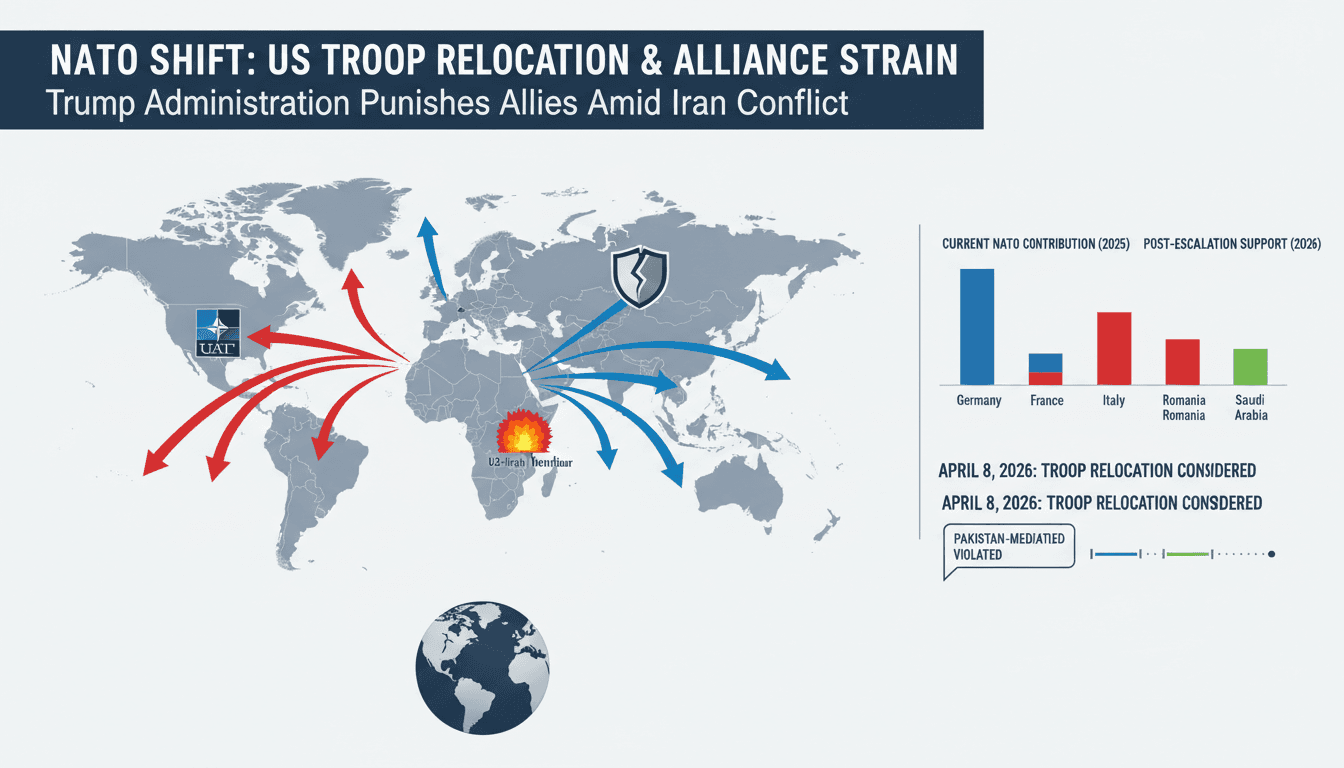
- On April 8, 2026, the Trump administration considered relocating US troops from select NATO allies due to insufficient support in the US-Iran conflict.
- Iran vowed revenge against Israel for airstrikes in Lebanon that resulted in civilian casualties, complicating the fragile ceasefire.
- NATO Secretary-General Mark Rutte visited Washington for urgent talks with President Trump amid rising tensions within the alliance.
The context you actually need
- The US-Iran war escalated after US and Israeli strikes on Iranian targets in February 2026, leading to Iranian retaliation and significant oil price surges.
- A two-week ceasefire was brokered by Pakistan, but it excluded proxy groups like Hezbollah, leading to accusations of violations by Iran.
- NATO allies such as Spain, Germany, and Italy have restricted US military operations, prompting threats from Trump to punish these nations by shifting US military resources.
What's really happening
The current geopolitical landscape is marked by a complex interplay of military strategy, economic interests, and international relations. The Trump administration's contemplation of troop relocations reflects deep frustrations with NATO allies who have not aligned with US military objectives in the ongoing US-Iran conflict. This dissatisfaction stems from perceived inadequacies in support from key NATO members, particularly Spain, Germany, and Italy, who have limited US military operations during the crisis.
The backdrop of this tension is the recent escalation of hostilities between the US and Iran, which began with targeted strikes against Iranian leadership and military assets. These actions prompted Iran to retaliate, leading to a closure of the Strait of Hormuz and a surge in global oil prices, which have now exceeded $120 per barrel. The economic ramifications of this conflict are significant, particularly for oil-dependent economies like the UAE, where stock markets have already lost $120 billion since the onset of hostilities.
The fragile ceasefire, while temporarily halting direct military engagement, is fraught with challenges. Iran's threats of revenge following Israeli airstrikes in Lebanon complicate the situation further. The International Committee of the Red Cross condemned these strikes, highlighting the civilian toll and raising humanitarian concerns. The US administration, represented by Vice President J.D. Vance, has characterized Iranian grievances as misunderstandings, yet the reality is that the situation remains volatile and precarious.
As NATO Secretary-General Rutte engages in high-level discussions with President Trump, the potential for troop relocations could reshape the alliance's dynamics, especially if the US follows through on its threats. This could lead to a reallocation of military resources towards Eastern Europe, impacting NATO's collective defense posture and regional security.
The implications of these developments extend beyond military strategy; they touch on economic stability, energy prices, and international relations. As tensions rise, the potential for broader conflict increases, which could disrupt global markets and lead to further economic fallout.
Who feels it first (and how)
- Investors in the UAE: Facing stock market volatility and economic uncertainty due to the conflict's impact on oil prices.
- NATO member states: Particularly those with restricted military cooperation with the US, facing potential troop relocations and shifts in defense strategy.
- Middle Eastern civilians: Directly affected by military actions and retaliatory threats, leading to humanitarian crises and increased instability.
What to watch next
- Troop relocation announcements: Monitor any decisions from the Trump administration regarding troop movements, as these will signal shifts in US-NATO relations.
- Iran's military responses: Pay attention to Iran's actions following Israeli strikes, which could escalate tensions and impact regional security.
- Oil price fluctuations: Watch for changes in oil prices, particularly if conflict escalates, as this will affect global markets and economies reliant on oil exports.
The US-Iran conflict is impacting global oil prices and regional stability.
NATO tensions will continue to rise as the US seeks greater alignment from its allies.
The long-term effects of troop relocations on NATO's collective defense and regional security dynamics.
Frequently Asked Questions
- Why it matters?
- The escalating conflict between the US and Iran, coupled with NATO's internal strains, threatens global stability and economic performance.
- What happened (in 30 seconds)?
- On April 8, 2026, the Trump administration considered relocating US troops from select NATO allies due to insufficient support in the US-Iran conflict. Iran vowed revenge against Israel for airstrikes in Lebanon that resulted in civilian casualties, complicating the fragile ceasefire. NATO Secretary-General Mark Rutte visited Washington for urgent talks with President Trump amid rising tensions within the alliance.
- What's really happening?
- The current geopolitical landscape is marked by a complex interplay of military strategy, economic interests, and international relations. The Trump administration's contemplation of troop relocations reflects deep frustrations with NATO allies who have not aligned with US military objectives in the ongoing US-Iran conflict. This dissatisfaction stems from perceived inadequacies in support from key NATO members, particularly Spain, Germany, and Italy, who have limited US military operations duri
- Who feels it first (and how)?
- Investors in the UAE: Facing stock market volatility and economic uncertainty due to the conflict's impact on oil prices. NATO member states: Particularly those with restricted military cooperation with the US, facing potential troop relocations and shifts in defense strategy. Middle Eastern civilians: Directly affected by military actions and retaliatory threats, leading to humanitarian crises and increased instability.
- What to watch next?
- Troop relocation announcements: Monitor any decisions from the Trump administration regarding troop movements, as these will signal shifts in US-NATO relations. Iran's military responses: Pay attention to Iran's actions following Israeli strikes, which could escalate tensions and impact regional security. Oil price fluctuations: Watch for changes in oil prices, particularly if conflict escalates, as this will affect global markets and economies reliant on oil exports.
Global news coverage with extensive reporting on Middle Eastern conflicts and geopolitics.
"Al Jazeera is a Qatar-based broadcaster known for wide regional coverage and alternative perspectives."
— A47 Editor
Trump administration signals it is mulling NATO withdrawal after Iran war
The Trump administration is contemplating a withdrawal from NATO following dissatisfaction with European allies' contributions to the military efforts in Iran. President Trump has expressed frustration over the lack of support from NATO countries ami...
Comprehensive coverage of Middle Eastern and global issues.
"Al Jazeera is a prominent voice from the Global South, especially the Middle East, with an emphasis on underreported stories."
— A47 Editor
Trump administration signals it is mulling NATO withdrawal after Iran war
The Trump administration is contemplating a withdrawal from NATO following dissatisfaction with European allies' contributions to the military efforts in Iran. President Trump has expressed frustration over the lack of support from NATO countries ami...