
Policymakers Warn of Underestimated Economic Fallout from Iran War
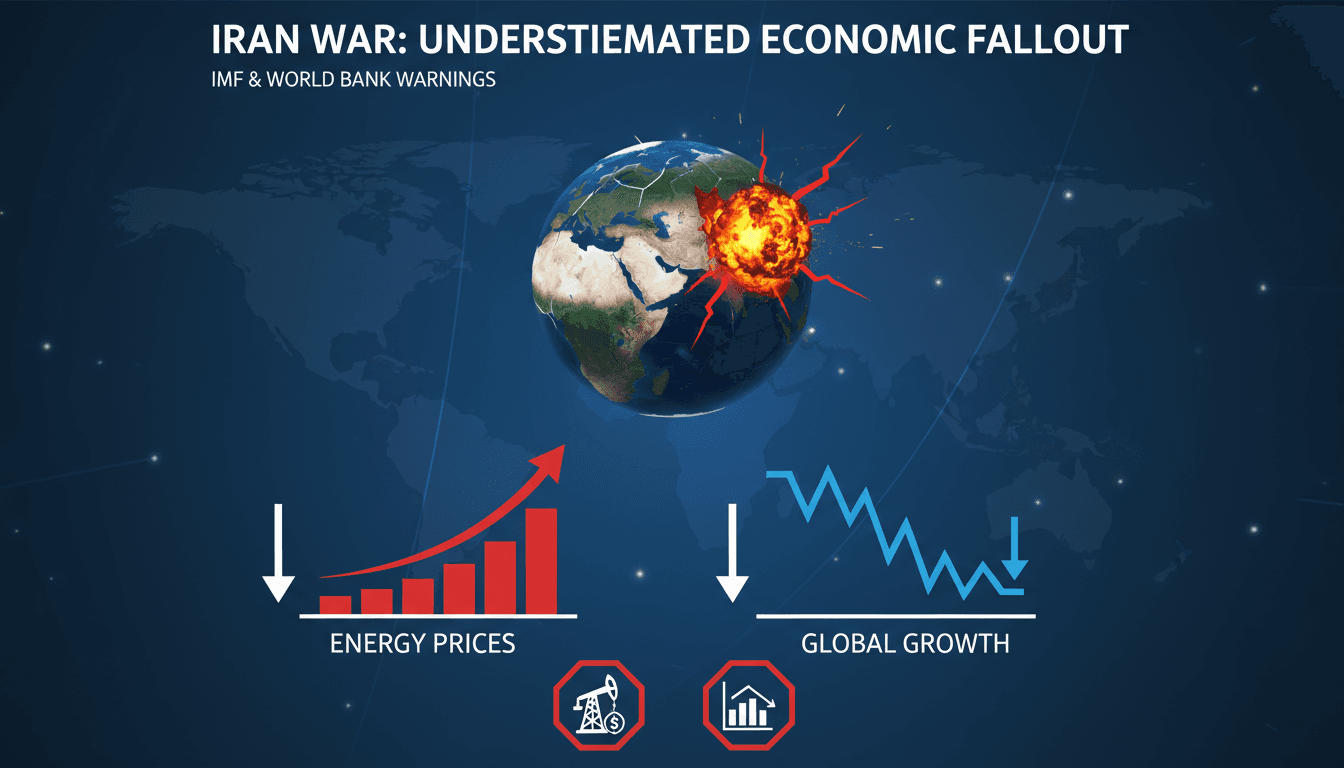
Here's what it means for you.
If you're invested in global markets or reliant on energy prices, the ongoing Iran war could significantly impact your financial outlook.
Why it matters
Policymakers are signaling that current market optimism may overlook the long-term economic disruptions caused by the Iran war.
What happened (in 30 seconds)
- On April 15, 2026, IMF and World Bank officials warned that financial markets are underestimating the enduring economic impacts of the Iran war.
- The conflict, which began on February 28, has led to significant disruptions in energy supply and trade routes, with oil prices surging to around $96 per barrel.
- Despite a temporary ceasefire, markets remain buoyant, but policymakers caution that structural changes could lead to worsening global economic conditions.
The context you actually need
- The 2026 Iran War started with U.S. and Israeli military actions, resulting in the closure of the Strait of Hormuz and damage to hydrocarbon infrastructure.
- Global energy prices have surged, with the IMF downgrading the 2026 global growth forecast to 3.1%, down from 3.4% pre-war.
- Dubai's stock markets have lost $120 billion in capitalization since the war began, highlighting the regional economic impact.
What's really happening
The 2026 Iran War has triggered a series of economic shocks that are reverberating through global markets. The conflict began with U.S. and Israeli military strikes on Iran, which led to the closure of the Strait of Hormuz—a critical chokepoint for global oil shipments. This closure has not only disrupted energy supplies but has also caused significant damage to hydrocarbon infrastructure, leading to a surge in oil prices. As of mid-April 2026, oil prices have reached approximately $96 per barrel, doubling natural gas costs in regions like Europe and exacerbating inflation risks in import-dependent economies.
Policymakers at the IMF and World Bank have expressed concern that investors are too complacent about the long-term economic repercussions of this conflict. During the Spring Meetings in Washington, D.C., key figures such as IMF Chief Economist Pierre-Olivier Gourinchas and World Bank President Ajay Banga highlighted the structural changes that could persist even after a ceasefire. They warned that the global economy is drifting toward adverse scenarios if disruptions continue, with the IMF downgrading its global growth forecast for 2026 to 3.1%.
Despite these warnings, many investors have dismissed the potential for prolonged economic fallout. U.S. stocks have rallied near all-time highs, buoyed by a temporary easing of oil prices following a partial reopening of the Strait of Hormuz. U.S. Treasury Secretary Scott Bessent characterized the IMF's warnings as an overreaction, expressing confidence in a swift normalization of prices. However, this optimism may be misplaced, as the underlying structural issues—such as elevated energy costs and elongated trade routes—remain unresolved.
The economic landscape is further complicated by the aftermath of the 2022 Russia-Ukraine war, which had already strained global supply chains and energy markets. The current conflict has amplified these vulnerabilities, leading to a precarious situation for economies reliant on stable energy prices. As the war continues, the potential for further disruptions looms large, and the implications for global economic stability are profound.
Who feels it first (and how)
- Investors: Those in energy and commodities markets may experience volatility and uncertainty in asset values.
- Consumers: Households in import-dependent economies will face rising costs of living due to increased energy prices.
- Tourism sectors: Regions like Dubai, heavily reliant on tourism, will see disruptions from flight cancellations and reduced travel.
- Governments: Nations may struggle with fiscal strains as they seek emergency funding to stabilize their economies.
What to watch next
- Energy prices: Monitor fluctuations in oil and gas prices, as sustained high prices could lead to broader economic instability.
- Global growth forecasts: Keep an eye on updates from the IMF and World Bank regarding growth projections, particularly in light of ongoing geopolitical tensions.
- Market reactions: Watch for shifts in investor sentiment, especially if economic indicators begin to reflect the warnings from policymakers.
The Iran war has caused significant disruptions in energy supply and trade routes.
Continued volatility in global markets as investors reassess risks associated with the conflict.
The duration of the war and its long-term economic impacts on global growth.
Frequently Asked Questions
- Why it matters?
- Policymakers are signaling that current market optimism may overlook the long-term economic disruptions caused by the Iran war.
- What happened (in 30 seconds)?
- On April 15, 2026, IMF and World Bank officials warned that financial markets are underestimating the enduring economic impacts of the Iran war. The conflict, which began on February 28, has led to significant disruptions in energy supply and trade routes, with oil prices surging to around $96 per barrel. Despite a temporary ceasefire, markets remain buoyant, but policymakers caution that structural changes could lead to worsening global economic conditions.
- What's really happening?
- The 2026 Iran War has triggered a series of economic shocks that are reverberating through global markets. The conflict began with U.S. and Israeli military strikes on Iran, which led to the closure of the Strait of Hormuz—a critical chokepoint for global oil shipments. This closure has not only disrupted energy supplies but has also caused significant damage to hydrocarbon infrastructure, leading to a surge in oil prices. As of mid-April 2026, oil prices have reached approximately $96 per barre
- Who feels it first (and how)?
- Investors: Those in energy and commodities markets may experience volatility and uncertainty in asset values. Consumers: Households in import-dependent economies will face rising costs of living due to increased energy prices. Tourism sectors: Regions like Dubai, heavily reliant on tourism, will see disruptions from flight cancellations and reduced travel. Governments: Nations may struggle with fiscal strains as they seek emergency funding to stabilize their economies.
- What to watch next?
- Energy prices: Monitor fluctuations in oil and gas prices, as sustained high prices could lead to broader economic instability. Global growth forecasts: Keep an eye on updates from the IMF and World Bank regarding growth projections, particularly in light of ongoing geopolitical tensions. Market reactions: Watch for shifts in investor sentiment, especially if economic indicators begin to reflect the warnings from policymakers.
Global markets, investing, and macroeconomics from a premier financial newsroom.
"Bloomberg is respected for in-depth financial reporting and data-driven analysis."
— A47 Editor
Markets Are Too Blasé on War’s Economic Toll, Policymakers Warn
The International Monetary Fund (IMF) and World Bank have expressed concerns that investors are underestimating the economic repercussions of the ongoing war in Iran. During their spring meetings, they highlighted a significant downgrade in global gr...
Capitol Hill news, legislation, and policy insight.
"The Hill specializes in U.S. politics and policy, with a focus on Capitol Hill developments and a reputation for insider reporting."
— A47 Editor
IMF warns Iran War could lead to recession — even with quick end
The International Monetary Fund (IMF) has issued a stark warning that the ongoing conflict in Iran could lead to a global recession, even if the war ends swiftly. This situation arises from the potential economic fallout, including rising inflation a...
UAE-based English-language newspaper covering regional politics, economics, and global affairs.
"The National reflects Emirati policy perspectives while maintaining international editorial standards."
— A47 Editor
‘We must brace for tough times,’ IMF chief says on Iran war effects
The International Monetary Fund (IMF) chief Kristalina Georgieva has warned of impending economic difficulties due to the ongoing war in Iran, emphasizing the need for preparedness as global inflation and oil prices rise.
Macro commentary, policy analysis, growth/inflation themes, and global outlooks.
"Contextual macro coverage that complements day-to-day market headlines."
— A47 Editor
IMF cuts growth outlook, warns world already drifting toward more adverse scenario
The International Monetary Fund (IMF) has revised its global growth forecast for 2026, lowering it to 3.1% from 3.3%, primarily due to the ongoing conflict in Iran, which has disrupted energy supplies and economic momentum.