
Circle Launches USDC Bridge for Cross-Chain Transfers Across EVM-Compatible Blockchains
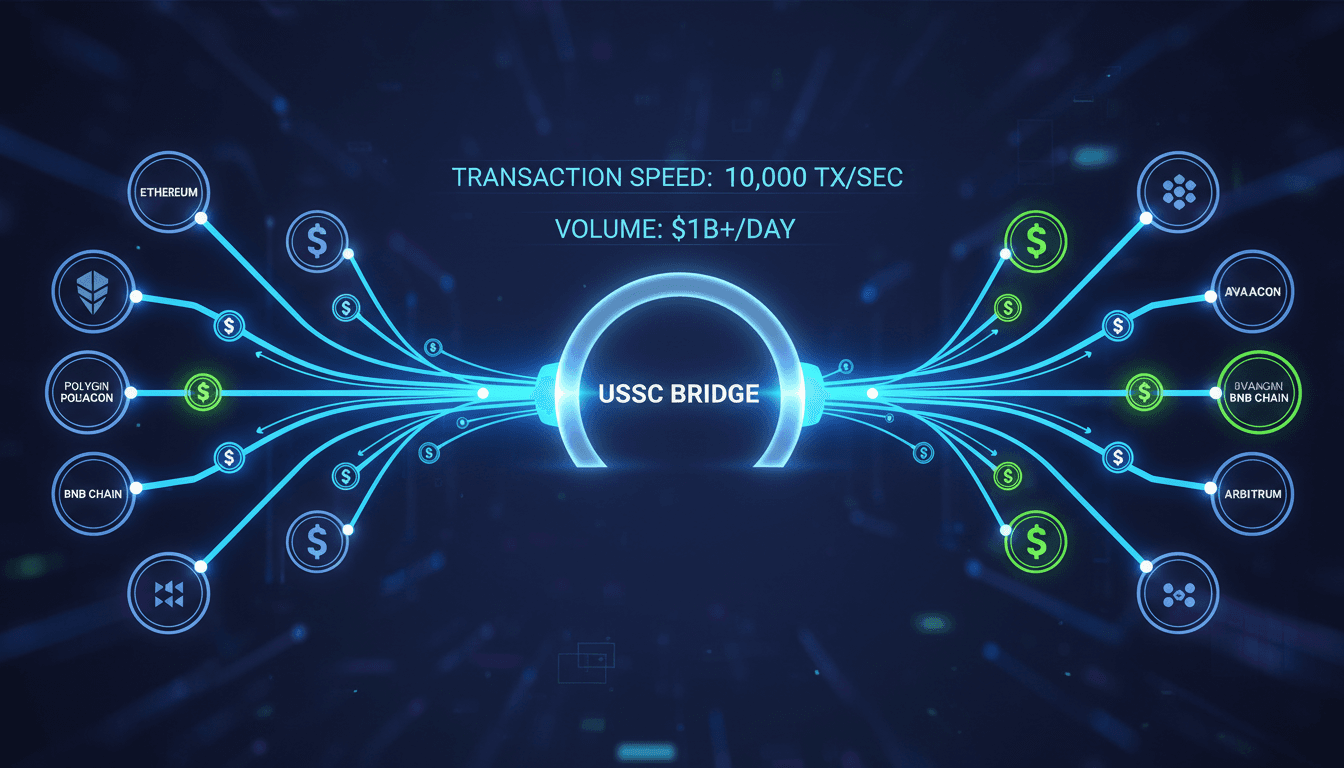
Here's what it means for you.
If you engage in cryptocurrency transactions, the new USDC Bridge simplifies how you move stablecoins across various blockchain networks.
Why it matters
This launch enhances liquidity and efficiency in the decentralized finance (DeFi) ecosystem, making USDC a more competitive option against other stablecoins.
What happened (in 30 seconds)
- Circle launched the USDC Bridge on April 17, 2026, enabling direct transfers of USDC across EVM-compatible blockchains.
- Initial activity exceeded $600 million in volume within the first 24 hours, indicating strong market demand.
- The bridge operates without protocol fees, only charging on-chain gas, streamlining the transfer process for users.
The context you actually need
- Cross-chain transfers previously relied on third-party solutions, which fragmented liquidity and increased transaction complexity.
- Circle's Cross-Chain Transfer Protocol (CCTP), introduced in 2023, has already processed over $140 billion in volume across more than 20 chains.
- The USDC Bridge utilizes CCTP V2, which offers enhanced finality and automated actions, making it easier for wallets and decentralized applications (dApps) to adopt.
What's really happening
Circle's launch of the USDC Bridge marks a significant evolution in the way stablecoins can be transferred across different blockchain networks. Prior to this, users had to rely on third-party bridges or wrapped tokens, which often led to liquidity fragmentation and increased transaction costs. The introduction of the USDC Bridge allows for native 1:1 transfers of USDC, eliminating the need for wrapped tokens and manual routing.
The bridge is powered by Circle's Cross-Chain Transfer Protocol (CCTP) V2, which enhances the efficiency and reliability of cross-chain transactions. This protocol has already demonstrated its effectiveness, processing over $140 billion in volume since its initial rollout in 2023. By providing a direct interface for users, Circle aims to streamline the transfer process, making it more accessible for wallets, dApps, and protocols.
The immediate uptake of the USDC Bridge, with over $600 million processed in just 24 hours, underscores the demand for a more efficient transfer mechanism. Users are drawn to the simplicity and transparency of the bridge, which charges no protocol fees beyond standard on-chain gas costs. This positions USDC as a more attractive option compared to competitors like Tether (USDT), particularly in the EVM ecosystem.
However, the launch has not been without criticism. Some users have expressed concerns about the centralization of the bridge, as it is operated directly by Circle. Additionally, there are calls for support for non-EVM networks, such as Solana and Algorand, to broaden the bridge's utility. Despite these critiques, the USDC Bridge is likely to enhance USDC's competitiveness in the market, particularly as it integrates further into the growing DeFi landscape.
Circle's regulatory achievements in the UAE, including recognition of USDC as a compliant crypto token, further bolster the bridge's potential. This regulatory clarity allows Dubai residents to leverage the USDC Bridge effectively, enhancing participation in DeFi and stablecoin utility within the Dubai International Financial Centre (DIFC) and Abu Dhabi Global Market (ADGM) frameworks.
Who feels it first (and how)
- Crypto traders: Benefit from faster and cheaper transfers across multiple networks.
- DeFi developers: Gain access to a more efficient stablecoin for their applications, enhancing liquidity.
- Investors in Dubai: Leverage regulatory clarity to utilize USDC in a compliant manner, boosting local crypto engagement.
What to watch next
- Adoption rates of the USDC Bridge: Monitoring transaction volumes will indicate how quickly users are shifting to this new system.
- Expansion plans for non-EVM support: If Circle announces support for additional blockchains, it could significantly broaden the bridge's user base.
- Market reactions to USDC vs. USDT: Observing shifts in liquidity and market share between these stablecoins will reveal the bridge's impact on competitive dynamics.
The USDC Bridge is live and operational, processing significant transaction volumes.
Increased adoption of USDC in DeFi applications as a result of the bridge's efficiency.
How Circle will address concerns regarding centralization and support for non-EVM networks.
Frequently Asked Questions
- Why it matters?
- This launch enhances liquidity and efficiency in the decentralized finance (DeFi) ecosystem, making USDC a more competitive option against other stablecoins.
- What happened (in 30 seconds)?
- Circle launched the USDC Bridge on April 17, 2026, enabling direct transfers of USDC across EVM-compatible blockchains. Initial activity exceeded $600 million in volume within the first 24 hours, indicating strong market demand. The bridge operates without protocol fees, only charging on-chain gas, streamlining the transfer process for users.
- What's really happening?
- Circle's launch of the USDC Bridge marks a significant evolution in the way stablecoins can be transferred across different blockchain networks. Prior to this, users had to rely on third-party bridges or wrapped tokens, which often led to liquidity fragmentation and increased transaction costs. The introduction of the USDC Bridge allows for native 1:1 transfers of USDC, eliminating the need for wrapped tokens and manual routing. The bridge is powered by Circle's Cross-Chain Transfer Protocol (C
- Who feels it first (and how)?
- Crypto traders: Benefit from faster and cheaper transfers across multiple networks. DeFi developers: Gain access to a more efficient stablecoin for their applications, enhancing liquidity. Investors in Dubai: Leverage regulatory clarity to utilize USDC in a compliant manner, boosting local crypto engagement.
- What to watch next?
- Adoption rates of the USDC Bridge: Monitoring transaction volumes will indicate how quickly users are shifting to this new system. Expansion plans for non-EVM support: If Circle announces support for additional blockchains, it could significantly broaden the bridge's user base. Market reactions to USDC vs. USDT: Observing shifts in liquidity and market share between these stablecoins will reveal the bridge's impact on competitive dynamics.
Covers Bitcoin plus altcoin news, market updates, and educational resources.
"Bitcoin.com provides news, market data, and guides focused on Bitcoin and the wider crypto industry."
— A47 Editor
Circle Launches USDC Bridge for Native Cross-Chain Transfers Across EVM Networks
Circle has launched the USDC Bridge, a new infrastructure designed to facilitate native cross-chain transfers across Ethereum Virtual Machine (EVM) networks, enhancing its Cross-Chain Transfer Protocol (CCTP). This initiative aims to streamline on-ch...
Covers blockchain, cryptocurrency news, project analysis, and market insights.
"Cointelegraph is a leading crypto-focused media outlet known for timely news, analysis, and educational content related to blockchain and digital assets."
— A47 Editor
Circle unveils USDC Bridge for native cross-chain stablecoin transfers
Circle has launched the USDC Bridge, enhancing its Cross-Chain Transfer Protocol to facilitate native cross-chain stablecoin transfers, which currently see over $500 million in USDC transactions daily. This new infrastructure aims to streamline on-ch...
Real-time updates, analysis, and reports on the blockchain and cryptocurrency sectors.
"Crypto News delivers real-time updates, analysis, and reports on the blockchain and cryptocurrency sectors."
— A47 Editor
Circle quietly wires USDC into crypto’s new settlement spine
Circle has introduced its new USDC Bridge, designed to streamline cross-chain transfers by creating a unified backend infrastructure for on-chain dollar transactions, effectively replacing fragmented systems with a single ledger experience managed en...