
Gold Prices Drop as Investors Await Trump Deadline for Iran's Strait of Hormuz Reopening
Here's what it means for you.
If you're invested in commodities or energy markets, understanding gold's volatility can help you navigate potential risks and opportunities.
Why it matters
Gold prices are a key indicator of market sentiment, particularly amid geopolitical tensions, which can affect global investment strategies.
What happened (in 30 seconds)
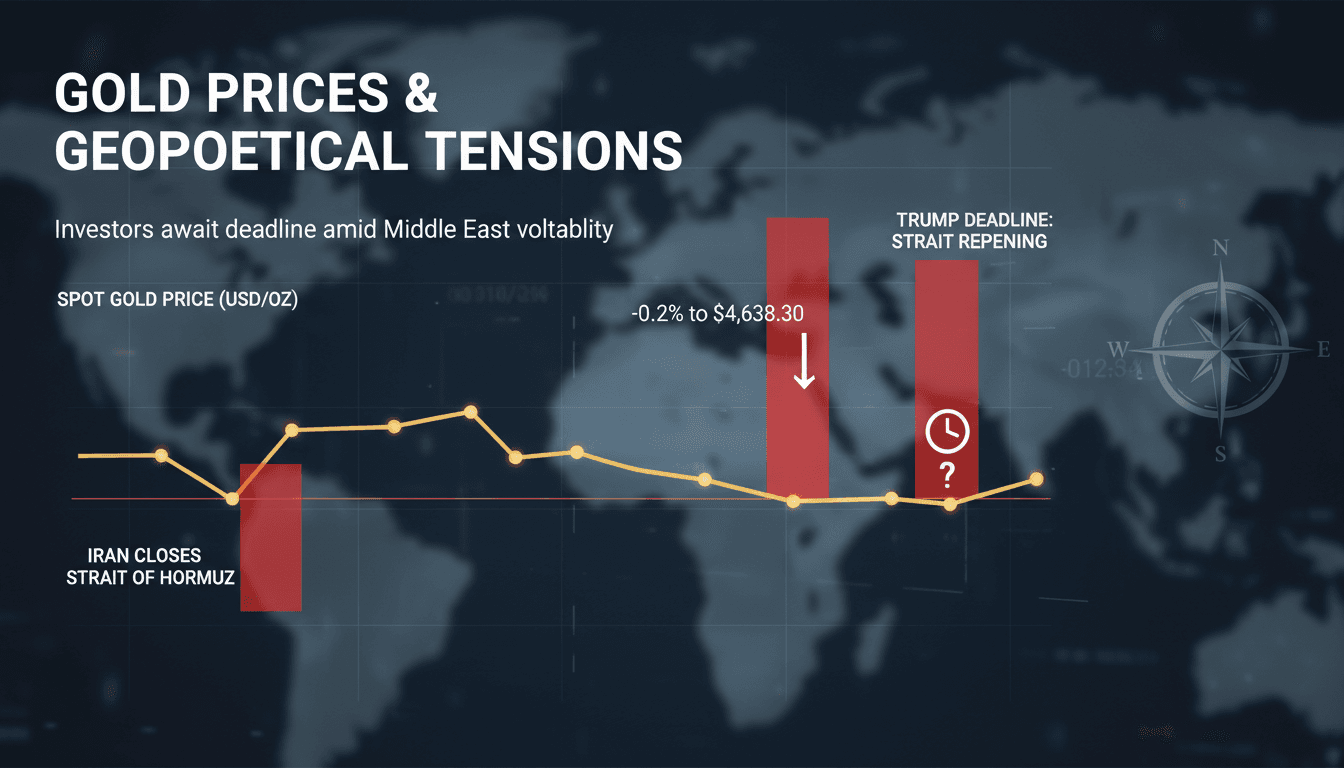
- Spot gold prices fell 0.2% to $4,638.30 per ounce on April 8, 2026, as investors reacted to U.S.-Iran tensions.
- The U.S. government set a deadline for Iran to reopen the Strait of Hormuz, a critical shipping route for oil and gas.
- President Trump extended the deadline by two weeks following mediation efforts, leading to a temporary stabilization in gold prices.
The context you actually need
- Escalating tensions began after U.S.-Israeli strikes on Iran on February 28, 2026, prompting Iran to close the Strait of Hormuz, disrupting 20% of global oil and gas supplies.
- Gold initially surged as a safe-haven asset but faced profit-taking and mixed signals as the deadline approached.
- Dubai's gold souk, a global trading hub, reflected the decline, with local investors showing increased caution due to regional instability.
What's really happening
The recent decline in gold prices is intricately linked to geopolitical developments, particularly the U.S.-Iran tensions surrounding the Strait of Hormuz. This vital shipping route is critical for global oil and gas supplies, and its closure by Iran has sent shockwaves through international markets. The U.S. government, led by President Trump, has issued multiple ultimatums to Iran, demanding the reopening of the strait or facing military action. This has created a climate of uncertainty, prompting investors to react cautiously.
Initially, gold prices surged as investors sought safe-haven assets amid fears of military escalation. However, as the April 8 deadline approached, market sentiment shifted. The price of gold peaked near $4,700 per ounce before retreating to $4,638.30, reflecting a 0.2% decline. This fluctuation is indicative of profit-taking behavior among traders who often capitalize on volatility. The mixed signals from the U.S. administration, including the extension of deadlines and negotiations, have further complicated the market landscape.
The extension of the deadline by two weeks, following a Pakistan-brokered proposal, has provided temporary relief to the markets. This ceasefire contingent on the reopening of the Strait of Hormuz has led to a stabilization of gold prices, but the underlying tensions remain unresolved. Investors are now closely monitoring the situation, as any further escalation could lead to renewed volatility in gold and other commodities.
In Dubai, the local gold market mirrors these global trends. The decline in spot gold prices has led to a corresponding drop in 24K gold rates, affecting local traders and investors who are particularly sensitive to geopolitical developments due to their proximity to the Strait of Hormuz. As a result, many are adopting a wait-and-see approach, reflecting the cautious sentiment prevalent in global markets.
Who feels it first (and how)
- Commodity traders: They experience immediate impacts on trading volumes and price volatility.
- Investors in gold and energy sectors: They face potential losses or gains based on market fluctuations.
- UAE local businesses: They may see reduced consumer spending as uncertainty affects investor confidence.
What to watch next
- U.S.-Iran negotiations: Continued talks or breakdowns could lead to further market volatility, impacting gold prices and investor sentiment.
- Global oil supply chain stability: Any disruptions in oil supply due to geopolitical tensions will likely influence gold as a safe-haven asset.
- Market reactions to economic indicators: Watch for shifts in U.S. economic data that could affect investor confidence and commodity prices.
Gold prices are sensitive to geopolitical tensions and market sentiment.
Continued volatility in gold prices as the U.S.-Iran situation evolves.
The long-term implications of the ceasefire on regional stability and global markets.
Frequently Asked Questions
- Why it matters?
- Gold prices are a key indicator of market sentiment, particularly amid geopolitical tensions, which can affect global investment strategies.
- What happened (in 30 seconds)?
- Spot gold prices fell 0.2% to $4,638.30 per ounce on April 8, 2026, as investors reacted to U.S.-Iran tensions. The U.S. government set a deadline for Iran to reopen the Strait of Hormuz, a critical shipping route for oil and gas. President Trump extended the deadline by two weeks following mediation efforts, leading to a temporary stabilization in gold prices.
- What's really happening?
- The recent decline in gold prices is intricately linked to geopolitical developments, particularly the U.S.-Iran tensions surrounding the Strait of Hormuz. This vital shipping route is critical for global oil and gas supplies, and its closure by Iran has sent shockwaves through international markets. The U.S. government, led by President Trump, has issued multiple ultimatums to Iran, demanding the reopening of the strait or facing military action. This has created a climate of uncertainty, promp
- Who feels it first (and how)?
- Commodity traders: They experience immediate impacts on trading volumes and price volatility. Investors in gold and energy sectors: They face potential losses or gains based on market fluctuations. UAE local businesses: They may see reduced consumer spending as uncertainty affects investor confidence.
- What to watch next?
- U.S.-Iran negotiations: Continued talks or breakdowns could lead to further market volatility, impacting gold prices and investor sentiment. Global oil supply chain stability: Any disruptions in oil supply due to geopolitical tensions will likely influence gold as a safe-haven asset. Market reactions to economic indicators: Watch for shifts in U.S. economic data that could affect investor confidence and commodity prices.
Arabic-language digital news outlet covering UAE, regional, and international developments with broad general-news coverage.
"Al Ain News coverage typically blends UAE-focused reporting with wider Arab regional and international news."
— A47 Editor
سعر الذهب اليوم.. ينخفض وسط ترقب حذر قبيل انتهاء مهلة ترامب لإيران
Gold prices experienced a slight decline on Tuesday as investors maintained a cautious stance ahead of the deadline set by U.S. President Donald Trump for Iran to reopen the Strait of Hormuz. This situation reflects ongoing geopolitical tensions that...
Pan-Arab news coverage spanning politics, business, sports, and regional affairs.
"Asharq Al-Awsat reflects a broad Arab editorial perspective with strong attention to regional geopolitics."
— A47 Editor
الذهب مستقر مع استمرار حذر الأسواق في ظل مهلة ترمب بشأن إيران
Gold prices remained stable on Tuesday ahead of the deadline set by U.S. President Donald Trump for reopening the Strait of Hormuz. This situation reflects the cautious sentiment prevailing in the markets as traders await further developments regardi...
Arabic-language UAE newspaper coverage focused on domestic affairs, public institutions, business, society, and regional developments.
"Al Khaleej coverage generally reflects a mainstream UAE editorial lens with strong attention to public affairs, institutions, and regional developments."
— A47 Editor
الذهب يستقر عند 4650 دولاراً للأونصة في بداية تعاملات اليوم الثلاثاء
Gold prices stabilized at $4,650 per ounce on Tuesday as investors remained cautious ahead of the deadline set by U.S. President Donald Trump for Iran to reopen the Strait of Hormuz. This situation reflects ongoing geopolitical tensions that can sign...