
Foreign Investors Reverse Course with $18.65 Billion Net Purchase of Japanese Stocks
Here's what it means for you.
As global markets stabilize, your investment opportunities may expand, particularly in emerging markets like Japan.
Why it matters
This influx of foreign capital signals a renewed confidence in Japanese equities, which could influence global market dynamics.
What happened (in 30 seconds)
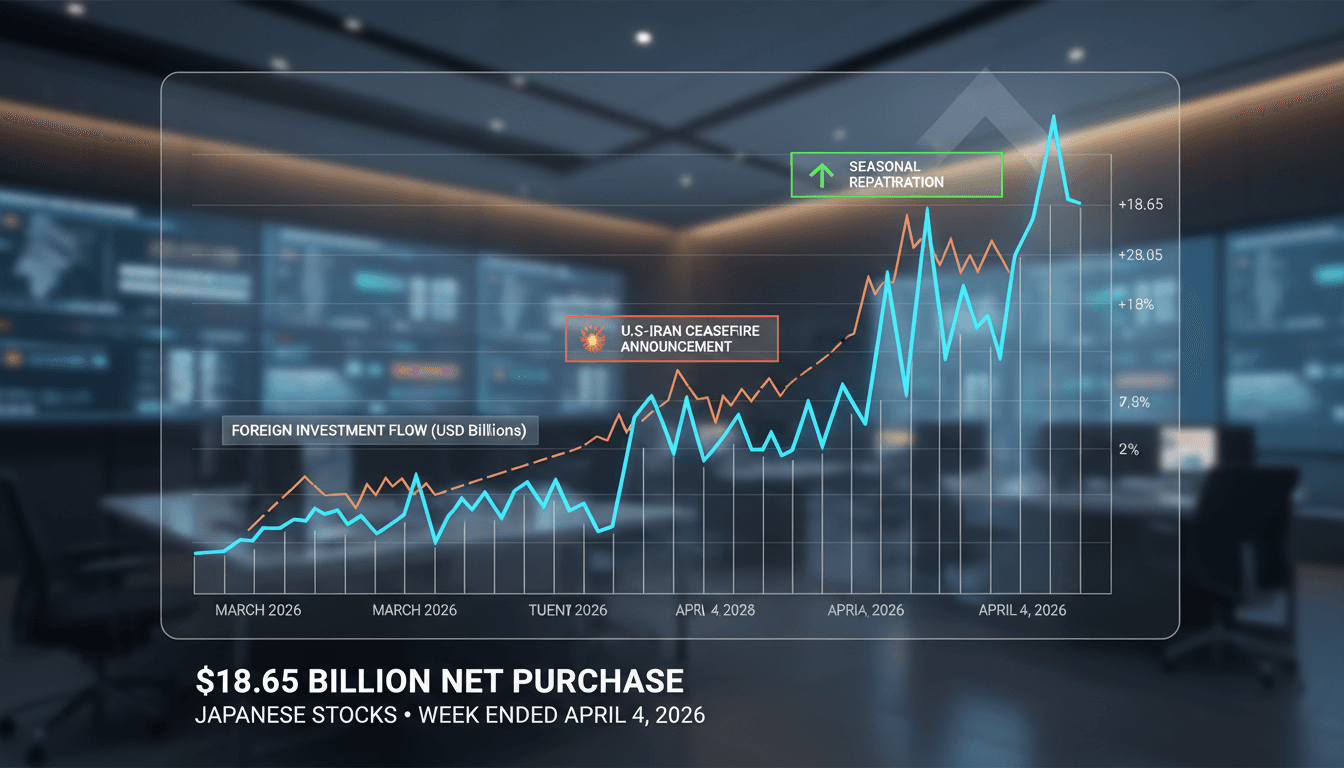
- Foreign investors net purchased 2.96 trillion yen ($18.65 billion) in Japanese stocks for the week ended April 4, 2026, reversing three weeks of net selling.
- The Nikkei 225 index surged 5.39% on April 8, following the announcement of a U.S.-Iran ceasefire, reflecting improved market sentiment.
- Japanese investors net bought 1.44 trillion yen in foreign stocks, indicating a shift in investment strategies amid stabilizing geopolitical conditions.
The context you actually need
- Geopolitical stabilization: The recent U.S.-Iran ceasefire alleviated prior risk-off sentiment that had led to significant selling in March.
- Seasonal factors: Foreign institutions typically repatriate holdings to Japan in April after shifting them offshore in March for voting rights and dividends.
- Market dynamics: The inflow of foreign capital not only supports the Japanese stock market but also affects global risk appetite, influencing other markets like the UAE.
What's really happening
The recent surge in foreign investment into Japanese equities is a significant turnaround from the previous three weeks of net selling, which totaled 7.37 trillion yen in March 2026. This selling was largely driven by heightened geopolitical tensions surrounding the Iran conflict, which prompted investors to adopt a risk-averse stance. However, the announcement of a ceasefire between the U.S. and Iran has shifted market sentiment, allowing investors to reassess their positions in Japan.
The reported net purchase of 2.96 trillion yen ($18.65 billion) by foreign investors during the week ended April 4, 2026, represents a critical moment for the Japanese market. This inflow not only reversed nearly two-thirds of the previous week's outflow of 4.45 trillion yen but also coincided with a notable rally in the Nikkei 225 index, which surged by 5.39% on April 8. This rally reflects a broader recovery in investor confidence, suggesting that the geopolitical stabilization has had a tangible impact on market dynamics.
Additionally, the inflow of foreign capital is complemented by a simultaneous increase in purchases of Japanese long-term bonds, amounting to 2.46 trillion yen, as rising yields attract investors seeking stable returns. This dual movement in equities and bonds indicates a comprehensive recovery in market sentiment, driven by both domestic and international factors.
The seasonal aspect of this investment trend cannot be overlooked. Historically, foreign institutions tend to shift their holdings offshore in March, primarily for voting rights and dividend collection, before repatriating them in April. This cyclical behavior aligns with the current influx of capital, reinforcing the notion that market movements are often influenced by predictable seasonal patterns.
Overall, the combination of geopolitical stabilization, seasonal repatriation, and a renewed appetite for Japanese equities has created a conducive environment for foreign investment. This trend not only benefits the Japanese market but also has implications for global investors, particularly those with exposure to emerging markets.
Who feels it first (and how)
- Foreign investors: They gain immediate access to a recovering market, potentially increasing their returns.
- Japanese corporations: Companies may see increased stock prices, enhancing their market capitalizations and investor confidence.
- UAE investors: With sovereign wealth funds diversifying portfolios, they may benefit from the rising tide of Japanese equities.
What to watch next
- Geopolitical developments: Continued stability in U.S.-Iran relations will be crucial for maintaining investor confidence in Japanese stocks.
- Market performance indicators: Watch the Nikkei 225 and foreign bond inflows for signs of sustained investment momentum.
- Seasonal investment patterns: Monitor how foreign institutions adjust their holdings in the coming months, as this could signal shifts in market sentiment.
Foreign investors have net purchased 2.96 trillion yen in Japanese stocks.
Continued foreign investment inflows if geopolitical conditions remain stable.
The long-term impact of this investment trend on the Japanese economy and global markets.
Frequently Asked Questions
- Why it matters?
- This influx of foreign capital signals a renewed confidence in Japanese equities, which could influence global market dynamics.
- What happened (in 30 seconds)?
- Foreign investors net purchased 2.96 trillion yen ($18.65 billion) in Japanese stocks for the week ended April 4, 2026, reversing three weeks of net selling. The Nikkei 225 index surged 5.39% on April 8, following the announcement of a U.S.-Iran ceasefire, reflecting improved market sentiment. Japanese investors net bought 1.44 trillion yen in foreign stocks, indicating a shift in investment strategies amid stabilizing geopolitical conditions.
- What's really happening?
- The recent surge in foreign investment into Japanese equities is a significant turnaround from the previous three weeks of net selling, which totaled 7.37 trillion yen in March 2026. This selling was largely driven by heightened geopolitical tensions surrounding the Iran conflict, which prompted investors to adopt a risk-averse stance. However, the announcement of a ceasefire between the U.S. and Iran has shifted market sentiment, allowing investors to reassess their positions in Japan. The rep
- Who feels it first (and how)?
- Foreign investors: They gain immediate access to a recovering market, potentially increasing their returns. Japanese corporations: Companies may see increased stock prices, enhancing their market capitalizations and investor confidence. UAE investors: With sovereign wealth funds diversifying portfolios, they may benefit from the rising tide of Japanese equities.
- What to watch next?
- Geopolitical developments: Continued stability in U.S.-Iran relations will be crucial for maintaining investor confidence in Japanese stocks. Market performance indicators: Watch the Nikkei 225 and foreign bond inflows for signs of sustained investment momentum. Seasonal investment patterns: Monitor how foreign institutions adjust their holdings in the coming months, as this could signal shifts in market sentiment.
Macro commentary, policy analysis, growth/inflation themes, and global outlooks.
"Contextual macro coverage that complements day-to-day market headlines."
— A47 Editor
Foreign investors pour $18.65 billion into Japanese stocks on return after three weeks
Foreign investors have invested $18.65 billion into Japanese stocks following a three-week absence from the market. This significant influx indicates a renewed confidence in the Japanese equity market, suggesting a positive shift in investor sentimen...
Global markets, investing, and macroeconomics from a premier financial newsroom.
"Bloomberg is respected for in-depth financial reporting and data-driven analysis."
— A47 Editor
Japan Bonds Draw Largest Foreign Inflow in a Year Last Week
Last week, overseas investors purchased the largest amount of Japanese bonds in a year, following significant redemptions that had previously reduced their holdings. This surge in demand indicates a renewed interest in Japan's bond market amidst fluc...