
APT28 Hackers Compromise Thousands of Home Routers for Credential Theft
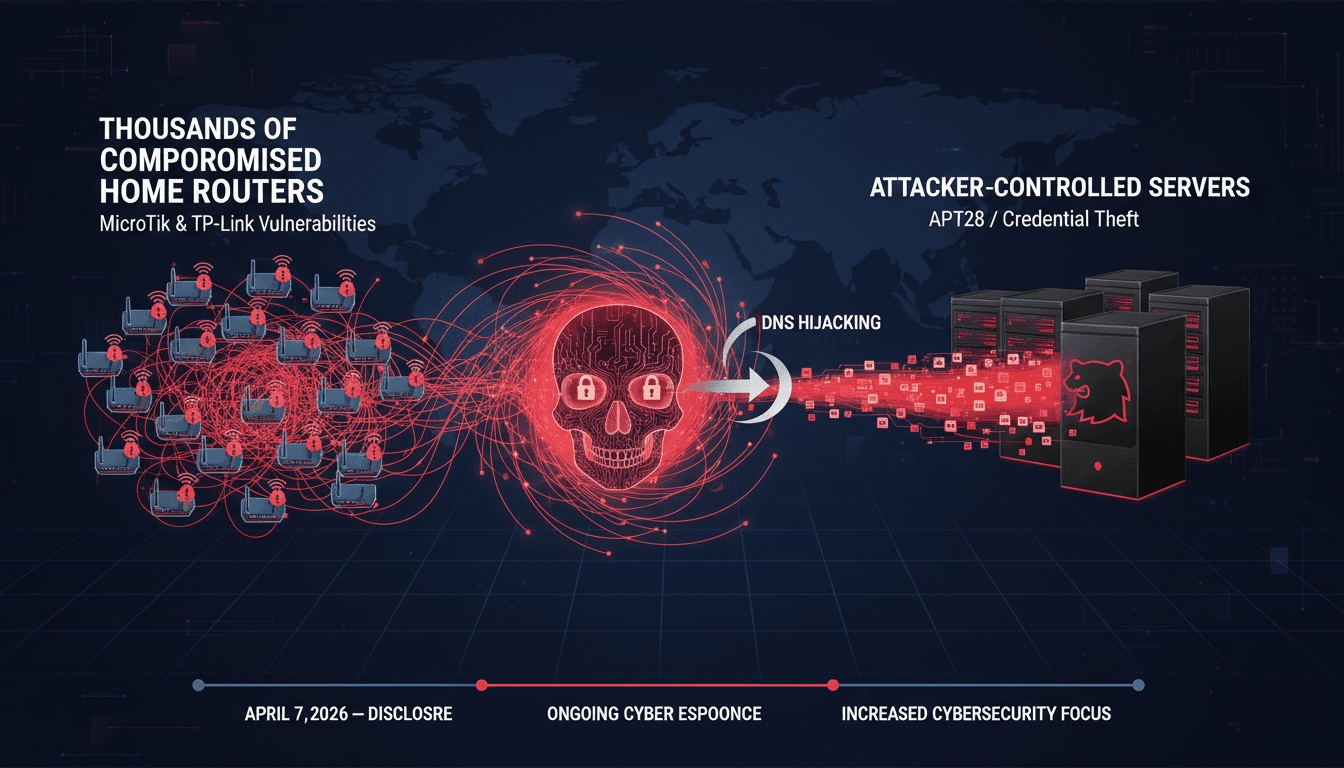
Here's what it means for you.
Your home network security may be at risk if you use unpatched routers.
Why it matters
This incident underscores the vulnerabilities in consumer-grade technology that can lead to widespread credential theft and espionage.
What happened (in 30 seconds)
- APT28 hackers compromised thousands of home routers globally to steal passwords and access tokens.
- The operation targeted unpatched MicroTik and TP-Link devices across 120 countries, focusing on sensitive entities.
- Authorities have partially disrupted the campaign, issuing advisories for immediate firmware updates and security measures.
The context you actually need
- APT28, linked to Russia's GRU Military Unit 26165, has a history of cyber espionage, including the 2016 DNC breach.
- Vulnerabilities in consumer routers like CVE-2023-50224 were exploited, enabling attackers to hijack DNS settings and redirect traffic.
- The campaign has affected 18,000 routers, with significant impacts on over 200 organizations, highlighting the scale of the threat.
What's really happening
APT28, also known as Fancy Bear, has been conducting a multi-year cyber espionage campaign that has now come to light. The group has targeted small office and home office routers, exploiting known vulnerabilities to gain unauthorized access. By modifying DNS settings, they redirected authentication traffic for services like Outlook to their own servers, allowing them to harvest sensitive information without triggering two-factor authentication.
The operation's scale is alarming, with Lumen Black Lotus Labs identifying 18,000 compromised routers worldwide. Microsoft further reported impacts on more than 200 organizations and 5,000 consumer devices. This indicates a systematic approach to espionage, where APT28 first scans for vulnerable devices before honing in on high-value targets, such as government entities and law enforcement agencies.
The geopolitical backdrop is crucial; ongoing tensions, particularly related to the Ukraine conflict, have intensified state-sponsored cyber activities. APT28's past operations, including the 2022 Viasat satellite disruption, illustrate a pattern of leveraging technology vulnerabilities to achieve strategic objectives. The exploitation of outdated firmware in MicroTik and TP-Link routers is a stark reminder of the risks associated with unpatched consumer technology.
The recent disclosures by UK NCSC, Lumen, and Microsoft on April 7, 2026, reveal the collaborative efforts of cybersecurity agencies to combat this threat. The FBI-led coalition has successfully disrupted some of the malicious domains and botnet infrastructure associated with APT28. However, the lack of immediate governmental responses from other nations raises concerns about the broader implications of this cyber threat.
As the digital landscape continues to evolve, the need for robust cybersecurity measures becomes paramount. The incident serves as a wake-up call for individuals and organizations alike to prioritize securing their network devices against potential breaches.
Who feels it first (and how)
- Home users with unpatched routers are at immediate risk of credential theft.
- Small businesses relying on vulnerable devices for operations may face data breaches.
- Government entities and law enforcement agencies are prime targets for espionage, risking national security.
- Cybersecurity firms will likely see increased demand for patching and monitoring services.
What to watch next
- Firmware updates: Monitor the response from router manufacturers regarding security patches and updates. This matters because timely updates can mitigate risks.
- Cybersecurity advisories: Pay attention to advisories from cybersecurity agencies, particularly in regions with high concentrations of vulnerable devices. This is crucial for understanding the evolving threat landscape.
- Geopolitical developments: Watch for changes in international relations and their impact on state-sponsored cyber activities, as these can influence the frequency and scale of cyber attacks.
APT28 has compromised 18,000 routers globally, focusing on unpatched devices.
Increased cybersecurity measures will be implemented by affected organizations and individuals.
The full extent of the campaign's impact on specific regions, including Dubai and the UAE, remains to be seen.
Frequently Asked Questions
- Why it matters?
- This incident underscores the vulnerabilities in consumer-grade technology that can lead to widespread credential theft and espionage.
- What happened (in 30 seconds)?
- APT28 hackers compromised thousands of home routers globally to steal passwords and access tokens. The operation targeted unpatched MicroTik and TP-Link devices across 120 countries, focusing on sensitive entities. Authorities have partially disrupted the campaign, issuing advisories for immediate firmware updates and security measures.
- What's really happening?
- APT28, also known as Fancy Bear, has been conducting a multi-year cyber espionage campaign that has now come to light. The group has targeted small office and home office routers, exploiting known vulnerabilities to gain unauthorized access. By modifying DNS settings, they redirected authentication traffic for services like Outlook to their own servers, allowing them to harvest sensitive information without triggering two-factor authentication. The operation's scale is alarming, with Lumen Blac
- Who feels it first (and how)?
- Home users with unpatched routers are at immediate risk of credential theft. Small businesses relying on vulnerable devices for operations may face data breaches. Government entities and law enforcement agencies are prime targets for espionage, risking national security. Cybersecurity firms will likely see increased demand for patching and monitoring services.
- What to watch next?
- Firmware updates: Monitor the response from router manufacturers regarding security patches and updates. This matters because timely updates can mitigate risks. Cybersecurity advisories: Pay attention to advisories from cybersecurity agencies, particularly in regions with high concentrations of vulnerable devices. This is crucial for understanding the evolving threat landscape. Geopolitical developments: Watch for changes in international relations and their impact on state-sponsored cyber a
Startup news with frequent AI coverage.
"Covers launches, funding, and product updates in AI."
— A47 Editor
Russian government hackers broke into thousands of home routers to steal passwords
Russian government hackers, identified as Fancy Bear or APT28, have compromised thousands of residential home routers to steal passwords and authentication tokens, marking a significant escalation in their espionage activities. This operation highlig...
Curated tech headlines including AI stories.
"Influential aggregator surfacing the day’s top tech/AI links."
— A47 Editor
The UK says Russia-linked hacking group APT28 is hijacking popular internet routers from MikroTik, TP-Link, and others to steal credentials and redirect traffic (Ryan Gallagher/Bloomberg)
The UK's National Cyber Security Centre has issued a warning that the Russian government-linked hacking group APT28 is hijacking popular internet routers from brands such as MikroTik and TP-Link to steal user credentials and redirect online traffic. ...