
Drone strike in Russia kills three civilians amid ongoing Ukraine conflict
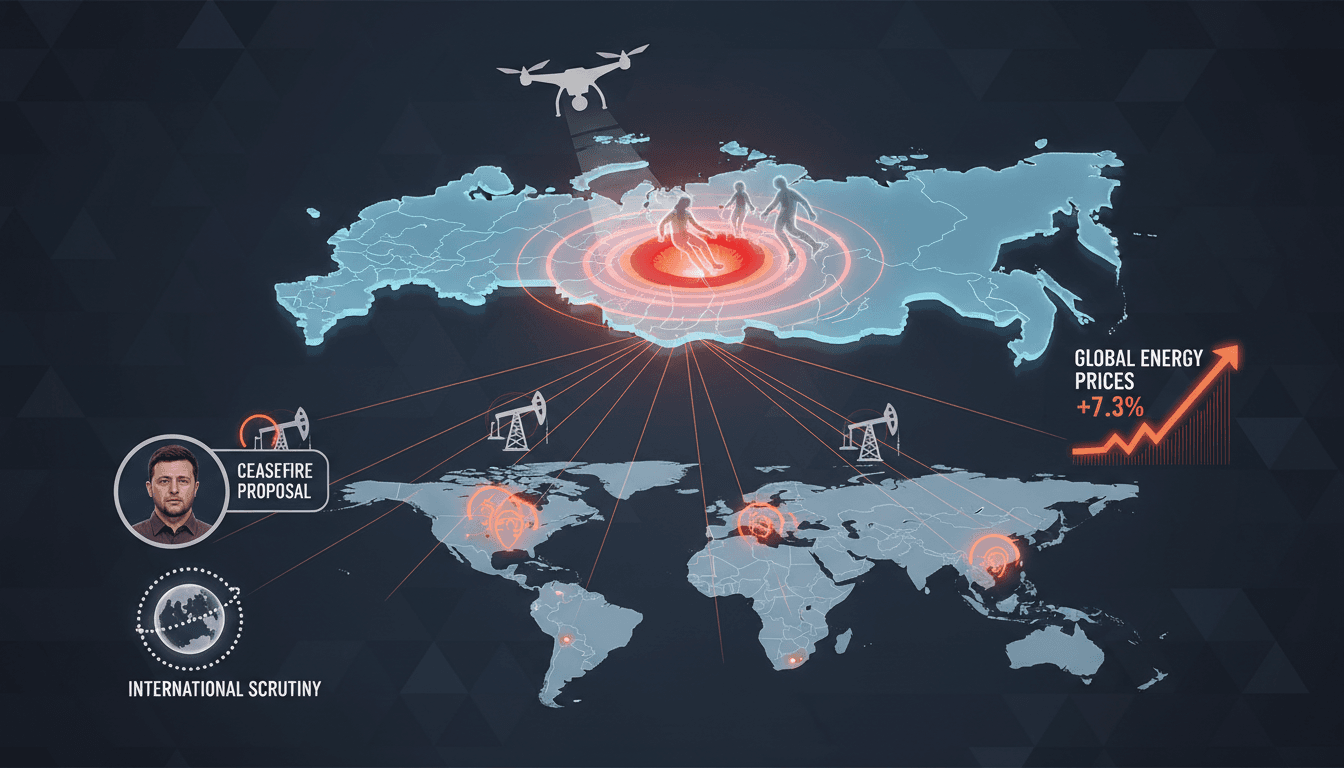
Here's what it means for you.
The ongoing conflict between Russia and Ukraine continues to disrupt global energy markets, impacting economic stability worldwide.
Why it matters
This incident underscores the escalating risks of civilian casualties in warfare, which can influence international relations and energy prices.
What happened (in 30 seconds)
- A drone strike occurred on the night of 6–7 April 2026, targeting a residential building in Aleksandrovsky District, Russia.
- Three civilians were killed, including a seven-year-old child, while a five-year-old sibling survived with burns.
- Ukrainian forces are alleged to be responsible, amidst ongoing long-range drone exchanges in the Russia-Ukraine war.
The context you actually need
- The Russia-Ukraine war has been ongoing since February 2022, marked by mutual strikes on infrastructure and civilian areas.
- Ukraine has intensified drone attacks on Russian energy facilities to disrupt funding for the war, while Russia retaliates against Ukrainian power grids.
- Ukrainian President Zelenskyy proposed a ceasefire on energy infrastructure strikes just before the incident, highlighting the fragile nature of negotiations.
What's really happening
The drone strike in Aleksandrovsky District is a stark reminder of the civilian toll in modern warfare, particularly in the context of the ongoing Russia-Ukraine conflict. As both sides escalate their use of unmanned aerial vehicles (UAVs), the risk of collateral damage increases dramatically. The attack, which resulted in the tragic deaths of three civilians, including a child, illustrates the severe consequences of military strategies that prioritize long-range strikes over the protection of non-combatants.
The incident occurred amid a backdrop of intensified drone warfare, where Ukraine has been targeting Russian energy infrastructure to undermine the Kremlin's war efforts. This strategy aims to disrupt the funding and operational capabilities of Russian forces. Conversely, Russia has been retaliating by targeting Ukrainian power grids, creating a cycle of violence that increasingly endangers civilian lives. The strike in Aleksandrovsky District is not an isolated event but part of a broader pattern of escalating hostilities that have seen both sides adopt aggressive tactics.
The implications of such strikes extend beyond immediate casualties. They can provoke international condemnation, shift public opinion, and influence diplomatic negotiations. The Russian government, for instance, may leverage this incident to rally domestic support for its military operations, framing it as a justification for further military action. On the other hand, Ukraine may face pressure to justify its military tactics in light of civilian casualties, complicating its international support.
Moreover, the incident could have ripple effects on global energy markets. As the conflict continues to disrupt energy supplies, countries reliant on Russian energy may experience price volatility, impacting everything from consumer costs to inflation rates. In this interconnected world, the consequences of a drone strike in a small Russian district can resonate far beyond its borders, affecting economies and political landscapes globally.
Who feels it first (and how)
- Civilians in conflict zones: Directly impacted by military actions, facing loss of life and injury.
- Energy markets: Fluctuations in energy supply and prices due to ongoing conflict can affect global economies.
- Governments and policymakers: Must navigate the diplomatic fallout and public sentiment regarding military actions and civilian safety.
What to watch next
- International reactions: Monitor how global leaders respond to the incident, as it may influence diplomatic negotiations.
- Energy price fluctuations: Keep an eye on energy markets, particularly in Europe, as ongoing strikes may disrupt supply chains.
- Ukrainian military strategy: Watch for changes in Ukraine's approach to drone warfare and civilian safety measures in response to international scrutiny.
Three civilians were killed, including a child, and one child survived with burns.
The incident will provoke international reactions and may impact energy markets.
The long-term implications for military strategy on both sides and future civilian safety in conflict zones.
Frequently Asked Questions
- Why it matters?
- This incident underscores the escalating risks of civilian casualties in warfare, which can influence international relations and energy prices.
- What happened (in 30 seconds)?
- A drone strike occurred on the night of 6–7 April 2026, targeting a residential building in Aleksandrovsky District, Russia. Three civilians were killed, including a seven-year-old child, while a five-year-old sibling survived with burns. Ukrainian forces are alleged to be responsible, amidst ongoing long-range drone exchanges in the Russia-Ukraine war.
- What's really happening?
- The drone strike in Aleksandrovsky District is a stark reminder of the civilian toll in modern warfare, particularly in the context of the ongoing Russia-Ukraine conflict. As both sides escalate their use of unmanned aerial vehicles (UAVs), the risk of collateral damage increases dramatically. The attack, which resulted in the tragic deaths of three civilians, including a child, illustrates the severe consequences of military strategies that prioritize long-range strikes over the protection of n
- Who feels it first (and how)?
- Civilians in conflict zones: Directly impacted by military actions, facing loss of life and injury. Energy markets: Fluctuations in energy supply and prices due to ongoing conflict can affect global economies. Governments and policymakers: Must navigate the diplomatic fallout and public sentiment regarding military actions and civilian safety.
- What to watch next?
- International reactions: Monitor how global leaders respond to the incident, as it may influence diplomatic negotiations. Energy price fluctuations: Keep an eye on energy markets, particularly in Europe, as ongoing strikes may disrupt supply chains. Ukrainian military strategy: Watch for changes in Ukraine's approach to drone warfare and civilian safety measures in response to international scrutiny.
Pan-Arab news coverage spanning politics, business, sports, and regional affairs.
"Asharq Al-Awsat reflects a broad Arab editorial perspective with strong attention to regional geopolitics."
— A47 Editor
3 قتلى من بينهم طفلة في هجوم بطائرات مسيرة قرب موسكو
A drone attack in the Vladimir region, northeast of Moscow, has resulted in the deaths of a couple and their young daughter, as reported by local governor Alexander Avdeyev. This incident highlights the ongoing security concerns in the area and the p...
Arabic-language UAE newspaper coverage focused on domestic affairs, public institutions, business, society, and regional developments.
"Al Khaleej coverage generally reflects a mainstream UAE editorial lens with strong attention to public affairs, institutions, and regional developments."
— A47 Editor
مقتل أسرة في موسكو جراء هجوم بمسيرات
A couple and their child were killed in a drone attack in the Vladimir region northeast of Moscow, as announced by local governor Alexander Avdeev. This incident highlights the ongoing security concerns in the area and the increasing use of drone tec...