
IMF Projects Up to $50 Billion in New Lending Demands Due to Middle East War Spillovers
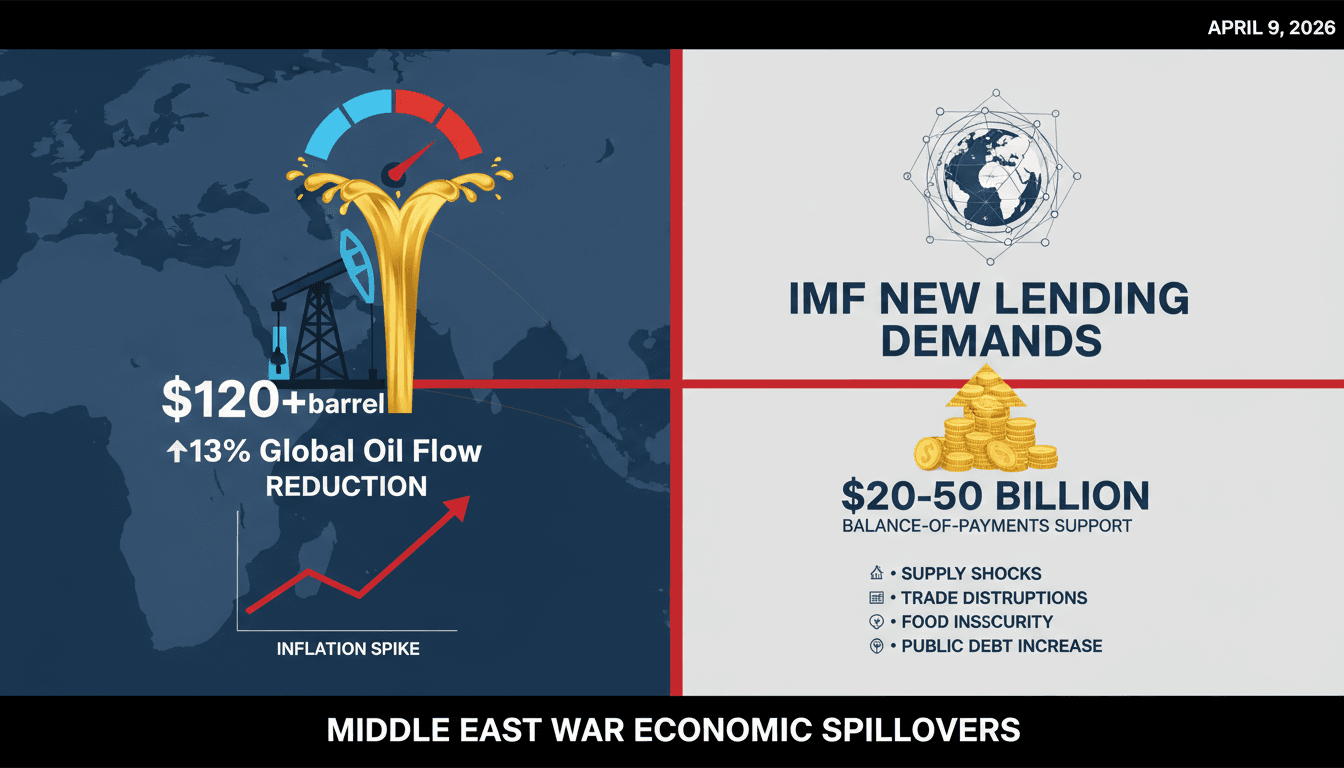
Here's what it means for you.
If you’re in a sector reliant on stable energy prices or global trade, brace for volatility and potential disruptions.
Why it matters
The IMF's forecast of up to $50 billion in new lending demands signals a significant economic ripple effect stemming from geopolitical tensions, impacting global markets and local economies.
What happened (in 30 seconds)
- April 9, 2026: IMF Managing Director Kristalina Georgieva projected a demand surge for up to $50 billion in balance-of-payments support due to economic spillovers from the ongoing Middle East war.
- Supply Shock: A 13% reduction in global daily oil flows and a 20% cut in liquefied natural gas have disrupted supply chains, tourism, and food security, affecting an additional 45 million people.
- Ceasefire Announcement: A fragile two-week ceasefire was announced on April 8, but ongoing tensions in the region continue to pose risks to economic recovery.
The context you actually need
- War Onset: The conflict began on February 28, 2026, with U.S.-Israeli strikes on Iran, leading to significant disruptions in the Strait of Hormuz and halting operations at Qatar's Ras Laffan LNG facility.
- Economic Impact: Oil prices surged to $120 per barrel, while supply chains for critical materials fractured, causing heightened food insecurity and economic instability across the region.
- IMF Response: The IMF is prepared to scale up support on top of existing programs, urging coordinated international policies to mitigate the economic fallout.
What's really happening
The ongoing conflict in the Middle East has triggered a series of economic disruptions that extend far beyond the immediate region. The IMF's projection of an additional $20–50 billion in lending demands reflects the severe impact of supply shocks on global markets. With oil and liquefied natural gas supplies significantly reduced, countries dependent on these resources are facing increased costs and potential shortages. This situation is exacerbated by the closure of vital trade routes, particularly through the Strait of Hormuz, a critical artery for global oil transport.
As energy prices spike, businesses and consumers alike are feeling the pinch. The IMF's analysis indicates that the war has already led to a 13% reduction in daily oil flows and a 20% cut in LNG, which are essential for both energy production and heating. This has resulted in inflationary pressures that are likely to persist, with public debt projected to rise to 100% of GDP in some affected countries by 2029. The IMF's call for countries to avoid unilateral actions underscores the need for a coordinated response to stabilize the global economy.
The fragile ceasefire announced on April 8 offers a glimmer of hope, yet the underlying tensions remain unresolved. Israeli military actions in Lebanon continue to threaten regional stability, which could further disrupt supply chains and economic recovery efforts. The IMF's readiness to provide additional support is crucial, but it also highlights the precariousness of the current economic landscape.
In Dubai, the implications are particularly pronounced. Residents are experiencing sustained high energy costs due to oil volatility, which has direct effects on living expenses and business operations. The tourism sector, a cornerstone of Dubai's economy, is also at risk as regional air traffic is curtailed. Disruptions at Jebel Ali port and supply shortages threaten to exacerbate the economic downturn, prompting the UAE government to implement an 'economic shield' involving liquidity injections and support for small and medium enterprises (SMEs).
Who feels it first (and how)
- Energy Sector: Companies reliant on stable oil and gas prices will face increased operational costs and potential supply shortages.
- Tourism Industry: Businesses in tourism will see reduced foot traffic and revenue as regional tensions limit travel.
- Consumers: Households will experience higher energy bills and food prices, impacting overall living standards.
- Small and Medium Enterprises (SMEs): Local businesses may struggle with cash flow issues due to rising costs and reduced consumer spending.
What to watch next
- Oil Price Trends: Monitor fluctuations in oil prices as they will directly impact global inflation and economic stability.
- IMF Policy Announcements: Keep an eye on IMF communications regarding new lending programs and support measures, which will indicate the severity of the economic fallout.
- Regional Stability Developments: Watch for updates on ceasefire negotiations and military actions in the Middle East, as these will influence market confidence and economic recovery prospects.
The IMF has projected a demand for up to $50 billion in additional support due to war spillovers.
Continued volatility in energy prices and economic instability in the Gulf region.
The long-term effects of the conflict on global supply chains and economic growth trajectories.
Frequently Asked Questions
- Why it matters?
- The IMF's forecast of up to $50 billion in new lending demands signals a significant economic ripple effect stemming from geopolitical tensions, impacting global markets and local economies.
- What happened (in 30 seconds)?
- April 9, 2026: IMF Managing Director Kristalina Georgieva projected a demand surge for up to $50 billion in balance-of-payments support due to economic spillovers from the ongoing Middle East war. Supply Shock: A 13% reduction in global daily oil flows and a 20% cut in liquefied natural gas have disrupted supply chains, tourism, and food security, affecting an additional 45 million people. Ceasefire Announcement: A fragile two-week ceasefire was announced on April 8, but ongoing tensions in the
- What's really happening?
- The ongoing conflict in the Middle East has triggered a series of economic disruptions that extend far beyond the immediate region. The IMF's projection of an additional $20–50 billion in lending demands reflects the severe impact of supply shocks on global markets. With oil and liquefied natural gas supplies significantly reduced, countries dependent on these resources are facing increased costs and potential shortages. This situation is exacerbated by the closure of vital trade routes, particu
- Who feels it first (and how)?
- Energy Sector: Companies reliant on stable oil and gas prices will face increased operational costs and potential supply shortages. Tourism Industry: Businesses in tourism will see reduced foot traffic and revenue as regional tensions limit travel. Consumers: Households will experience higher energy bills and food prices, impacting overall living standards. Small and Medium Enterprises (SMEs): Local businesses may struggle with cash flow issues due to rising costs and reduced consumer spending.
- What to watch next?
- Oil Price Trends: Monitor fluctuations in oil prices as they will directly impact global inflation and economic stability. IMF Policy Announcements: Keep an eye on IMF communications regarding new lending programs and support measures, which will indicate the severity of the economic fallout. Regional Stability Developments: Watch for updates on ceasefire negotiations and military actions in the Middle East, as these will influence market confidence and economic recovery prospects.
Macro commentary, policy analysis, growth/inflation themes, and global outlooks.
"Contextual macro coverage that complements day-to-day market headlines."
— A47 Editor
IMF’s Georgieva expects war to trigger demand for up to $50 billion in Fund support
Kristalina Georgieva, Managing Director of the International Monetary Fund (IMF), has indicated that the ongoing conflict in the Middle East could lead to a demand for up to $50 billion in financial support from the Fund as nations grapple with econo...
Regional and international reporting focused on Middle Eastern politics, diplomacy, and economics.
"Asharq Al-Awsat is a Saudi-owned international newspaper reflecting mainstream Gulf political perspectives."
— A47 Editor
IMF Expects to Provide Vulnerable Economies Hit by Iran War Up to $50 bn
The International Monetary Fund (IMF) has announced plans to provide up to $50 billion in financial assistance to vulnerable economies affected by the ongoing war in Iran. This support aims to mitigate the economic fallout from the conflict, which ha...