
U.S. Plans Troop Redeployment from NATO Allies Post-Iran War
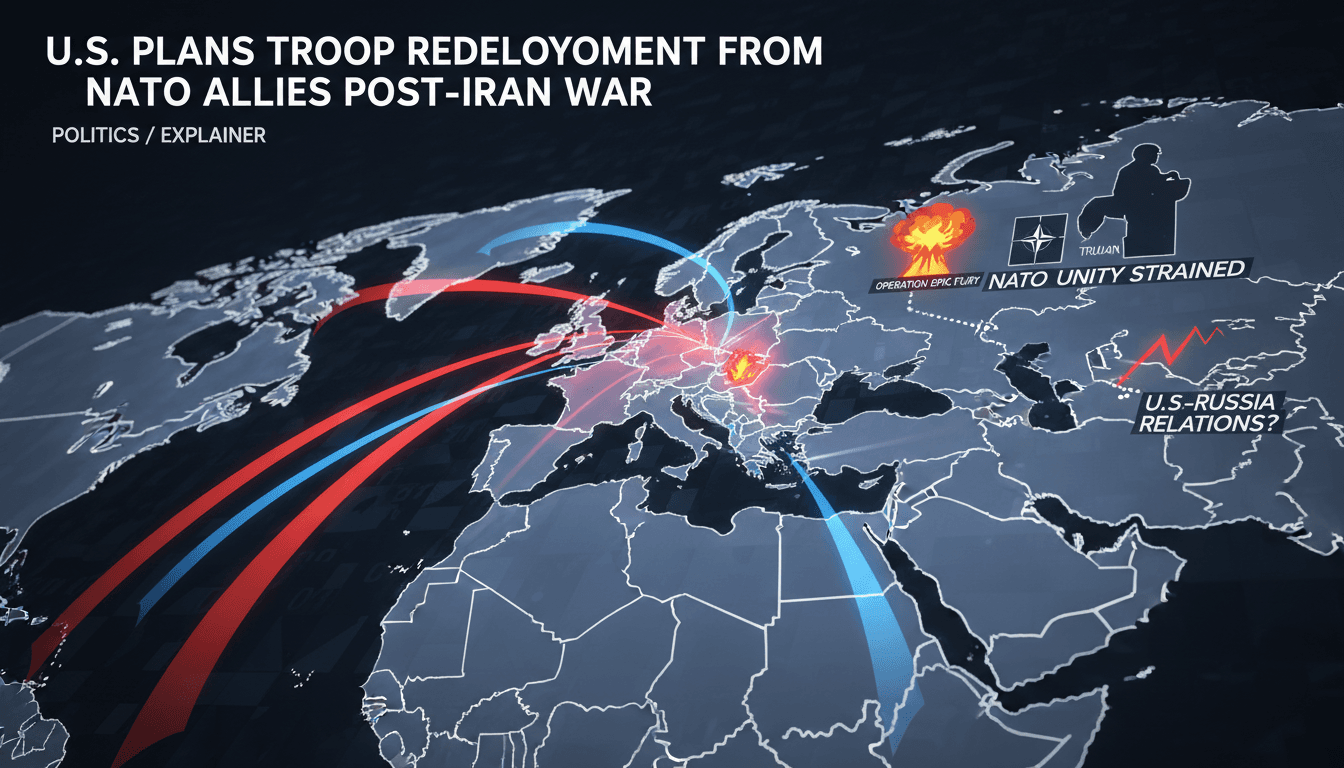
Here's what it means for you.
The shifting of U.S. military presence in Europe could reshape geopolitical alliances and impact global markets.
Why it matters
This proposal signals a potential realignment of U.S. military strategy in Europe, influencing defense spending and diplomatic relations.
What happened (in 30 seconds)
- On April 8, 2026, the White House began discussions on redeploying U.S. troops from NATO countries that did not support the 2026 Iran War.
- Troops may shift from Spain, Germany, Italy, and France to more supportive nations like Poland, Romania, Lithuania, and Greece.
- President Trump expressed dissatisfaction with NATO's response to the Iran conflict, prompting this strategic review.
The context you actually need
- The 2026 Iran War, known as Operation Epic Fury, began on February 28, 2026, with U.S.-Israeli airstrikes against Iranian military targets.
- NATO's response was mixed, with some allies providing logistical support while others restricted U.S. operations, leading to tensions within the alliance.
- The proposed troop redeployment reflects a shift in U.S. military strategy, prioritizing cooperation with nations that align more closely with U.S. interests.
What's really happening
The discussions around troop redeployment stem from the U.S. administration's dissatisfaction with NATO allies who did not support the 2026 Iran War. The conflict, which lasted six weeks, saw the U.S. and Israel conducting airstrikes against Iranian military infrastructure without prior consultation with NATO. This unilateral approach led to a variety of responses from member countries: supportive nations like the UK and Poland facilitated logistics, while others such as Spain and Germany restricted access to bases and airspace.
President Trump’s criticisms of NATO were amplified through social media, where he lamented the lack of support during a critical military operation. The proposal to redeploy troops is not merely a punitive measure; it reflects a strategic recalibration aimed at reinforcing alliances with countries that demonstrated solidarity during the conflict. By moving troops to nations like Poland and Romania, the U.S. can enhance its operational capabilities in Eastern Europe, a region increasingly viewed as pivotal in countering Russian influence.
This shift could also have broader implications for NATO's cohesion. Countries that restricted U.S. operations may face diplomatic repercussions, potentially straining relationships within the alliance. Meanwhile, nations that supported the U.S. could see an influx of military resources, which may bolster their defense capabilities but also raise concerns about escalating tensions with Russia.
The redeployment proposal is still in early stages, with discussions ongoing among U.S. officials and NATO leadership. The outcome will depend on various factors, including the responses from the countries involved and the overall geopolitical landscape. As the U.S. reassesses its military commitments, the potential for increased defense spending among NATO allies may arise, as countries seek to enhance their military readiness in light of perceived threats.
Who feels it first (and how)
- NATO member nations: Countries like Spain, Germany, and Italy may experience diplomatic fallout and reduced military cooperation.
- Eastern European nations: Poland, Romania, Lithuania, and Greece could benefit from increased U.S. troop presence and military investment.
- Global markets: Investors in defense sectors will monitor troop movements and potential shifts in military spending across Europe.
What to watch next
- NATO's response: Watch for statements from NATO leadership regarding the troop redeployment and its implications for alliance unity.
- Defense spending trends: Monitor how European nations adjust their defense budgets in response to the redeployment discussions.
- Geopolitical tensions: Keep an eye on U.S.-Russia relations, particularly as troop movements may provoke reactions from the Kremlin.
The U.S. is considering troop redeployment from NATO countries that did not support the Iran War.
Increased military cooperation between the U.S. and supportive NATO allies in Eastern Europe.
The long-term impact on NATO's cohesion and the potential for increased tensions with non-supportive member states.
Frequently Asked Questions
- Why it matters?
- This proposal signals a potential realignment of U.S. military strategy in Europe, influencing defense spending and diplomatic relations.
- What happened (in 30 seconds)?
- On April 8, 2026, the White House began discussions on redeploying U.S. troops from NATO countries that did not support the 2026 Iran War. Troops may shift from Spain, Germany, Italy, and France to more supportive nations like Poland, Romania, Lithuania, and Greece. President Trump expressed dissatisfaction with NATO's response to the Iran conflict, prompting this strategic review.
- What's really happening?
- The discussions around troop redeployment stem from the U.S. administration's dissatisfaction with NATO allies who did not support the 2026 Iran War. The conflict, which lasted six weeks, saw the U.S. and Israel conducting airstrikes against Iranian military infrastructure without prior consultation with NATO. This unilateral approach led to a variety of responses from member countries: supportive nations like the UK and Poland facilitated logistics, while others such as Spain and Germany restri
- Who feels it first (and how)?
- NATO member nations: Countries like Spain, Germany, and Italy may experience diplomatic fallout and reduced military cooperation. Eastern European nations: Poland, Romania, Lithuania, and Greece could benefit from increased U.S. troop presence and military investment. Global markets: Investors in defense sectors will monitor troop movements and potential shifts in military spending across Europe.
- What to watch next?
- NATO's response: Watch for statements from NATO leadership regarding the troop redeployment and its implications for alliance unity. Defense spending trends: Monitor how European nations adjust their defense budgets in response to the redeployment discussions. Geopolitical tensions: Keep an eye on U.S.-Russia relations, particularly as troop movements may provoke reactions from the Kremlin.
Global business headlines with AI angles.
"General business outlet that frequently covers AI."
— A47 Editor
White House Reportedly Considering Pulling Troops From NATO Countries That Didn't Help During Iran War
The White House is reportedly considering withdrawing U.S. troops from NATO countries that did not provide support during the ongoing conflict in Iran. This potential shift reflects a growing frustration within the U.S. administration regarding the p...
Global political, business, and cultural coverage from WSJ international desks.
"The Wall Street Journal offers extensive international reporting with a reputation for financial insight and a center-right editorial stance."
— A47 Editor
Trump Team Explores Punishment for NATO Countries That Didn’t Support Iran War
President Trump is exploring punitive measures against NATO countries that did not support U.S. military operations in Iran, potentially shifting U.S. troops to nations that align with his administration's stance. This move reflects growing frustrati...
Pan-Arab news coverage spanning politics, business, sports, and regional affairs.
"Asharq Al-Awsat reflects a broad Arab editorial perspective with strong attention to regional geopolitics."
— A47 Editor
تقرير: ترمب يدرس معاقبة دول بـ«الناتو» لعدم دعمها حرب إيران
According to a report by the Wall Street Journal, U.S. officials have indicated that former President Trump is considering a plan to penalize certain NATO members for their insufficient support during the Iran War. This development reflects ongoing t...