
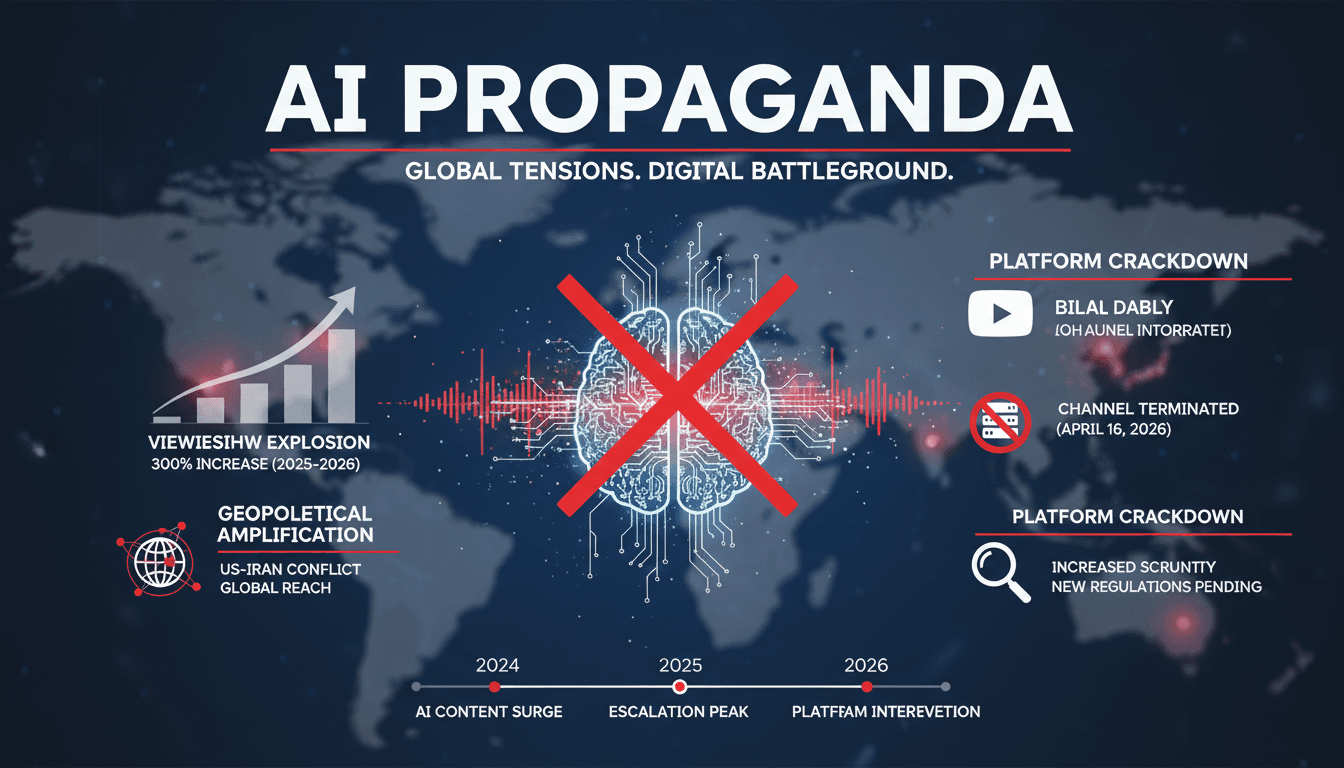
YouTube Bans Iran-Linked Channel for Violating Content Policies
Here's what it means for you.
The removal of politically charged content from platforms like YouTube could reshape how information is disseminated globally, impacting your access to diverse viewpoints.
Why it matters
This incident highlights the ongoing tension between content moderation policies and geopolitical narratives, affecting how information is shared and perceived worldwide.
What happened (in 30 seconds)
- YouTube terminated the Iran-linked Explosive Media channel on April 16, 2026, for violating spam and deceptive practices policies.
- The channel produced AI-generated Lego Movie-style videos that garnered millions of views, promoting pro-Iranian sentiments amid escalating US-Iran tensions.
- Iran's Foreign Ministry condemned the termination, labeling it as suppression of truth regarding the conflict, while the channel continues to operate on other platforms.
The context you actually need
- The US-Iran conflict escalated in February 2026, leading to increased propaganda efforts from both sides, including AI-generated content.
- Explosive Media's videos evolved from basic political commentary to sophisticated animations, gaining traction through shares from Iranian state accounts.
- YouTube's action reflects broader concerns about misinformation and the platform's responsibility in moderating content that could incite violence or spread propaganda.
What's really happening
The termination of the Explosive Media channel by YouTube is a significant event in the landscape of digital content moderation and geopolitical communication. As tensions between the US and Iran escalated in early 2026, the emergence of AI-generated propaganda became a notable trend. Explosive Media capitalized on this by creating videos that utilized familiar motifs from popular culture, specifically The Lego Movie, to convey political messages that were sympathetic to Iran and critical of the US. This strategy not only made the content more engaging but also allowed it to bypass some of the traditional barriers to political discourse.
YouTube's decision to terminate the channel was based on its policies against spam, deceptive practices, and scams. However, the timing of this action coincided with a surge in views and shares of the channel's content, which had amassed millions of views across various platforms. The Iranian government and its supporters amplified this content, further complicating the narrative surrounding the channel's removal. The channel's initial suspension and subsequent termination raised questions about the criteria used by YouTube to evaluate content, especially when it comes to politically sensitive material.
The implications of this incident extend beyond just one channel. It underscores the challenges that social media platforms face in balancing free expression with the need to prevent the spread of misinformation and propaganda. As geopolitical tensions rise, the role of digital platforms in shaping public perception becomes increasingly critical. The response from Iran's Foreign Ministry, which condemned the removal as an act of suppression, illustrates the potential for backlash against platforms that take such actions. This could lead to further scrutiny of content moderation policies and their impact on global narratives.
Moreover, the persistence of Explosive Media on other platforms like X, Instagram, TikTok, and Telegram indicates a shift in how content creators can navigate restrictions imposed by major platforms. This adaptability may encourage other groups to explore alternative channels for disseminating their messages, potentially leading to a more fragmented media landscape where certain viewpoints are amplified in specific digital spaces.
In summary, the termination of the Explosive Media channel is not just about one instance of content removal; it reflects broader trends in digital communication, the influence of AI in content creation, and the ongoing struggle over narrative control in a polarized geopolitical environment.
Who feels it first (and how)
- Content creators: Those producing politically charged content may face increased scrutiny and potential removal from platforms.
- Media consumers: Individuals seeking diverse viewpoints may find access to certain narratives restricted.
- Geopolitical analysts: Experts monitoring US-Iran relations will need to consider the impact of digital propaganda on public perception and policy.
What to watch next
- Emergence of alternative platforms: Monitor how content creators adapt to restrictions by utilizing less regulated platforms, which could change the landscape of political discourse.
- Changes in content moderation policies: Watch for updates from YouTube and other platforms regarding their policies on political content, as these will influence what information is available to the public.
- Geopolitical developments: Keep an eye on the US-Iran conflict and how digital narratives evolve in response to military and diplomatic actions.
YouTube terminated the Explosive Media channel for policy violations.
Other politically charged content may face similar scrutiny and removal in the future.
The long-term impact on the dissemination of political content across digital platforms remains to be seen.
Frequently Asked Questions
- Why it matters?
- This incident highlights the ongoing tension between content moderation policies and geopolitical narratives, affecting how information is shared and perceived worldwide.
- What happened (in 30 seconds)?
- YouTube terminated the Iran-linked Explosive Media channel on April 16, 2026, for violating spam and deceptive practices policies. The channel produced AI-generated Lego Movie-style videos that garnered millions of views, promoting pro-Iranian sentiments amid escalating US-Iran tensions. Iran's Foreign Ministry condemned the termination, labeling it as suppression of truth regarding the conflict, while the channel continues to operate on other platforms.
- What's really happening?
- The termination of the Explosive Media channel by YouTube is a significant event in the landscape of digital content moderation and geopolitical communication. As tensions between the US and Iran escalated in early 2026, the emergence of AI-generated propaganda became a notable trend. Explosive Media capitalized on this by creating videos that utilized familiar motifs from popular culture, specifically The Lego Movie, to convey political messages that were sympathetic to Iran and critical of the
- Who feels it first (and how)?
- Content creators: Those producing politically charged content may face increased scrutiny and potential removal from platforms. Media consumers: Individuals seeking diverse viewpoints may find access to certain narratives restricted. Geopolitical analysts: Experts monitoring US-Iran relations will need to consider the impact of digital propaganda on public perception and policy.
- What to watch next?
- Emergence of alternative platforms: Monitor how content creators adapt to restrictions by utilizing less regulated platforms, which could change the landscape of political discourse. Changes in content moderation policies: Watch for updates from YouTube and other platforms regarding their policies on political content, as these will influence what information is available to the public. Geopolitical developments: Keep an eye on the US-Iran conflict and how digital narratives evolve in respon
UAE-based English-language newspaper covering regional politics, economics, and global affairs.
"The National reflects Emirati policy perspectives while maintaining international editorial standards."
— A47 Editor
YouTube says Iran-linked AI Lego video channel removed over policy breaches
YouTube has removed a channel linked to the Iranian group Explosive Media, which produced AI-generated LEGO videos mocking U.S. President Donald Trump and criticizing U.S. military actions in Iran, citing policy breaches. This action follows the chan...
Arabic-language sports reporting covering UAE competitions and major international events.
"Emarat Al Youm sports coverage is mainstream and accessible, with strong emphasis on UAE and regional sport."
— A47 Editor
"يوتيوب" يحذف قناة تسخر من ترامب "يوتيوب" يحذف قناة تسخر من ترامب
YouTube has removed a channel that was reportedly supportive of Iran, which featured AI-generated videos mocking former President Donald Trump using Lego characters. This action reflects the platform's ongoing efforts to regulate content that it deem...
Pan-Arab news coverage spanning politics, business, sports, and regional affairs.
"Asharq Al-Awsat reflects a broad Arab editorial perspective with strong attention to regional geopolitics."
— A47 Editor
«يوتيوب» يحذف قناة تبث فيديوهات بتقنية الذكاء الاصطناعي تسخر من ترمب
YouTube has removed a channel that was reportedly supportive of Iran, which was broadcasting AI-generated videos featuring Lego characters to mock former U.S. President Donald Trump. This action reflects the platform's ongoing efforts to regulate con...