
Arab League Condemns Iran's Claims Over Arabian Gulf and Strait of Hormuz
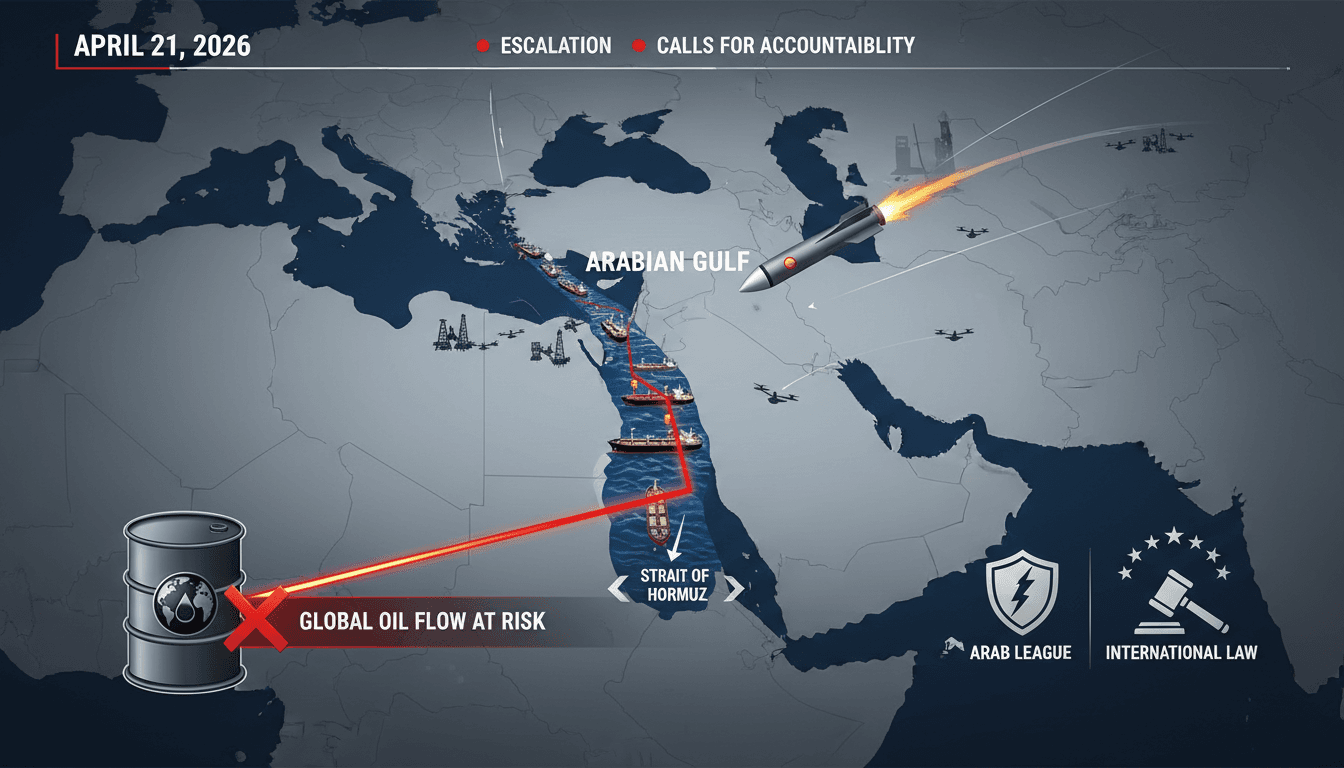
Here's what it means for you.
The geopolitical landscape in the Gulf is shifting, impacting trade routes and energy prices that affect global markets.
The Vibe
A unified Arab front is emerging against Iranian territorial claims, signaling a potential escalation in regional tensions.
What it signals
This rejection underscores a critical realignment of power dynamics in the Gulf region. As Arab states rally against perceived Iranian aggression, the implications for energy security and international trade are profound. The Strait of Hormuz, a vital artery for global oil transport, remains a focal point of contention, influencing economic stability and diplomatic relations.
Why it's happening now
1. Escalating Iranian military actions, including missile and drone strikes on Gulf states, have heightened security concerns and prompted a collective Arab response. 2. The recent UN Security Council Resolution 2817, which Iran is accused of violating, has galvanized Arab nations to assert their sovereignty and challenge Iranian narratives. 3. Historical disputes over nomenclature and territorial claims are resurfacing, reflecting deeper cultural identities and national pride that are now being leveraged in diplomatic discourse.
Who it's for (and who it leaves out)
The primary beneficiaries are Gulf Arab states, which gain a stronger collective voice against Iranian influence. Conversely, this situation marginalizes Iranian interests and could alienate moderate factions within Iran that seek diplomatic engagement.
What to watch next
1. Monitor oil price fluctuations as tensions in the Strait of Hormuz could lead to supply disruptions, impacting global markets. 2. Watch for potential international diplomatic interventions or sanctions aimed at Iran, which could reshape alliances and economic strategies in the region.
Visual Directive: A bold infographic illustrating the geopolitical stakes in the Strait of Hormuz and its impact on global oil markets.
The Arab League has formally rejected Iran's claims over the Arabian Gulf and Strait of Hormuz.
Increased military readiness and economic measures from Gulf states in response to Iranian actions.
The long-term impact on regional trade and energy prices amid ongoing tensions.
Arabic-language political and world news coverage for UAE readers.
"Emarat Al Youm world coverage usually presents international developments through a UAE and Arab audience lens."
— A47 Editor
أبوالغيط: تصورات طهران عن التحكم في الخليج العربي ومضيق هرمز باطلة قانوناً ومرفوضة جملة وتفصيلاً أبوالغيط: تصورات طهران عن التحكم في الخليج العربي ومضيق هرمز باطلة قانوناً ومرفوضة جملة وتفصيلاً
Ahmed Aboul Gheit, the Secretary-General of the Arab League, stated that the perceptions held by Tehran regarding its control over the Arabian Gulf and the Strait of Hormuz are legally invalid and entirely rejected. He emphasized that Arab nations wi...
Arabic-language political and world news coverage for UAE readers.
"Emarat Al Youm world coverage usually presents international developments through a UAE and Arab audience lens."
— A47 Editor
أبو الغيط : الدول العربية لم ولن تكون رهينة في يد إيران لتصفية الحسابات أبو الغيط : الدول العربية لم ولن تكون رهينة في يد إيران لتصفية الحسابات
Ahmed Aboul Gheit, the Secretary-General of the Arab League, stated during an emergency meeting of Arab foreign ministers that Arab countries have never been and will not be held hostage by Iran for settling scores. This assertion underscores the ong...
Arabic-language coverage of political affairs and current events.
"Okaz political coverage typically follows mainstream Saudi framing on national and regional affairs."
— A47 Editor
الجامعة العربية: لا يمكن لإيران أن تنتزع لنفسها حق التحكم في مضيق هرمز
Ahmed Aboul Gheit, the Secretary-General of the Arab League, called for Iran to immediately comply with UN Security Council resolutions and take full responsibility for damages resulting from its unlawful attacks against Arab nations. During a virtua...