
Oil Prices Surge Amid Fragile U.S.-Iran Cease-Fire and Strait of Hormuz Shipping Limits
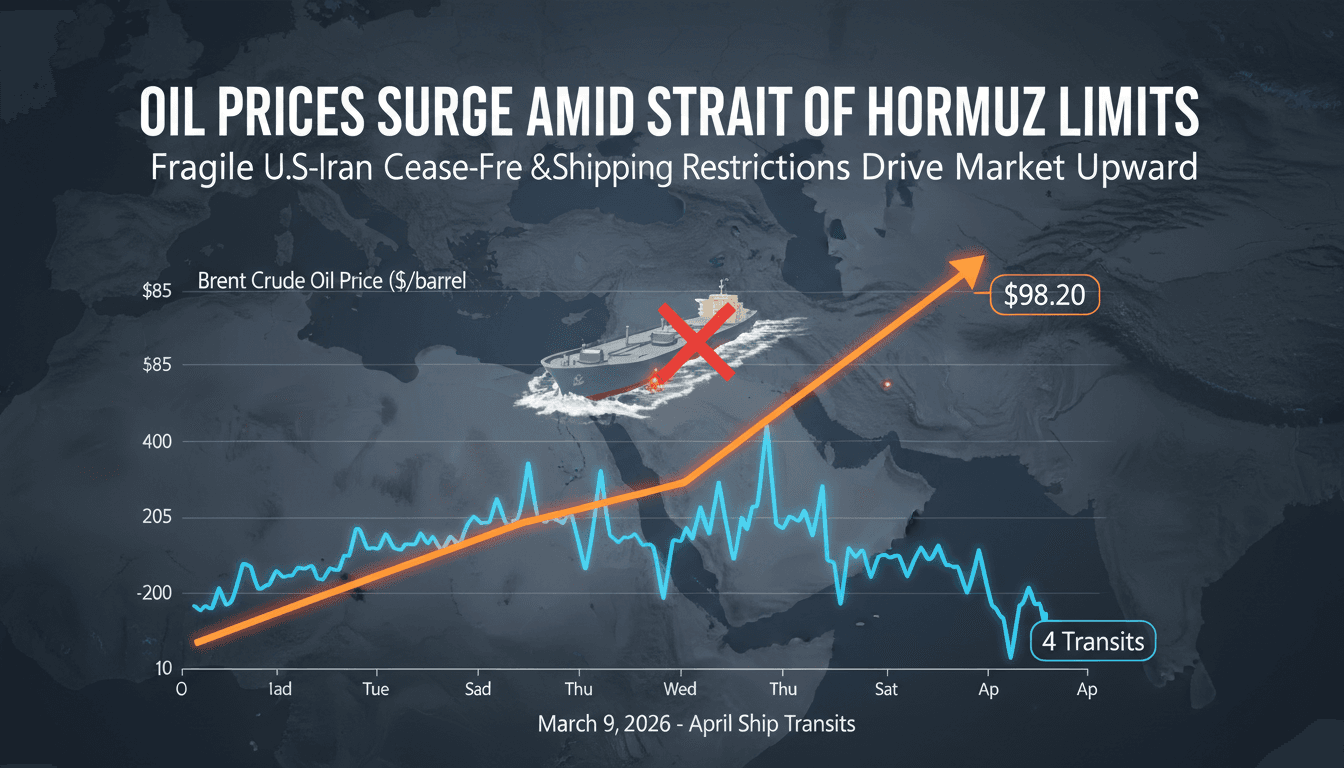
Here's what it means for you.
Rising oil prices could lead to higher costs for consumers and businesses worldwide, impacting everything from fuel to goods prices.
Why it matters
Fluctuations in oil prices directly affect global economic stability and consumer spending.
What happened (in 30 seconds)
- Oil prices surged on April 9, 2026, with Brent crude up 3.6% and West Texas Intermediate up 2.7%.
- A fragile cease-fire between the U.S. and Iran showed signs of unraveling, limiting shipping through the critical Strait of Hormuz.
- Only four ships transited the strait on April 8, marking the fewest for the month, raising concerns over supply disruptions.
The context you actually need
- The Strait of Hormuz is vital for global oil transport, accounting for 20% of oil flows.
- U.S.-Iran hostilities escalated, leading to military actions and a conditional cease-fire that has yet to stabilize.
- Persistent supply disruptions from production outages and refinery issues compound the uncertainty in oil markets.
What's really happening
The recent spike in oil prices is rooted in a complex interplay of geopolitical tensions and market dynamics. The U.S.-Iran cease-fire, announced on April 7, 2026, aimed to ease hostilities that had escalated to military confrontations, including Iran's restrictions on the Strait of Hormuz. This strait is crucial for oil transport, with about 20% of the world's oil passing through it. The conditional two-week truce was intended to stabilize the situation, but early signs of its unraveling have emerged, with only four vessels transiting the strait on April 8—the lowest daily figure for the month.
The limited shipping is a direct result of Iran's imposed restrictions, which have reduced daily transits to about 12, coupled with tolls that deter shipping activity. These constraints are exacerbated by ongoing Israeli military actions in Lebanon, which further complicate the regional security landscape. As a result, traders are weighing the risks of supply disruptions more heavily, leading to a rebound in oil prices after an initial drop following the cease-fire announcement.
The market's reaction reflects a cautious optimism that quickly turned to concern as the cease-fire's terms remain contentious. Analysts have noted that the fragile nature of the truce, combined with Iran's accusations of U.S. violations and the UAE's demand for guarantees of free passage, creates an environment of uncertainty. This uncertainty is reflected in the elevated global pump prices, which have remained high due to inventory lags and risk premiums associated with potential supply disruptions.
As oil prices rise, the implications extend beyond the commodity markets. Consumers and businesses are likely to face increased costs, which could dampen economic growth. The interconnectedness of global supply chains means that higher fuel prices will translate into elevated costs for goods and services, impacting everything from transportation to food prices.
Who feels it first (and how)
- Consumers: Higher fuel prices will increase transportation and goods costs.
- Businesses: Companies reliant on oil will face rising operational costs, affecting profit margins.
- Transport sector: Airlines and shipping companies will see increased fuel expenses, potentially leading to higher ticket and shipping rates.
- UAE residents: Sustained high fuel costs and commodity prices will impact daily living expenses.
What to watch next
- Cease-fire developments: Any changes in the U.S.-Iran cease-fire could significantly impact oil supply and prices.
- Shipping activity in the Strait of Hormuz: Monitoring the number of vessels transiting the strait will provide insight into market stability.
- Global oil inventory levels: Changes in inventory levels can indicate supply-demand dynamics and influence price trends.
Oil prices are currently rising due to geopolitical tensions and supply constraints.
Continued volatility in oil prices as the situation in the Strait of Hormuz evolves.
The long-term impact of the cease-fire on regional stability and global oil supply.
Frequently Asked Questions
- Why it matters?
- Fluctuations in oil prices directly affect global economic stability and consumer spending.
- What happened (in 30 seconds)?
- Oil prices surged on April 9, 2026, with Brent crude up 3.6% and West Texas Intermediate up 2.7%. A fragile cease-fire between the U.S. and Iran showed signs of unraveling, limiting shipping through the critical Strait of Hormuz. Only four ships transited the strait on April 8, marking the fewest for the month, raising concerns over supply disruptions.
- What's really happening?
- The recent spike in oil prices is rooted in a complex interplay of geopolitical tensions and market dynamics. The U.S.-Iran cease-fire, announced on April 7, 2026, aimed to ease hostilities that had escalated to military confrontations, including Iran's restrictions on the Strait of Hormuz. This strait is crucial for oil transport, with about 20% of the world's oil passing through it. The conditional two-week truce was intended to stabilize the situation, but early signs of its unraveling have e
- Who feels it first (and how)?
- Consumers: Higher fuel prices will increase transportation and goods costs. Businesses: Companies reliant on oil will face rising operational costs, affecting profit margins. Transport sector: Airlines and shipping companies will see increased fuel expenses, potentially leading to higher ticket and shipping rates. UAE residents: Sustained high fuel costs and commodity prices will impact daily living expenses.
- What to watch next?
- Cease-fire developments: Any changes in the U.S.-Iran cease-fire could significantly impact oil supply and prices. Shipping activity in the Strait of Hormuz: Monitoring the number of vessels transiting the strait will provide insight into market stability. Global oil inventory levels: Changes in inventory levels can indicate supply-demand dynamics and influence price trends.
Markets desk coverage, trading insights, and investor updates.
"WSJ’s markets reporting provides in-depth analysis and context for investors."
— A47 Editor
Crude Futures End Volatile Session Higher
Oil futures ended a volatile trading session higher, buoyed by a fragile truce between the U.S. and Iran, despite ongoing tensions that threaten the stability of the Strait of Hormuz. Israel's decision to engage in negotiations with Lebanon has somew...
Oil, metals, and agriculture: supply/demand headlines, OPEC chatter, inventories, and price action.
"Solid tape for energy and metals traders tracking macro and micro catalysts."
— A47 Editor
Oil prices pull back from session highs on Israel, Lebanon agreeing to negotiate
Oil prices have retreated from session highs following an agreement between Israel and Lebanon to engage in negotiations aimed at establishing a ceasefire and addressing the disarmament of Hezbollah. This development comes amid ongoing tensions in th...
Arabic-language digital news outlet covering UAE, regional, and international developments with broad general-news coverage.
"Al Ain News coverage typically blends UAE-focused reporting with wider Arab regional and international news."
— A47 Editor
سعر النفط يقفز 4% مع استمرار إغلاق هرمز وبقاء علاوة المخاطر
Oil prices surged by 4% on Thursday amid investor concerns over the ongoing restrictions on energy flows through the Strait of Hormuz. This increase reflects heightened market sensitivity to geopolitical tensions affecting oil supply routes.