
Cryptocurrency Prices Fall as Oil Surges Amid U.S.-Iran Tensions
Here's what it means for you.
If you're invested in cryptocurrencies or oil markets, the recent geopolitical tensions could significantly impact your portfolio.
Why it matters
The renewed U.S.-Iran tensions are reshaping global financial markets, influencing both oil prices and cryptocurrency valuations.
What happened (in 30 seconds)
- Bitcoin, Ether, and Solana prices fell as geopolitical risks escalated, with Bitcoin dropping 1.6% to $74,335.
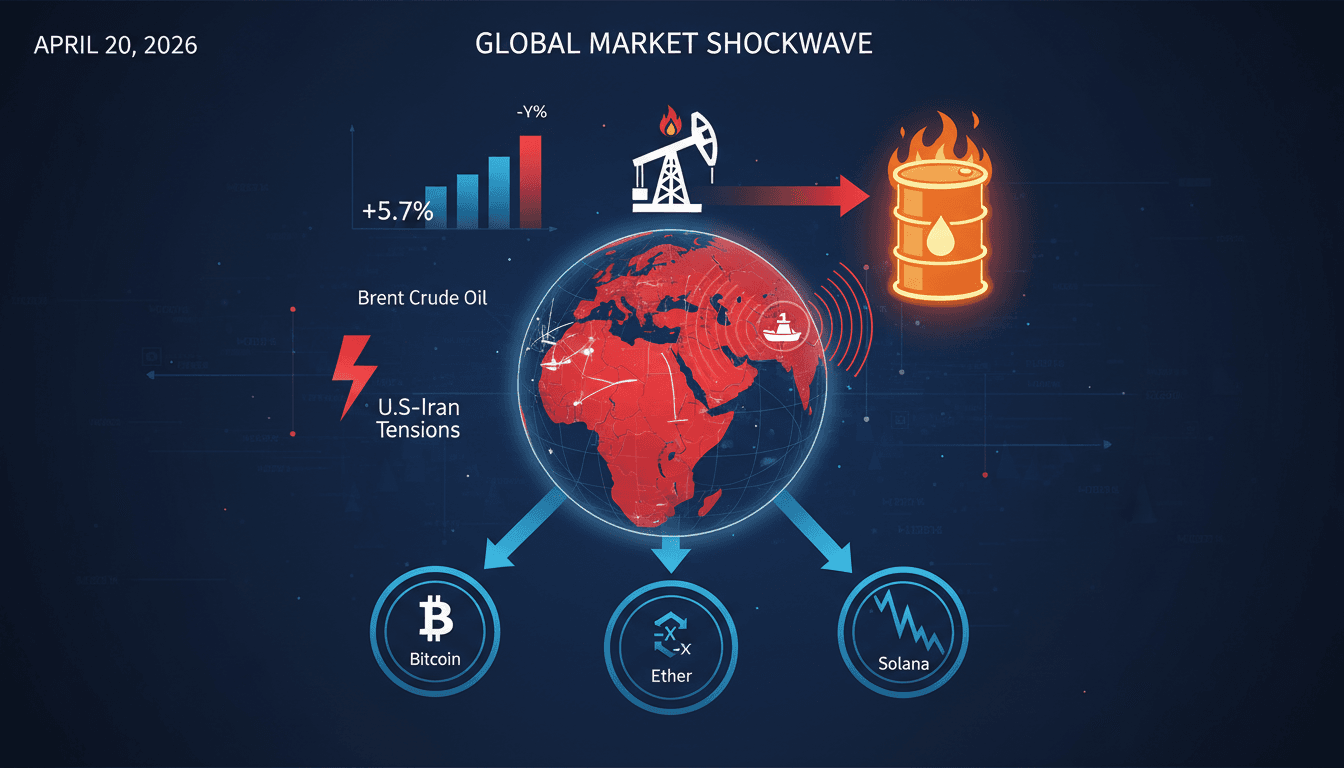
- Brent crude oil surged 5.7% to $95.50 per barrel amid fears of supply disruptions in the Strait of Hormuz.
- U.S. President Trump threatened severe military action against Iran, complicating the potential for diplomatic negotiations.
The context you actually need
- The 2026 Iran War began on February 28, 2026, with U.S. and Israeli airstrikes targeting Iranian military assets, leading to retaliatory actions from Iran.
- The Strait of Hormuz is a critical chokepoint for global oil trade, with 20% of the world's oil passing through it, making any disruption a significant concern for markets.
- Cryptocurrencies have shown resilience in previous flare-ups, but the current geopolitical climate is testing their stability as traditional assets react sharply to risk.
What's really happening
The recent escalation in U.S.-Iran tensions has created a ripple effect across global financial markets, particularly impacting oil and cryptocurrencies. On April 20, 2026, Iran reimposed controls over the Strait of Hormuz, reversing its earlier decision to allow commercial passage. This move came after the U.S. Navy seized an Iranian-flagged vessel, heightening fears of military confrontation. President Trump’s threats to target Iranian infrastructure if negotiations fail have further exacerbated the situation, leading to a sharp increase in Brent crude oil prices by 5.7% to $95.50 per barrel.
The Strait of Hormuz is vital for global oil supply, and any disruption can lead to significant price fluctuations. The recent military actions and threats have caused traders to reassess risk, leading to a sell-off in cryptocurrencies like Bitcoin, Ether, and Solana. These digital assets are often viewed as risk-on investments, and their decline reflects a broader market sentiment that is wary of geopolitical instability.
Moreover, the cryptocurrency market has shown signs of resilience in the face of previous geopolitical events, but the current situation is different. The sell-off in cryptocurrencies was less severe than in past incidents, suggesting that some investors may be pricing in these risks. However, the ongoing U.S. naval blockade and Iran's vow of retaliation could lead to further volatility.
In Dubai, a key oil exporter and crypto hub, the implications are twofold. Elevated oil prices could boost revenues for the UAE, benefiting the local economy. However, the decline in cryptocurrency values could negatively impact local investors, particularly those heavily invested in digital assets. The proximity to the Strait of Hormuz also raises concerns about supply chain disruptions and inflation risks, especially given the region's reliance on food imports.
As the situation unfolds, the interconnectedness of oil and cryptocurrency markets will continue to be tested. Investors should remain vigilant, as the geopolitical landscape can shift rapidly, influencing market dynamics in unexpected ways.
Who feels it first (and how)
- Cryptocurrency investors: Facing immediate losses as digital asset prices decline.
- Oil traders: Experiencing volatility and potential profit opportunities due to rising oil prices.
- Dubai residents: Benefiting from increased oil revenues but facing risks from cryptocurrency market downturns.
- Global supply chain managers: Monitoring potential disruptions in oil supply and food imports due to regional tensions.
What to watch next
- Iran's response to U.S. actions: Any military retaliation could further escalate tensions and impact oil prices.
- Negotiation outcomes: The potential for renewed talks could stabilize markets or lead to further volatility depending on the results.
- Cryptocurrency market resilience: Watch for Bitcoin's price stability around the $74,000-$73,000 range to gauge investor sentiment.
Oil prices are sensitive to geopolitical tensions, and recent events have caused a significant spike.
Continued volatility in both oil and cryptocurrency markets as tensions evolve.
The long-term impact of these tensions on global economic stability and investor behavior.
Frequently Asked Questions
- Why it matters?
- The renewed U.S.-Iran tensions are reshaping global financial markets, influencing both oil prices and cryptocurrency valuations.
- What happened (in 30 seconds)?
- Bitcoin, Ether, and Solana prices fell as geopolitical risks escalated, with Bitcoin dropping 1.6% to $74,335. Brent crude oil surged 5.7% to $95.50 per barrel amid fears of supply disruptions in the Strait of Hormuz. U.S. President Trump threatened severe military action against Iran, complicating the potential for diplomatic negotiations.
- What's really happening?
- The recent escalation in U.S.-Iran tensions has created a ripple effect across global financial markets, particularly impacting oil and cryptocurrencies. On April 20, 2026, Iran reimposed controls over the Strait of Hormuz, reversing its earlier decision to allow commercial passage. This move came after the U.S. Navy seized an Iranian-flagged vessel, heightening fears of military confrontation. President Trump’s threats to target Iranian infrastructure if negotiations fail have further exacerbat
- Who feels it first (and how)?
- Cryptocurrency investors: Facing immediate losses as digital asset prices decline. Oil traders: Experiencing volatility and potential profit opportunities due to rising oil prices. Dubai residents: Benefiting from increased oil revenues but facing risks from cryptocurrency market downturns. Global supply chain managers: Monitoring potential disruptions in oil supply and food imports due to regional tensions.
- What to watch next?
- Iran's response to U.S. actions: Any military retaliation could further escalate tensions and impact oil prices. Negotiation outcomes: The potential for renewed talks could stabilize markets or lead to further volatility depending on the results. Cryptocurrency market resilience: Watch for Bitcoin's price stability around the $74,000-$73,000 range to gauge investor sentiment.
Covers blockchain, cryptocurrency news, project analysis, and market insights.
"CoinDesk is a well-established cryptocurrency and blockchain news provider, offering comprehensive insights, market data, and industry research."
— A47 Editor
Bitcoin, ether, solana slide, oil jumps on renewed U.S.-Iran war risks
Bitcoin, ether, and solana experienced a downturn as geopolitical tensions escalated following Iran's reimposition of controls over the Strait of Hormuz, with Bitcoin trading at $74,335, marking a 1.6% decline. In contrast, Brent crude oil prices sur...
Covers blockchain, cryptocurrency news, project analysis, and market insights.
"Cointelegraph is a leading crypto-focused media outlet known for timely news, analysis, and educational content related to blockchain and digital assets."
— A47 Editor
Bitcoin erases weekend gains as US-Iran ceasefire faces pressure
Bitcoin's price experienced a significant drop, briefly falling below $74,000, as geopolitical tensions escalated following Iran's threats of retaliation against a U.S. military seizure of an Iranian cargo ship. This decline erased gains made over th...