
Egypt's Urban Inflation Hits 15.2% Amid Fuel Price Hikes Linked to Iran War
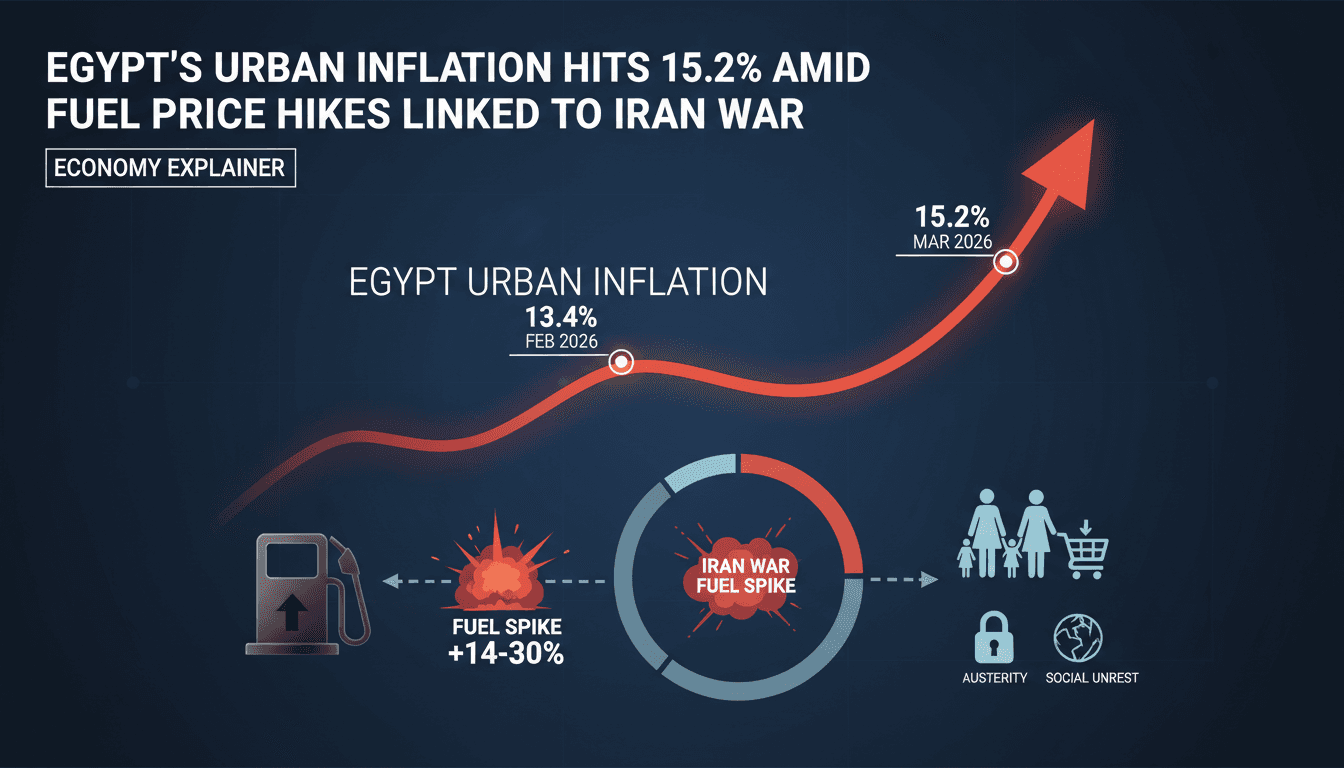
Here's what it means for you.
If you're connected to Egypt through family or business, the rising inflation could impact remittances and local purchasing power.
Why it matters
This inflation spike threatens economic stability in Egypt, affecting not only local households but also expatriates and businesses reliant on remittances.
What happened (in 30 seconds)
- Inflation accelerated to 15.2% in March 2026, up from 13.4% in February, driven by rising food and transport costs.
- Fuel prices surged by 14-30% in March due to geopolitical tensions from the Iran war, further straining household budgets.
- Families adopted austerity measures, including reduced meat intake and increased reliance on walking to save on transport costs.
The context you actually need
- Historical inflation peaks: Egypt's inflation reached nearly 40% in mid-2023, following significant currency devaluation and subsidy cuts.
- Economic reforms: By late 2025, inflation moderated to around 12% due to interest rate hikes and IMF-supported reforms, but recent geopolitical events have reversed this trend.
- Rising costs: Monthly inflation rates have shown a concerning upward trajectory, with essential goods like vegetables and meat seeing significant price increases.
What's really happening
The recent spike in Egypt's urban inflation to 15.2% is a direct consequence of a series of economic and geopolitical factors. Following a period of relative stabilization, where inflation rates had moderated to around 12% by late 2025, the situation deteriorated sharply due to the ongoing Iran war. This conflict has disrupted global energy markets, leading to a surge in oil prices above $119 per barrel. As a result, Egypt was compelled to raise fuel prices by 14-30% in March 2026, which had a cascading effect on transportation costs and, subsequently, on the prices of imported goods and local markets.
The Central Agency for Public Mobilization and Statistics (CAPMAS) reported a monthly inflation rate of 3.2% for March, reflecting a significant increase from 2.8% in February and just 1.2% in January. This rapid escalation has led to sharp price increases in essential goods: vegetables rose by 21.8%, meat and poultry by 5.9%, and grains/bread by 1.5%. However, market observers noted that actual price increases in many cases exceeded these reported figures, particularly outside subsidized outlets.
In response to these pressures, Egyptian households have begun to adopt stringent austerity measures. Many families are stockpiling food, reducing their meat consumption, and opting for walking instead of using public transport to save on costs. This shift not only reflects immediate financial strain but also indicates a broader trend of economic hardship that could have long-term implications for health and education spending. Economist Wael Al-Nahas has warned that essential spending on these areas may be curtailed as families prioritize basic needs.
The Central Bank of Egypt has maintained interest rates amid these inflationary pressures, suggesting a cautious approach to monetary policy. Meanwhile, the government has announced a minimum wage increase from EGP 7,000 to 8,000 effective July 2026. However, many experts and public commentators view this adjustment as insufficient against the backdrop of 15.2% inflation, raising concerns about real purchasing power erosion.
Who feels it first (and how)
- Urban families: Households in cities like Cairo and Alexandria are directly impacted by rising food and transport costs.
- Low-income workers: Those earning near the minimum wage will struggle to meet basic needs as inflation outpaces wage increases.
- Expatriates: Egyptian expatriates, particularly in the UAE, are feeling the pressure to increase remittances to support families back home.
What to watch next
- Remittance trends: Watch for changes in remittance flows from expatriates, as increased family needs may lead to higher transfers, impacting disposable income in the UAE.
- Interest rate decisions: Monitor the Central Bank of Egypt's interest rate policies, as sustained inflation may force adjustments that could further affect economic growth.
- Consumer behavior: Keep an eye on shifts in consumer spending patterns, particularly in essential goods, as families adapt to ongoing economic pressures.
Inflation has risen to 15.2% due to fuel price hikes and increased costs of living.
Households will continue to adopt austerity measures, impacting consumption and economic growth.
The long-term effects of these inflationary pressures on health and education spending remain uncertain.
Frequently Asked Questions
- Why it matters?
- This inflation spike threatens economic stability in Egypt, affecting not only local households but also expatriates and businesses reliant on remittances.
- What happened (in 30 seconds)?
- Inflation accelerated to 15.2% in March 2026, up from 13.4% in February, driven by rising food and transport costs. Fuel prices surged by 14-30% in March due to geopolitical tensions from the Iran war, further straining household budgets. Families adopted austerity measures, including reduced meat intake and increased reliance on walking to save on transport costs.
- What's really happening?
- The recent spike in Egypt's urban inflation to 15.2% is a direct consequence of a series of economic and geopolitical factors. Following a period of relative stabilization, where inflation rates had moderated to around 12% by late 2025, the situation deteriorated sharply due to the ongoing Iran war. This conflict has disrupted global energy markets, leading to a surge in oil prices above $119 per barrel. As a result, Egypt was compelled to raise fuel prices by 14-30% in March 2026, which had a c
- Who feels it first (and how)?
- Urban families: Households in cities like Cairo and Alexandria are directly impacted by rising food and transport costs. Low-income workers: Those earning near the minimum wage will struggle to meet basic needs as inflation outpaces wage increases. Expatriates: Egyptian expatriates, particularly in the UAE, are feeling the pressure to increase remittances to support families back home.
- What to watch next?
- Remittance trends: Watch for changes in remittance flows from expatriates, as increased family needs may lead to higher transfers, impacting disposable income in the UAE. Interest rate decisions: Monitor the Central Bank of Egypt's interest rate policies, as sustained inflation may force adjustments that could further affect economic growth. Consumer behavior: Keep an eye on shifts in consumer spending patterns, particularly in essential goods, as families adapt to ongoing economic pressures
Pan-Arab news coverage spanning politics, business, sports, and regional affairs.
"Asharq Al-Awsat reflects a broad Arab editorial perspective with strong attention to regional geopolitics."
— A47 Editor
التضخم يتسارع في مصر ويدفع أسراً لمزيد من التقشف
The inflation rate in Egypt accelerated to approximately 15.2% year-on-year in March, up from 13.4% in February. This increase reflects ongoing economic challenges faced by the country, impacting the cost of living for many families.
Arabic-language UAE newspaper coverage focused on domestic affairs, public institutions, business, society, and regional developments.
"Al Khaleej coverage generally reflects a mainstream UAE editorial lens with strong attention to public affairs, institutions, and regional developments."
— A47 Editor
المركزي المصري: ارتفاع التضخم الأساسي إلى 14% في مارس
The Central Bank of Egypt announced on Thursday that the core inflation rate rose to 14% year-on-year in March, up from 12.7% in February. This increase reflects ongoing economic pressures affecting consumer prices in the country.
Arabic-language UAE newspaper coverage focused on domestic affairs, public institutions, business, society, and regional developments.
"Al Khaleej coverage generally reflects a mainstream UAE editorial lens with strong attention to public affairs, institutions, and regional developments."
— A47 Editor
التضخم في المدن المصرية يقفز إلى 15.2% في مارس
The annual inflation rate in Egyptian cities surged unexpectedly to 15.2% in March, up from 13.4% in February. This increase reflects growing economic pressures within the country, impacting the cost of living for residents.