
German Factory Orders Rise 0.9% Amid Iran War Tensions
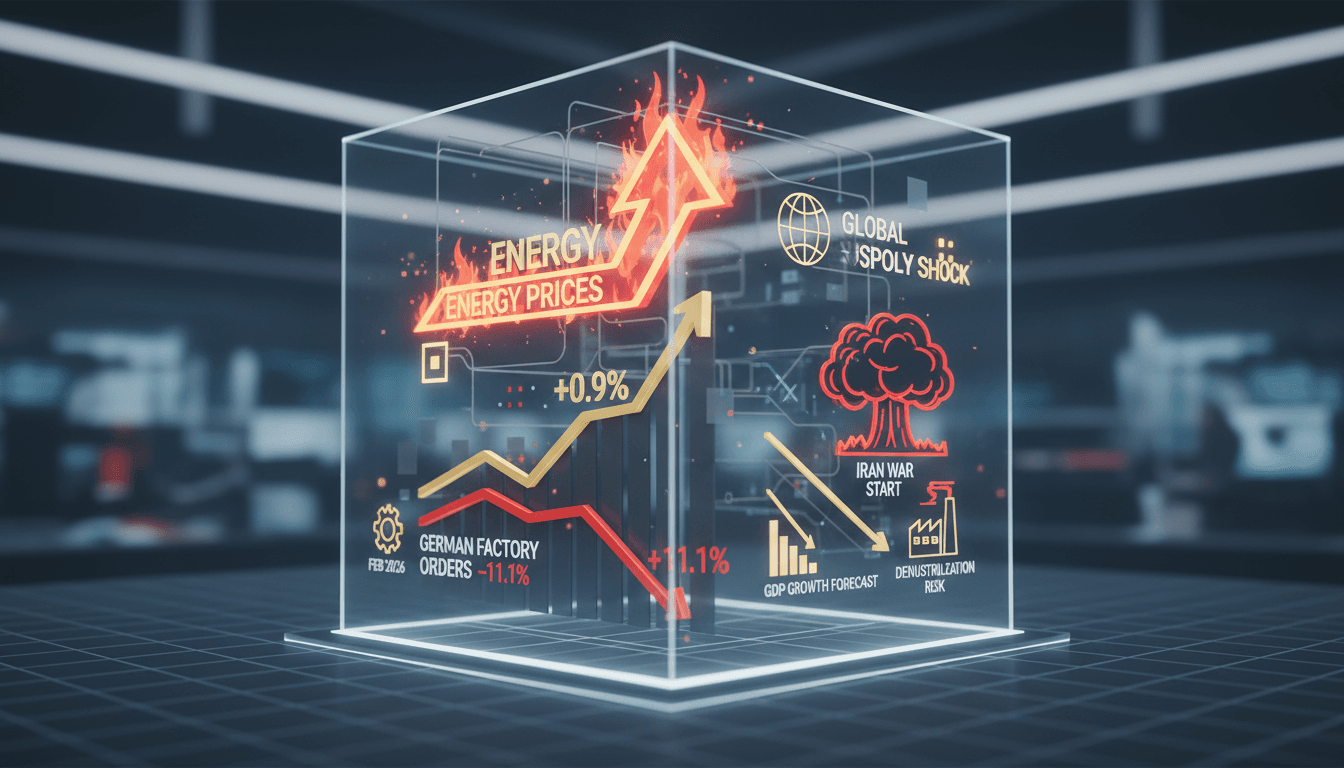
Here's what it means for you.
As global supply chains face disruptions, your business may experience increased costs and delays.
Why it matters
Germany's manufacturing sector is a critical barometer for European economic health, influencing global supply chains and energy markets.
What happened (in 30 seconds)
- German factory orders increased by 0.9% month-on-month in February 2026, recovering from an 11.1% decline in January.
- The rise occurred just before the onset of the Iran war, which began on February 28, escalating tensions in the Middle East.
- Economic forecasts have since been downgraded, with German GDP growth expectations halved due to anticipated supply shocks and energy price hikes.
The context you actually need
- Germany's manufacturing sector faced volatility entering 2026, with a significant 7.8% surge in December 2025 orders followed by a sharp decline in January.
- The impending Iran war is expected to severely disrupt supply chains, particularly affecting energy prices and availability in Europe.
- Economic institutes have reacted by downgrading growth forecasts, anticipating a contraction in manufacturing output and increased operational costs.
What's really happening
The recent uptick in German factory orders signals a brief recovery in a sector that has been under significant strain. After a tumultuous January, where orders plummeted by 11.1%, the 0.9% increase in February reflects a rebound in both domestic and international demand. This recovery, however, is overshadowed by the looming threat of the Iran war, which began on February 28, 2026, following escalating tensions between the US, Israel, and Iran.
The manufacturing sector's resilience is noteworthy, especially considering the backdrop of geopolitical instability. The Federal Statistical Office's data indicates that manufacturers were able to capitalize on a brief window of improved demand before the conflict escalated. However, the optimism is tempered by the knowledge that the war will likely disrupt supply chains, particularly in the energy sector, which is critical for manufacturing operations.
As the war unfolds, the immediate impact on energy prices is expected to be significant. With the Persian Gulf being a vital shipping route for oil and gas, any disruptions could lead to skyrocketing costs for manufacturers reliant on these resources. In fact, 90% of German manufacturers anticipate negative impacts from the conflict, primarily due to higher energy costs. This has led to a downgrade in GDP growth forecasts, with economic institutes slashing their predictions from 1.3% to just 0.6% for 2026.
The broader implications of these developments extend beyond Germany. As Europe's largest economy, Germany's manufacturing output influences global supply chains. A contraction in German manufacturing could lead to ripple effects across various sectors, including automotive, machinery, and chemicals. Moreover, the conflict's impact on energy prices could exacerbate inflationary pressures across Europe, affecting consumer spending and overall economic stability.
In summary, while the February increase in factory orders provides a glimmer of hope, the impending war in Iran casts a long shadow over the manufacturing sector's future. The interplay between geopolitical tensions and economic performance will be crucial to monitor in the coming months.
Who feels it first (and how)
- Manufacturers: Facing increased operational costs and potential supply chain disruptions.
- Energy Sector: Experiencing volatility in prices and availability of resources.
- Consumers: Likely to see rising prices for goods as manufacturers pass on costs.
- Exporters: May struggle with reduced demand from international markets affected by the conflict.
- Tourism and Hospitality: Particularly in regions like Dubai, where economic fallout from the war could lead to a decline in visitor numbers.
What to watch next
- Energy Prices: Monitoring fluctuations in oil and gas prices will be critical as the war progresses, impacting manufacturing costs.
- Manufacturing PMI: The Purchasing Managers' Index will provide insights into the health of the manufacturing sector amid ongoing geopolitical tensions.
- GDP Growth Forecasts: Keep an eye on revisions from economic institutes, as further downgrades could signal deeper economic challenges.
German factory orders rose by 0.9% in February 2026.
The Iran war will disrupt supply chains and increase energy costs, impacting manufacturing.
The full extent of the economic fallout from the Iran war on global supply chains and consumer prices.
Frequently Asked Questions
- Why it matters?
- Germany's manufacturing sector is a critical barometer for European economic health, influencing global supply chains and energy markets.
- What happened (in 30 seconds)?
- German factory orders increased by 0.9% month-on-month in February 2026, recovering from an 11.1% decline in January. The rise occurred just before the onset of the Iran war, which began on February 28, escalating tensions in the Middle East. Economic forecasts have since been downgraded, with German GDP growth expectations halved due to anticipated supply shocks and energy price hikes.
- What's really happening?
- The recent uptick in German factory orders signals a brief recovery in a sector that has been under significant strain. After a tumultuous January, where orders plummeted by 11.1%, the 0.9% increase in February reflects a rebound in both domestic and international demand. This recovery, however, is overshadowed by the looming threat of the Iran war, which began on February 28, 2026, following escalating tensions between the US, Israel, and Iran. The manufacturing sector's resilience is notewort
- Who feels it first (and how)?
- Manufacturers: Facing increased operational costs and potential supply chain disruptions. Energy Sector: Experiencing volatility in prices and availability of resources. Consumers: Likely to see rising prices for goods as manufacturers pass on costs. Exporters: May struggle with reduced demand from international markets affected by the conflict. Tourism and Hospitality: Particularly in regions like Dubai, where economic fallout from the war could lead to a decline in visitor numbers.
- What to watch next?
- Energy Prices: Monitoring fluctuations in oil and gas prices will be critical as the war progresses, impacting manufacturing costs. Manufacturing PMI: The Purchasing Managers' Index will provide insights into the health of the manufacturing sector amid ongoing geopolitical tensions. GDP Growth Forecasts: Keep an eye on revisions from economic institutes, as further downgrades could signal deeper economic challenges.
Key macro releases (CPI, jobs, PMIs), surprise indexes, and market implications.
"Great for data-print awareness and instant read-through to rates and risk assets."
— A47 Editor
Germany’s February industrial orders up, albeit far below forecasts
Germany's industrial orders saw a modest increase of 0.9% in February, marking a recovery from the significant 11.1% decline in January, although this rise remains below market forecasts. This uptick indicates a slight rebound in the manufacturing se...
Social/economic commentary and analysis relevant to business and markets.
"WSJ blends data-driven economic insight with commentary on policy and society."
— A47 Editor
German Factory Orders Returned to Growth Ahead of Iran War
German manufacturing orders increased by 0.9% in February, marking a recovery from the significant 11.1% decline experienced in January. This uptick suggests a potential stabilization in the manufacturing sector ahead of geopolitical tensions involvi...
Global political, business, and cultural coverage from WSJ international desks.
"The Wall Street Journal offers extensive international reporting with a reputation for financial insight and a center-right editorial stance."
— A47 Editor
German Factory Orders Returned to Growth Ahead of Iran War
German manufacturing orders increased by 0.9% in February, marking a recovery from the significant 11.1% decline experienced in January. This uptick suggests a potential stabilization in the manufacturing sector ahead of geopolitical tensions involvi...
Global markets, investing, and macroeconomics from a premier financial newsroom.
"Bloomberg is respected for in-depth financial reporting and data-driven analysis."
— A47 Editor
German Factory Orders Showed Small Rebound Ahead of Iran War
German factory orders showed a small rebound in February, indicating a modest recovery in the manufacturing sector ahead of the Iran war, which poses risks to the economic stability of Europe’s largest economy.