
U.S. Economic Data Shows Weak Growth and High Inflation Amid Iran Conflict Oil Surge
Here's what it means for you.
Your household budget may feel tighter as rising energy costs and inflation impact consumer spending.
Why it matters
The latest economic indicators highlight significant risks to the U.S. economy, which could affect global markets and consumer behavior.
What happened (in 30 seconds)
- Economic growth slowed: The U.S. GDP growth for Q4 2025 was revised downward to 0.7%, reflecting ongoing economic challenges.
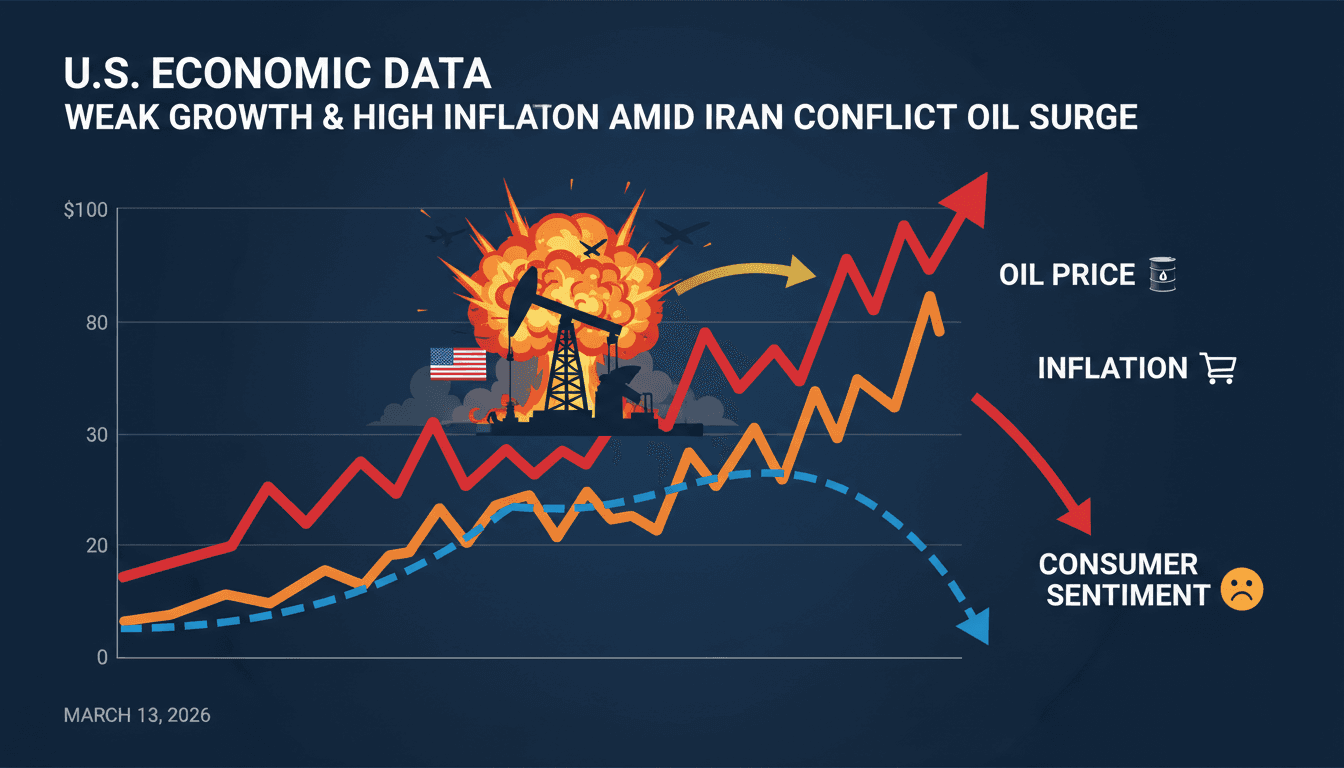
- Inflation remains stubborn: Core PCE inflation held at 3.1%, exceeding the Federal Reserve's target, while gasoline prices surged to $3.63 per gallon.
- Consumer sentiment dropped: The University of Michigan's consumer sentiment index fell to 55.5, indicating growing concerns among households.
The context you actually need
- Headwinds from late 2025: The U.S. economy faced multiple challenges, including tariffs and a government shutdown, leading to stagnant job growth.
- Geopolitical tensions: Military actions against Iran disrupted oil supplies, driving crude prices above $100 per barrel and exacerbating inflationary pressures.
- Mixed economic resilience: Despite challenges, investments in artificial intelligence and strong stock market performance had previously supported consumer spending.
What's really happening
The U.S. economy is currently navigating a complex landscape shaped by both domestic and international factors. In late 2025, a series of policy disruptions—including tariffs, a prolonged government shutdown, and immigration restrictions—contributed to a slowdown in economic growth. The Bureau of Economic Analysis reported a downward revision of Q4 2025 GDP growth to 0.7%, down from an earlier estimate of 1.4%. This stagnation reflects the cumulative impact of these headwinds, which have resulted in subdued consumer spending and declining business confidence.
In early March 2026, military strikes by the U.S. and Israel against Iran significantly disrupted oil supplies, causing Brent crude prices to spike to $104.51 per barrel and WTI to $99.69. This surge in oil prices has had immediate repercussions on consumer costs, with national average gasoline prices rising from $2.98 to $3.63 per gallon. The increase in energy costs is particularly concerning as it compounds existing inflationary pressures, with core PCE inflation holding steady at 3.1% year-over-year—well above the Federal Reserve's 2% target.
Consumer sentiment, as measured by the University of Michigan, fell to its lowest point of 2026 at 55.5, down from 56.6 in February. Households are increasingly worried about rising energy costs and the ongoing geopolitical conflict, which is likely to dampen spending further. This decline in consumer confidence is a critical indicator of future economic activity, as it suggests that households may cut back on discretionary spending, which could further slow growth.
The Federal Reserve is currently in a challenging position, with markets anticipating a 40% probability of no interest rate cuts in 2026, a shift from earlier expectations of multiple reductions. Economists are adjusting their near-term inflation forecasts upward, reflecting the persistent pressures from rising energy costs. While some analysts maintain a cautious optimism about the economy's resilience, the combination of high inflation and geopolitical risks presents a precarious situation that could lead to more pronounced economic vulnerabilities.
Who feels it first (and how)
- Consumers: Households will experience immediate impacts through higher gasoline prices and increased costs of goods.
- Small businesses: Increased operational costs due to higher energy prices may lead to reduced profit margins.
- Investors: Market volatility may affect investment portfolios, particularly in sectors sensitive to energy prices.
- Low-income households: These groups are disproportionately affected by rising costs, as a larger share of their income goes toward energy and basic necessities.
What to watch next
- Oil prices: Continued fluctuations in crude oil prices will be critical, as they directly affect consumer costs and inflation.
- Consumer spending trends: Monitoring shifts in consumer behavior will provide insights into the broader economic outlook and potential recession indicators.
- Federal Reserve policy: Any changes in interest rate policy will signal how the Fed is responding to inflationary pressures and economic growth concerns.
Rising energy costs are impacting consumer budgets and overall inflation.
Continued geopolitical tensions will keep oil prices elevated, further straining the economy.
The Federal Reserve's response to inflation and growth challenges remains uncertain.
Frequently Asked Questions
- Why it matters?
- The latest economic indicators highlight significant risks to the U.S. economy, which could affect global markets and consumer behavior.
- What happened (in 30 seconds)?
- Economic growth slowed: The U.S. GDP growth for Q4 2025 was revised downward to 0.7%, reflecting ongoing economic challenges. Inflation remains stubborn: Core PCE inflation held at 3.1%, exceeding the Federal Reserve's target, while gasoline prices surged to $3.63 per gallon. Consumer sentiment dropped: The University of Michigan's consumer sentiment index fell to 55.5, indicating growing concerns among households.
- What's really happening?
- The U.S. economy is currently navigating a complex landscape shaped by both domestic and international factors. In late 2025, a series of policy disruptions—including tariffs, a prolonged government shutdown, and immigration restrictions—contributed to a slowdown in economic growth. The Bureau of Economic Analysis reported a downward revision of Q4 2025 GDP growth to 0.7%, down from an earlier estimate of 1.4%. This stagnation reflects the cumulative impact of these headwinds, which have resulte
- Who feels it first (and how)?
- Consumers: Households will experience immediate impacts through higher gasoline prices and increased costs of goods. Small businesses: Increased operational costs due to higher energy prices may lead to reduced profit margins. Investors: Market volatility may affect investment portfolios, particularly in sectors sensitive to energy prices. Low-income households: These groups are disproportionately affected by rising costs, as a larger share of their income goes toward energy and basic necessitie
- What to watch next?
- Oil prices: Continued fluctuations in crude oil prices will be critical, as they directly affect consumer costs and inflation. Consumer spending trends: Monitoring shifts in consumer behavior will provide insights into the broader economic outlook and potential recession indicators. Federal Reserve policy: Any changes in interest rate policy will signal how the Fed is responding to inflationary pressures and economic growth concerns.
Social/economic commentary and analysis relevant to business and markets.
"WSJ blends data-driven economic insight with commentary on policy and society."
— A47 Editor
A slew of data released Friday portrayed an economy showing cracks, from weaker household spending to cooler consumer sentiment and higher inflation. Oil prices could aggravate all three.
Recent economic data revealed signs of strain in the US economy, with slower household spending, weakening consumer sentiment, and persistent inflation, even before the recent escalation of conflict involving Iran sent oil prices sharply higher.
Conservative-leaning political and national coverage.
"The Washington Times is a conservative-leaning newspaper known for its political coverage and advocacy of right-of-center viewpoints."
— A47 Editor
Cracks emerged in a resilient U.S. economy before war in Iran sent oil prices rocketing
*# New data revealed that the previously resilient U.S. economy was already showing signs of strain before the outbreak of war in Iran, which has since caused oil prices to surge sharply. *# The escalation in fuel and energy costs poses significant r...
Markets desk coverage, trading insights, and investor updates.
"WSJ’s markets reporting provides in-depth analysis and context for investors."
— A47 Editor
Here’s Where the U.S. Economy Is Most Vulnerable to Iran War
*# The U.S. economy faces new vulnerabilities as the war involving Iran escalates, with previous Middle East conflicts having triggered recessions, though the current economy is somewhat more insulated from oil shocks but already showing signs of str...