
Crude Oil Prices Rise 5% to Near $100 Amid US-Iran Ceasefire Doubts
Here's what it means for you.
If you rely on fuel for commuting or logistics, expect rising costs as oil prices climb.
Why it matters
The surge in crude oil prices reflects ongoing geopolitical tensions that can disrupt global supply chains and impact inflation rates.
What happened (in 30 seconds)
- Crude oil prices surged approximately 5% on April 9, 2026, with WTI closing at $99.83 per barrel.
- Investor concerns over the fragile US-Iran ceasefire and potential supply disruptions in the Strait of Hormuz drove the price increase.
- Energy markets remain volatile, with analysts adjusting forecasts downward amid ongoing geopolitical risks.
The context you actually need
- The Strait of Hormuz is a critical chokepoint for global oil flows, accounting for about 20% of the world's oil supply.
- A recent US-Iran conflict escalated in March 2026, leading to significant price fluctuations, including a previous spike to over $118 per barrel.
- The UAE's fuel price adjustments reflect the global oil price surge, with Super 98 petrol increasing by 31% and diesel by 72% in April 2026.
What's really happening
The recent surge in crude oil prices is rooted in a complex interplay of geopolitical tensions and market dynamics. The US-Iran conflict, which escalated in March 2026, has raised significant concerns over the stability of oil supplies, particularly through the Strait of Hormuz. This strategic waterway is crucial for global oil transport, with approximately 20% of the world's oil passing through it.
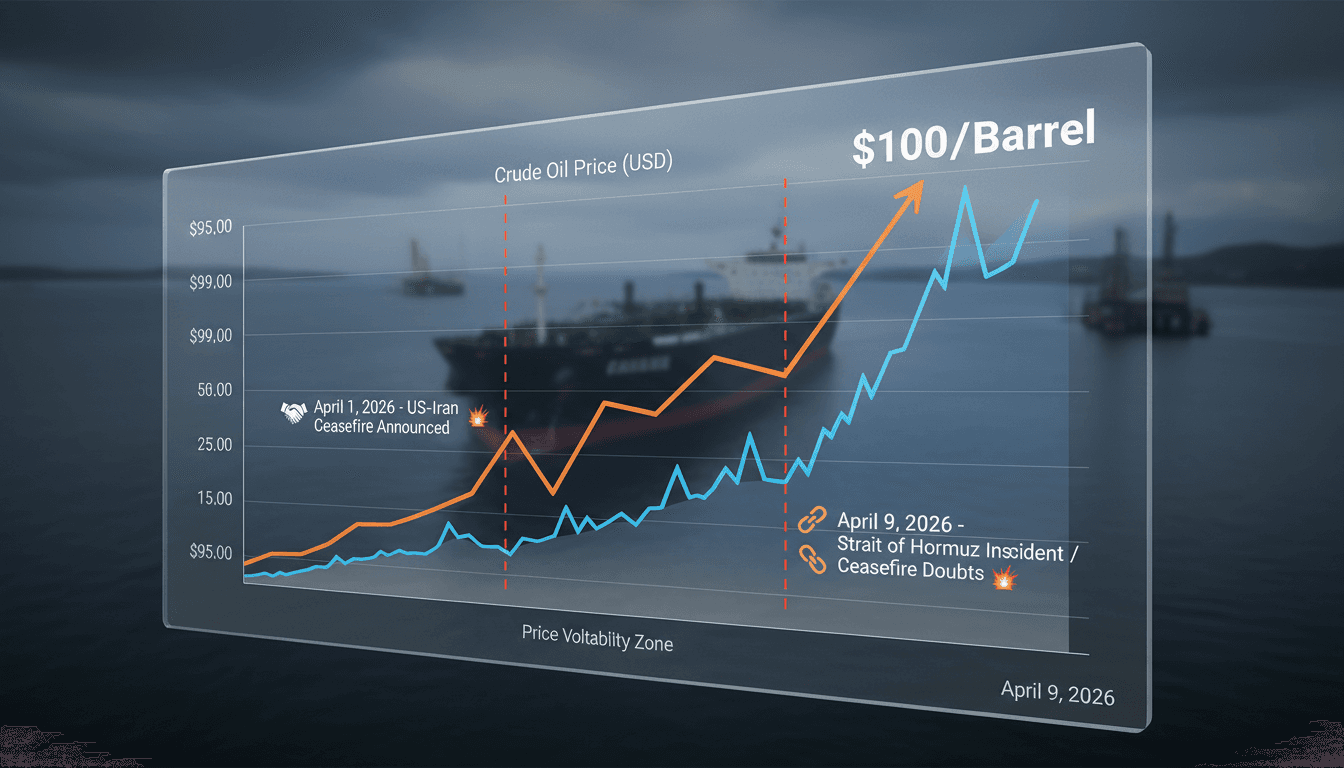
On April 9, 2026, crude oil prices rebounded sharply, with West Texas Intermediate (WTI) crude closing at $99.83 per barrel, up 5.7%. This increase followed a brief drop in prices due to a two-week ceasefire announcement between the US and Iran. However, traders remained skeptical about the durability of this truce, leading to volatile trading conditions. Reports of limited tanker traffic in the Strait of Hormuz and warnings from Iranian officials about potential disruptions further fueled market anxiety.
The market's reaction is indicative of broader supply constraints and geopolitical risks that have become increasingly pronounced in recent months. The initial spike to over $118 per barrel earlier in March was a direct response to fears of conflict escalation, but the subsequent price drop to around $94 following the ceasefire announcement highlighted the market's sensitivity to geopolitical developments.
As traders digested the implications of the fragile ceasefire, they noted that unresolved supply issues and the potential for renewed conflict could lead to further price volatility. Analysts from firms like Goldman Sachs have already adjusted their forecasts, projecting Brent crude prices to stabilize around $90 per barrel for the second quarter of 2026, reflecting ongoing uncertainties in the market.
The implications of these price movements extend beyond just oil traders; they resonate throughout the global economy. As fuel prices rise, costs for transportation and logistics increase, impacting everything from consumer goods to business operations. The UAE has already announced significant increases in fuel prices, with Super 98 petrol rising to Dh3.39 per litre, up 31% from March, and diesel prices soaring by 72%. This translates to higher commuting costs for residents and increased operational expenses for businesses, despite ongoing efforts to diversify the economy away from oil dependency.
Who feels it first (and how)
- Commuters: Increased fuel prices lead to higher costs for daily travel.
- Logistics companies: Rising oil prices inflate transportation costs, impacting delivery and operational budgets.
- Consumers: Higher fuel prices can lead to increased prices for goods and services as businesses pass on costs.
- Investors: Volatility in oil prices can affect stock market performance, particularly in energy sectors.
- Governments: Rising fuel prices may prompt policy adjustments or subsidies to mitigate economic impact.
What to watch next
- Geopolitical developments: Monitor any changes in US-Iran relations that could affect oil supply stability.
- OPEC+ decisions: Watch for any announcements regarding production cuts or increases that could influence global oil prices.
- Market reactions: Observe how energy stocks and broader equities respond to ongoing price volatility and inflation concerns.
Crude oil prices are currently volatile, hovering near $100 per barrel.
Continued geopolitical tensions will keep oil prices fluctuating in the near term.
The long-term impact of these price changes on global inflation and economic growth remains uncertain.
Frequently Asked Questions
- Why it matters?
- The surge in crude oil prices reflects ongoing geopolitical tensions that can disrupt global supply chains and impact inflation rates.
- What happened (in 30 seconds)?
- Crude oil prices surged approximately 5% on April 9, 2026, with WTI closing at $99.83 per barrel. Investor concerns over the fragile US-Iran ceasefire and potential supply disruptions in the Strait of Hormuz drove the price increase. Energy markets remain volatile, with analysts adjusting forecasts downward amid ongoing geopolitical risks.
- What's really happening?
- The recent surge in crude oil prices is rooted in a complex interplay of geopolitical tensions and market dynamics. The US-Iran conflict, which escalated in March 2026, has raised significant concerns over the stability of oil supplies, particularly through the Strait of Hormuz. This strategic waterway is crucial for global oil transport, with approximately 20% of the world's oil passing through it. On April 9, 2026, crude oil prices rebounded sharply, with West Texas Intermediate (WTI) crude
- Who feels it first (and how)?
- Commuters: Increased fuel prices lead to higher costs for daily travel. Logistics companies: Rising oil prices inflate transportation costs, impacting delivery and operational budgets. Consumers: Higher fuel prices can lead to increased prices for goods and services as businesses pass on costs. Investors: Volatility in oil prices can affect stock market performance, particularly in energy sectors. Governments: Rising fuel prices may prompt policy adjustments or subsidies to mitigate econ
- What to watch next?
- Geopolitical developments: Monitor any changes in US-Iran relations that could affect oil supply stability. OPEC+ decisions: Watch for any announcements regarding production cuts or increases that could influence global oil prices. Market reactions: Observe how energy stocks and broader equities respond to ongoing price volatility and inflation concerns.
Arabic-language UAE newspaper coverage focused on domestic affairs, public institutions, business, society, and regional developments.
"Al Khaleej coverage generally reflects a mainstream UAE editorial lens with strong attention to public affairs, institutions, and regional developments."
— A47 Editor
النفط يصعد 5% ويحوم حول 100 دولار
Oil prices rose by 5% on Thursday, driven by investor concerns over ongoing restrictions on energy flows through the Strait of Hormuz amid a fragile ceasefire between the United States and Iran expected to last two weeks. Brent crude futures climbed ...
Sports reporting with a focus on Saudi and regional competitions.
"Okaz sports coverage is broad and audience-friendly, with strong attention to Saudi teams and leagues."
— A47 Editor
النفط يعاود الصعود.. برنت يلامس 100 دولار و«نايمكس» قرب 102
Oil prices have increased significantly today, with Brent crude nearing $100 per barrel and WTI crude close to $102, driven by a decline in the dollar and ongoing concerns over energy flow restrictions through the Strait of Hormuz, despite a ceasefir...
Pan-Arab news coverage spanning politics, business, sports, and regional affairs.
"Asharq Al-Awsat reflects a broad Arab editorial perspective with strong attention to regional geopolitics."
— A47 Editor
النفط يقفز مجدداً مع تزايد الشكوك حول عبور مضيق هرمز
Oil prices surged on Thursday amid increasing concerns regarding the ongoing restrictions on energy flows through the Strait of Hormuz. This rise in prices reflects the heightened uncertainty surrounding the stability of one of the world's most criti...