
NASA's Artemis II Crew Returns from Historic Lunar Flyby
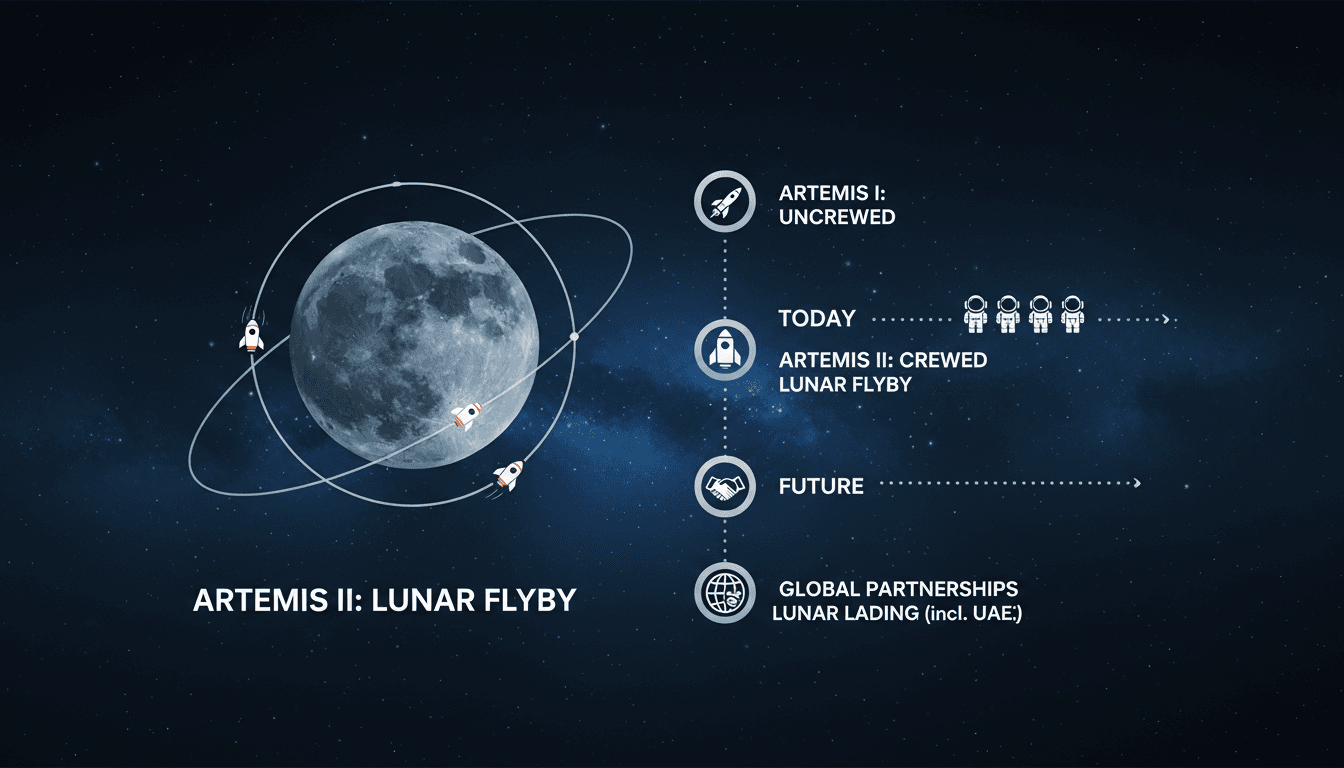
Here's what it means for you.
The Artemis II mission sets the stage for a new era of international collaboration in space, impacting industries from aerospace to technology.
Why it matters
This mission reinforces NASA's commitment to sustainable lunar exploration and paves the way for future Mars missions, influencing global space policies and partnerships.
What happened (in 30 seconds)
- NASA's Artemis II crew—Reid Wiseman, Victor Glover, Christina Koch, and Jeremy Hansen—completed a 10-day circumlunar mission and are en route for splashdown in the Pacific Ocean on April 10, 2026.
- The Orion spacecraft, launched on April 1, 2026, achieved a maximum distance of 252,756 miles from Earth, surpassing the Apollo 13 record.
- International participation was highlighted, with Canadian astronaut Jeremy Hansen aboard, showcasing global cooperation under the Artemis Accords.
The context you actually need
- Artemis II follows the uncrewed Artemis I mission, which validated key systems for future lunar exploration.
- The mission tested life support, navigation, and reentry capabilities critical for human deep-space operations.
- UAE's involvement through the Mohammed Bin Rashid Space Centre emphasizes the growing international partnerships in space exploration.
What's really happening
The Artemis II mission, which launched on April 1, 2026, represents a significant leap in human spaceflight, marking the first crewed lunar mission since Apollo 17 in 1972. The Orion spacecraft, named Integrity, successfully completed its circumlunar journey, achieving a peak distance of 252,756 miles from Earth—an impressive feat that eclipses the Apollo 13 record. This mission is not just a technical achievement; it is a critical test for NASA's broader Artemis program, which aims to establish a sustainable human presence on the Moon and prepare for future Mars exploration.
The mission's success is rooted in extensive preparation and international collaboration. Following the uncrewed Artemis I mission, which validated the Space Launch System (SLS) and Orion spacecraft systems, Artemis II served as a critical test for human operations in deep space. The crew's journey involved intricate maneuvers, including translunar injection and trajectory corrections, showcasing NASA's advanced capabilities in navigation and life support systems.
Moreover, the Artemis program is underpinned by international partnerships, exemplified by the participation of Canadian astronaut Jeremy Hansen. This collaboration highlights the importance of the Artemis Accords, which aim to foster cooperation in space exploration among signatory nations. The UAE's involvement through its Mohammed Bin Rashid Space Centre further emphasizes the program's global reach and the potential for shared technological advancements in aerospace.
As the mission approaches its splashdown in the Pacific Ocean, the implications extend beyond the immediate success of the flight. The Artemis II mission is a stepping stone toward future lunar landings, including the planned Artemis III mission, which aims to land the first woman and the next man on the Moon. This progressive vision for lunar exploration not only enhances scientific understanding but also stimulates innovation across various sectors, including aerospace, technology, and education.
The successful return of the Artemis II crew will likely bolster public interest and investment in space exploration, leading to increased funding for research and development in related fields. As nations and private entities vie for leadership in the burgeoning space economy, the outcomes of the Artemis missions will play a pivotal role in shaping the future landscape of space exploration and its associated industries.
Who feels it first (and how)
- Aerospace companies: Increased contracts and opportunities for collaboration on future missions.
- Educational institutions: Enhanced STEM programs and research initiatives inspired by renewed interest in space exploration.
- International partners: Countries involved in the Artemis Accords may see strengthened ties and collaborative projects in space science.
What to watch next
- Future Artemis missions: Watch for announcements regarding Artemis III and subsequent missions, as they will define the next steps in lunar exploration.
- International partnerships: Monitor new collaborations and agreements under the Artemis Accords, which could reshape global space exploration efforts.
- Technological advancements: Keep an eye on innovations stemming from the Artemis program that may impact other industries, particularly in aerospace and telecommunications.
The Artemis II mission successfully tested key systems for human spaceflight.
Increased international collaboration in space exploration will emerge from the success of Artemis II.
The long-term economic impact of Artemis missions on the global space industry remains to be seen.
Frequently Asked Questions
- Why it matters?
- This mission reinforces NASA's commitment to sustainable lunar exploration and paves the way for future Mars missions, influencing global space policies and partnerships.
- What happened (in 30 seconds)?
- NASA's Artemis II crew—Reid Wiseman, Victor Glover, Christina Koch, and Jeremy Hansen—completed a 10-day circumlunar mission and are en route for splashdown in the Pacific Ocean on April 10, 2026. The Orion spacecraft, launched on April 1, 2026, achieved a maximum distance of 252,756 miles from Earth, surpassing the Apollo 13 record. International participation was highlighted, with Canadian astronaut Jeremy Hansen aboard, showcasing global cooperation under the Artemis Accords.
- What's really happening?
- The Artemis II mission, which launched on April 1, 2026, represents a significant leap in human spaceflight, marking the first crewed lunar mission since Apollo 17 in 1972. The Orion spacecraft, named Integrity, successfully completed its circumlunar journey, achieving a peak distance of 252,756 miles from Earth—an impressive feat that eclipses the Apollo 13 record. This mission is not just a technical achievement; it is a critical test for NASA's broader Artemis program, which aims to establish
- Who feels it first (and how)?
- Aerospace companies: Increased contracts and opportunities for collaboration on future missions. Educational institutions: Enhanced STEM programs and research initiatives inspired by renewed interest in space exploration. International partners: Countries involved in the Artemis Accords may see strengthened ties and collaborative projects in space science.
- What to watch next?
- Future Artemis missions: Watch for announcements regarding Artemis III and subsequent missions, as they will define the next steps in lunar exploration. International partnerships: Monitor new collaborations and agreements under the Artemis Accords, which could reshape global space exploration efforts. Technological advancements: Keep an eye on innovations stemming from the Artemis program that may impact other industries, particularly in aerospace and telecommunications.
International news coverage curated for readers in the UAE and Gulf region.
"Emirates 24|7 world coverage presents global developments through a UAE-facing and Gulf-relevant editorial lens."
— A47 Editor
Artemis II astronauts hurtle home from moon toward splashdown Artemis II astronauts hurtle home from moon toward splashdown
The Artemis II astronauts, aboard the Orion spacecraft, are returning to Earth after a historic 10-day mission that marked the first crewed lunar journey in over 50 years. The crew, consisting of U.S. astronauts Reid Wiseman, Victor Glover, Christina...
24/7 international news from a French perspective in multiple languages.
"France 24 is viewed as a globally focused outlet with balanced coverage and a European perspective."
— A47 Editor
Artemis II astronauts hurtle home from Moon toward Pacific splashdown
The Artemis II astronauts are returning to Earth after a historic lunar mission, marking the first crewed journey to the Moon in over 50 years. The crew is preparing for a splashdown in the Pacific Ocean off the coast of California, concluding a 10-d...