
UK Introduces EU Realignment Legislation Amid Iran War Strains
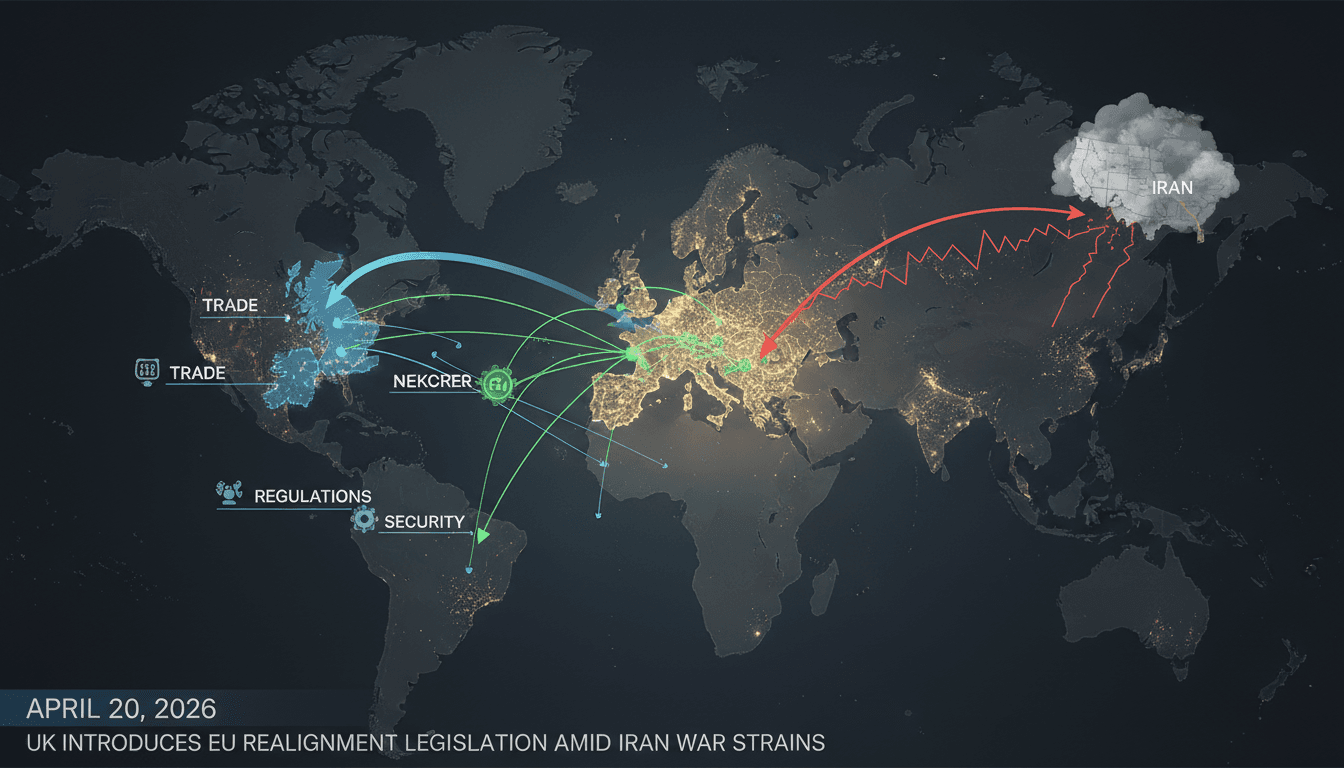
Here's what it means for you.
If you operate in international markets, the UK's pivot towards the EU could reshape trade dynamics and regulatory landscapes.
Why it matters
This legislative shift signals a significant recalibration of the UK's economic strategy in response to geopolitical pressures.
What happened (in 30 seconds)
- On April 20, 2026, the UK government announced plans for legislation to align more closely with EU single market rules.
- This move comes amid deteriorating relations with the US, particularly under President Donald Trump's administration, as the Iran war escalates.
- Prime Minister Keir Starmer's administration is framing this 'EU reset' as crucial for economic stability and security resilience.
The context you actually need
- The 2026 Iran war, which began on February 28, has strained transatlantic ties, particularly affecting the UK's relationship with the US.
- Post-Brexit dynamics have left the UK seeking stability and economic partnerships, especially after Labour's 2024 election victory.
- The UK’s GDP growth forecast for 2026 has been downgraded to 0.8%, the largest decline among G7 nations, largely due to energy import shocks from the Iran conflict.
What's really happening
The UK's decision to pursue a legislative realignment with the EU is a strategic response to the deteriorating geopolitical landscape, particularly the ongoing Iran war. This conflict, which began with US-Israel airstrikes on Iranian military sites, has led to significant disruptions in global energy markets and heightened tensions between the UK and its traditional ally, the US.
As the UK abstains from direct military involvement, it faces pressure from the US, especially from President Trump, who has threatened to withdraw from the nascent US-UK trade deal. This threat is compounded by Trump's broader criticisms of allies who do not participate in the conflict, creating a precarious situation for the UK.
In this context, Prime Minister Keir Starmer's administration is positioning the proposed EU alignment as a necessary pivot to ensure economic resilience. The legislation aims to facilitate dynamic regulatory alignment, enhance youth mobility, and establish energy deals with the EU. This approach is not just about economic pragmatism; it is also a political maneuver to stabilize the UK's standing in Europe as it navigates the fallout from Brexit and the current geopolitical crisis.
The timing of this announcement is strategic, coinciding with the 10th anniversary of Brexit and an upcoming EU summit. By aligning more closely with EU regulations, the UK hopes to mitigate the economic fallout from the Iran war, which has already led to inflationary pressures and a significant downgrade in GDP growth forecasts.
Moreover, this shift could redefine the UK's role in Europe, potentially leading to deeper integration with EU markets. However, it also risks alienating segments of the UK population who view this as a betrayal of Brexit ideals. The political landscape is further complicated by reactions from various political factions, with some advocating for deeper ties with the EU while others vehemently oppose it.
Who feels it first (and how)
- Businesses in the UK: Companies reliant on EU trade may benefit from reduced regulatory barriers but face uncertainty in the transition.
- Energy sector stakeholders: Firms involved in energy imports and exports will need to adapt to new agreements and regulations.
- Young professionals: Those seeking opportunities in Europe may find enhanced mobility options, impacting labor markets.
- Political factions: Different political groups will react variably, influencing future elections and policy directions.
What to watch next
- EU-UK negotiations: Watch for developments in talks regarding youth mobility and energy agreements, as these will indicate the depth of the realignment.
- Market reactions: Monitor how financial markets respond to the proposed legislation, particularly in sectors sensitive to regulatory changes.
- US-UK relations: Keep an eye on any shifts in rhetoric or policy from the US, especially from Trump, which could impact trade agreements.
The UK is pursuing legislation for closer alignment with EU regulations.
Economic impacts from the Iran war will continue to influence UK-EU relations and domestic policies.
The long-term political ramifications of this shift on the UK's domestic landscape and Brexit sentiment.
Frequently Asked Questions
- Why it matters?
- This legislative shift signals a significant recalibration of the UK's economic strategy in response to geopolitical pressures.
- What happened (in 30 seconds)?
- On April 20, 2026, the UK government announced plans for legislation to align more closely with EU single market rules. This move comes amid deteriorating relations with the US, particularly under President Donald Trump's administration, as the Iran war escalates. Prime Minister Keir Starmer's administration is framing this 'EU reset' as crucial for economic stability and security resilience.
- What's really happening?
- The UK's decision to pursue a legislative realignment with the EU is a strategic response to the deteriorating geopolitical landscape, particularly the ongoing Iran war. This conflict, which began with US-Israel airstrikes on Iranian military sites, has led to significant disruptions in global energy markets and heightened tensions between the UK and its traditional ally, the US. As the UK abstains from direct military involvement, it faces pressure from the US, especially from President Trump
- Who feels it first (and how)?
- Businesses in the UK: Companies reliant on EU trade may benefit from reduced regulatory barriers but face uncertainty in the transition. Energy sector stakeholders: Firms involved in energy imports and exports will need to adapt to new agreements and regulations. Young professionals: Those seeking opportunities in Europe may find enhanced mobility options, impacting labor markets. Political factions: Different political groups will react variably, influencing future elections and policy di
- What to watch next?
- EU-UK negotiations: Watch for developments in talks regarding youth mobility and energy agreements, as these will indicate the depth of the realignment. Market reactions: Monitor how financial markets respond to the proposed legislation, particularly in sectors sensitive to regulatory changes. US-UK relations: Keep an eye on any shifts in rhetoric or policy from the US, especially from Trump, which could impact trade agreements.
English-language news from Qatar covering domestic and regional affairs.
"Gulf Times reflects Qatari perspectives on regional developments."
— A47 Editor
As Iran war strains ties with Trump’s US, UK looks to Europe
The UK government is preparing to announce new legislation aimed at strengthening ties with the European Union, a move prompted by deteriorating relations with the United States amid ongoing tensions related to the Iran war. This shift reflects a str...
Regional and international reporting focused on Middle Eastern politics, diplomacy, and economics.
"Asharq Al-Awsat is a Saudi-owned international newspaper reflecting mainstream Gulf political perspectives."
— A47 Editor
As Iran War Strains Ties with Trump’s US, UK Looks to Europe
The ongoing conflict involving Iran has strained relations with the United States under President Trump, prompting the UK to seek closer ties with Europe as a strategic response. This shift comes amid rising tensions and military dissent within the U...