
Egypt's Inflation Rate Climbs to 15.2% Amid Energy Price Hikes
Here's what it means for you.
If you have family in Egypt or are involved in the remittance economy, rising inflation will directly impact your financial decisions.
Why it matters
The surge in inflation is reshaping consumer behavior and economic stability in Egypt, affecting both local and expatriate communities.
What happened (in 30 seconds)
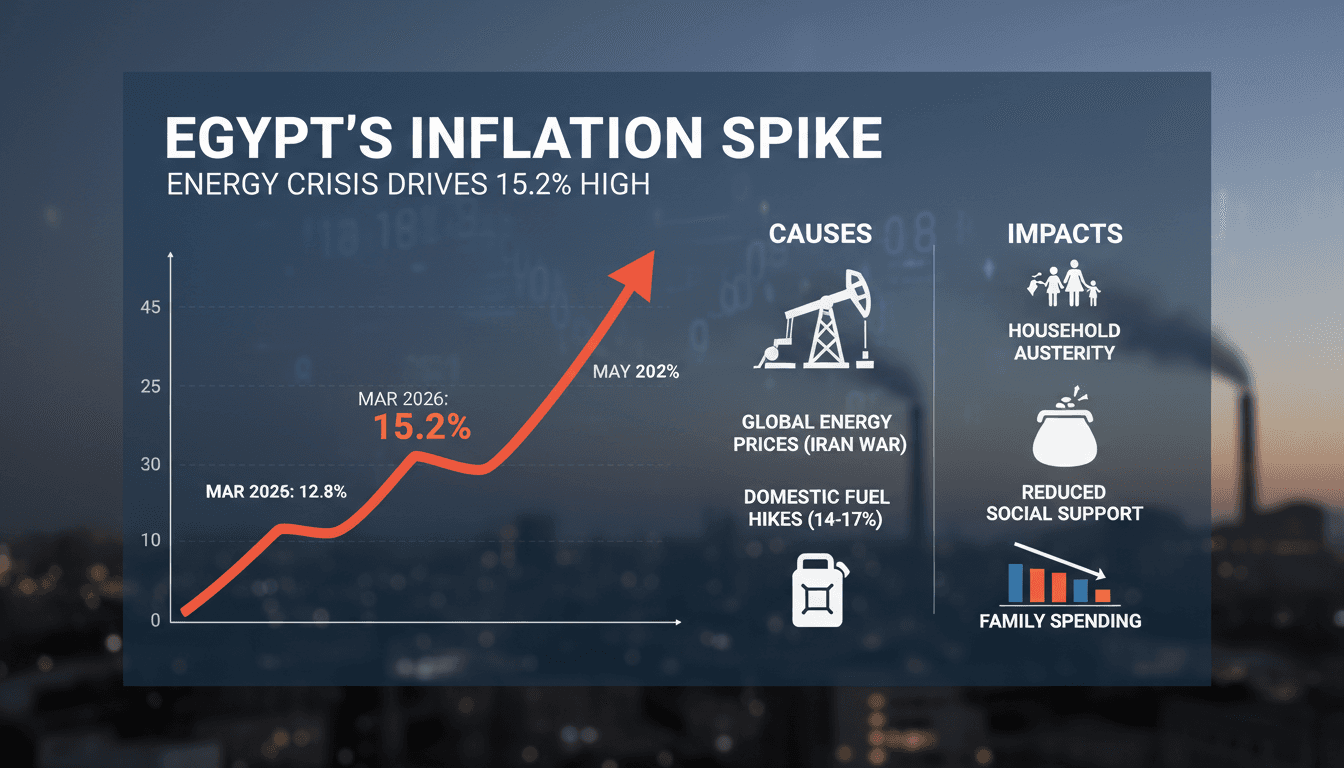
- Inflation accelerated to 15.2% in March 2026, up from 13.4% in February, marking the highest level since May 2025.
- Energy costs spiked due to the Iran war and domestic fuel price hikes of 14-17%, leading to increased pressures on households.
- Austerity measures were introduced by the Egyptian government in response, including electricity price hikes and adjustments to social support.
The context you actually need
- Historical inflation peaks: Egypt's inflation reached 38% in September 2023, driven by currency devaluation and IMF reforms, prompting aggressive interest rate hikes.
- Recent stabilization: By late 2025, inflation had stabilized around 11-12% due to monetary easing and pound stabilization.
- Geopolitical influences: The outbreak of the Iran war in early 2026 triggered global energy price spikes, reigniting inflationary pressures.
What's really happening
In March 2026, Egypt faced a significant inflation surge, with the annual urban consumer price index (CPI) reaching 15.2%. This increase was primarily driven by a combination of external and internal factors. The Iran war has caused global energy prices to rise sharply, which directly impacted domestic fuel prices. The Egyptian government responded to these pressures by implementing fuel price hikes of 14-17% across various petroleum products.
As a result, households are feeling the pinch, particularly low- and middle-income families who are already grappling with the aftermath of previous economic reforms. The Central Agency for Public Mobilization and Statistics (CAPMAS) reported a monthly inflation rate of 3.2% in March, up from 2.8% in February. This rapid increase in living costs is forcing families to cut back on non-essential spending, prioritizing basic needs like food and energy.
Sector-specific surges reveal the depth of the crisis: transport costs soared by 39.4%, housing and utilities by 35.3%, and regulated items by 19%. This inflationary environment is exacerbating existing economic strains and pushing households to adopt stricter austerity measures.
In response to the inflation crisis, the Egyptian government has rolled out austerity measures, including electricity price hikes for high-usage households starting in April 2026. Additionally, social support programs are being expanded, and minimum wage adjustments are being considered to alleviate some of the financial burdens on citizens. The Central Bank of Egypt is maintaining a cautious approach to monetary policy, closely monitoring the situation as the economy navigates these turbulent waters.
The overall market sentiment is one of caution, with the Egyptian pound experiencing depreciation and foreign investors pulling out. Households are tightening their belts, leading to a significant reduction in discretionary spending. This economic landscape is not just a temporary blip; it signals a potential long-term shift in consumer behavior and economic stability in Egypt.
Who feels it first (and how)
- Low- and middle-income households: Struggling to afford basic necessities due to rising prices.
- Expatriates in the UAE: Over 500,000 Egyptians in Dubai face increased remittance demands as inflation erodes purchasing power back home.
- Transport and utility sectors: Experiencing significant price hikes that directly affect operational costs and consumer spending.
What to watch next
- Government policy adjustments: Monitor any new austerity measures or changes to social support programs that could further impact household budgets.
- Inflation trends: Keep an eye on monthly inflation rates to gauge whether the current spike is a temporary phenomenon or indicative of a longer-term trend.
- Remittance flows: Watch for changes in remittance patterns, especially from expatriates in the UAE, as inflation affects family purchasing power in Egypt.
Inflation has surged to 15.2%, impacting household spending.
Continued austerity measures and potential adjustments to social support will follow.
The long-term effects of the Iran war on global energy prices and subsequent inflation in Egypt.
Frequently Asked Questions
- Why it matters?
- The surge in inflation is reshaping consumer behavior and economic stability in Egypt, affecting both local and expatriate communities.
- What happened (in 30 seconds)?
- Inflation accelerated to 15.2% in March 2026, up from 13.4% in February, marking the highest level since May 2025. Energy costs spiked due to the Iran war and domestic fuel price hikes of 14-17%, leading to increased pressures on households. Austerity measures were introduced by the Egyptian government in response, including electricity price hikes and adjustments to social support.
- What's really happening?
- In March 2026, Egypt faced a significant inflation surge, with the annual urban consumer price index (CPI) reaching 15.2%. This increase was primarily driven by a combination of external and internal factors. The Iran war has caused global energy prices to rise sharply, which directly impacted domestic fuel prices. The Egyptian government responded to these pressures by implementing fuel price hikes of 14-17% across various petroleum products. As a result, households are feeling the pinch, par
- Who feels it first (and how)?
- Low- and middle-income households: Struggling to afford basic necessities due to rising prices. Expatriates in the UAE: Over 500,000 Egyptians in Dubai face increased remittance demands as inflation erodes purchasing power back home. Transport and utility sectors: Experiencing significant price hikes that directly affect operational costs and consumer spending.
- What to watch next?
- Government policy adjustments: Monitor any new austerity measures or changes to social support programs that could further impact household budgets. Inflation trends: Keep an eye on monthly inflation rates to gauge whether the current spike is a temporary phenomenon or indicative of a longer-term trend. Remittance flows: Watch for changes in remittance patterns, especially from expatriates in the UAE, as inflation affects family purchasing power in Egypt.
Pan-Arab news coverage spanning politics, business, sports, and regional affairs.
"Asharq Al-Awsat reflects a broad Arab editorial perspective with strong attention to regional geopolitics."
— A47 Editor
التضخم يتسارع في مصر ويدفع أسراً لمزيد من التقشف
The inflation rate in Egypt accelerated to approximately 15.2% year-on-year in March, up from 13.4% in February. This increase reflects ongoing economic challenges faced by the country, impacting the cost of living for many families.
Arabic-language UAE newspaper coverage focused on domestic affairs, public institutions, business, society, and regional developments.
"Al Khaleej coverage generally reflects a mainstream UAE editorial lens with strong attention to public affairs, institutions, and regional developments."
— A47 Editor
المركزي المصري: ارتفاع التضخم الأساسي إلى 14% في مارس
The Central Bank of Egypt announced on Thursday that the core inflation rate rose to 14% year-on-year in March, up from 12.7% in February. This increase reflects ongoing economic pressures affecting consumer prices in the country.
Arabic-language UAE newspaper coverage focused on domestic affairs, public institutions, business, society, and regional developments.
"Al Khaleej coverage generally reflects a mainstream UAE editorial lens with strong attention to public affairs, institutions, and regional developments."
— A47 Editor
التضخم في المدن المصرية يقفز إلى 15.2% في مارس
The annual inflation rate in Egyptian cities surged unexpectedly to 15.2% in March, up from 13.4% in February. This increase reflects growing economic pressures within the country, impacting the cost of living for residents.