
Oil Prices Fluctuate Amid U.S. Deadline for Iran Deal on Strait of Hormuz
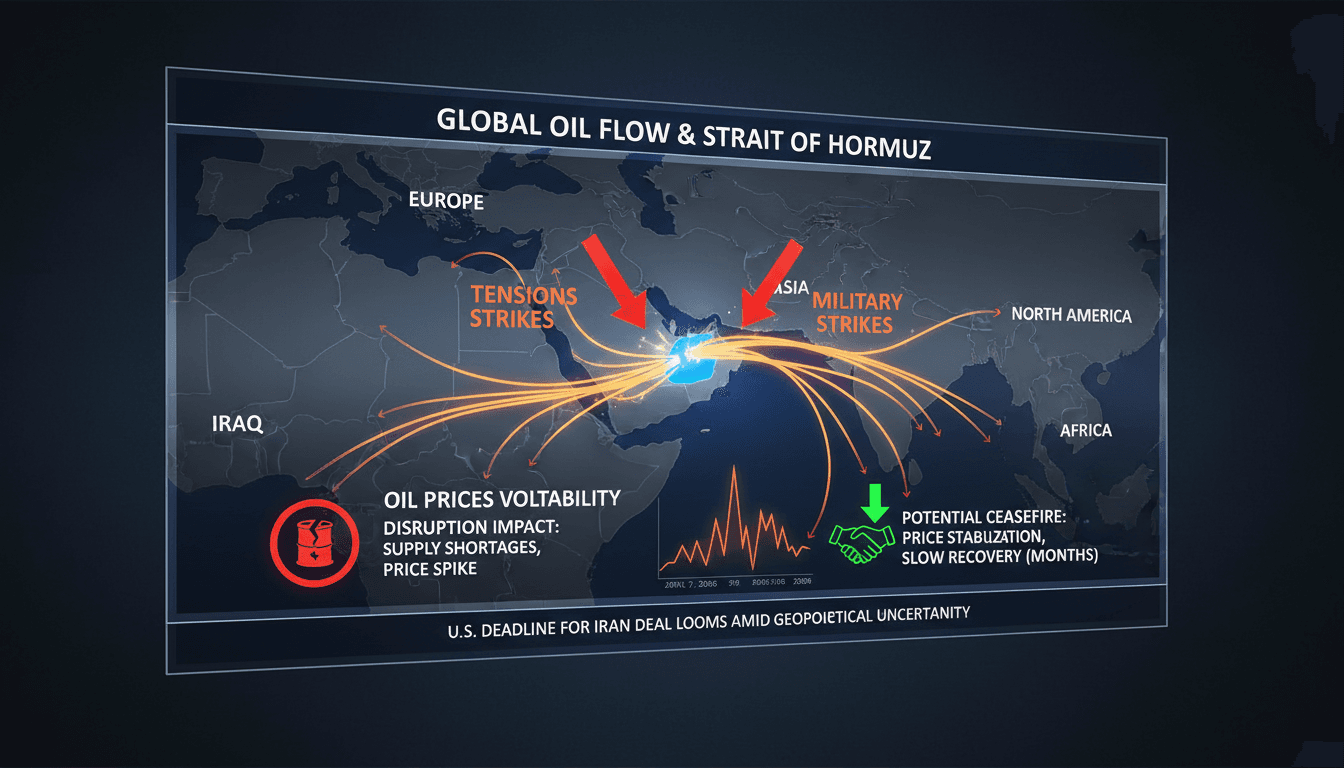
Here's what it means for you.
If you rely on oil or energy markets, the fluctuations in oil prices could directly impact your costs and financial planning.
Why it matters
The Strait of Hormuz is a critical artery for global oil supply, and disruptions can lead to significant market volatility.
What happened (in 30 seconds)
- Oil prices surged above $111 per barrel on April 7, 2026, amid fears of prolonged disruptions in the Strait of Hormuz.
- U.S. President Trump set a self-imposed deadline for Iran to agree to a deal reopening the strait, escalating tensions.
- A two-week ceasefire was agreed upon, leading to a subsequent plunge in oil prices to around $92-$96 per barrel.
The context you actually need
- Negotiations between the U.S. and Iran over nuclear dismantlement began in April 2025 but faced significant setbacks due to military actions.
- Israeli strikes on Iranian nuclear sites in June 2025 and U.S. airstrikes in early 2026 heightened tensions, leading to threats of closing the Strait of Hormuz.
- The Strait of Hormuz is vital for global oil transport, with about 20% of the world's oil passing through it, making its security crucial for energy markets.
What's really happening
The recent volatility in oil prices is a direct consequence of escalating tensions between the U.S. and Iran, particularly surrounding the Strait of Hormuz. As of April 7, 2026, oil prices had reached a peak of $111 per barrel, reflecting market fears of a potential disruption in this critical shipping route. This spike was driven by a combination of factors, including President Trump's ultimatum to Iran and the backdrop of ongoing military actions that have already disrupted oil flows.
The situation began to unravel in late February 2026, when U.S. and Israeli airstrikes targeted Iranian nuclear sites, resulting in the death of Supreme Leader Ali Khamenei. This act provoked a strong Iranian response, including threats to close the Strait of Hormuz, which is essential for oil exports from the Gulf region. As tensions escalated, Trump issued multiple ultimatums, culminating in a deadline for Iran to agree to a deal that would ensure the reopening of the strait.
As the deadline approached, analysts noted Iran's hardline stance, which contributed to the uncertainty in oil markets. The fear of a prolonged conflict led to a surge in oil prices, as traders reacted to the potential for significant disruptions in supply. However, in a surprising turn, Iran announced conditional safe passage through the strait under its oversight, leading to a temporary ceasefire and averting immediate escalation.
Following the deadline, the oil market responded dramatically. Prices plunged by up to 15%, settling around $92-$96 per barrel, as the ceasefire alleviated fears of a full-blown conflict. This decline in oil prices had a ripple effect across global stock markets, with major indices like the S&P 500 and FTSE 100 seeing gains. The ceasefire, while a relief, is not a permanent solution, and analysts caution that the recovery of oil markets could take months due to the damage inflicted on infrastructure during the conflict.
The situation remains fluid, with ongoing monitoring by Gulf governments, including the UAE, which are wary of the implications for regional stability and energy exports. The interplay of military actions, diplomatic negotiations, and market reactions underscores the complexity of the geopolitical landscape surrounding oil supply.
Who feels it first (and how)
- Consumers in Dubai: Elevated fuel prices and inflationary pressures due to disrupted energy exports.
- Shipping companies: Increased insurance costs and operational risks associated with navigating the Strait of Hormuz.
- Investors: Fluctuations in stock markets and commodity prices affecting portfolios, especially in energy sectors.
What to watch next
- Iran's compliance: Monitor whether Iran adheres to the ceasefire terms and allows safe passage through the Strait, as this will influence oil supply stability.
- U.S. and Israeli military actions: Any further military engagement could reignite tensions and lead to another spike in oil prices.
- Global economic indicators: Watch for changes in inflation rates and consumer spending in oil-dependent economies, which could reflect the broader impact of oil price volatility.
Oil prices are sensitive to geopolitical tensions, particularly in the Middle East.
Continued volatility in oil markets as the situation evolves and negotiations unfold.
The long-term implications for U.S.-Iran relations and their impact on global energy security.
Frequently Asked Questions
- Why it matters?
- The Strait of Hormuz is a critical artery for global oil supply, and disruptions can lead to significant market volatility.
- What happened (in 30 seconds)?
- Oil prices surged above $111 per barrel on April 7, 2026, amid fears of prolonged disruptions in the Strait of Hormuz. U.S. President Trump set a self-imposed deadline for Iran to agree to a deal reopening the strait, escalating tensions. A two-week ceasefire was agreed upon, leading to a subsequent plunge in oil prices to around $92-$96 per barrel.
- What's really happening?
- The recent volatility in oil prices is a direct consequence of escalating tensions between the U.S. and Iran, particularly surrounding the Strait of Hormuz. As of April 7, 2026, oil prices had reached a peak of $111 per barrel, reflecting market fears of a potential disruption in this critical shipping route. This spike was driven by a combination of factors, including President Trump's ultimatum to Iran and the backdrop of ongoing military actions that have already disrupted oil flows. The sit
- Who feels it first (and how)?
- Consumers in Dubai: Elevated fuel prices and inflationary pressures due to disrupted energy exports. Shipping companies: Increased insurance costs and operational risks associated with navigating the Strait of Hormuz. Investors: Fluctuations in stock markets and commodity prices affecting portfolios, especially in energy sectors.
- What to watch next?
- Iran's compliance: Monitor whether Iran adheres to the ceasefire terms and allows safe passage through the Strait, as this will influence oil supply stability. U.S. and Israeli military actions: Any further military engagement could reignite tensions and lead to another spike in oil prices. Global economic indicators: Watch for changes in inflation rates and consumer spending in oil-dependent economies, which could reflect the broader impact of oil price volatility.
Coverage of national news and events from across the United States.
"HuffPost is known for its progressive editorial stance, offering opinionated yet comprehensive coverage on social, political, and cultural topics."
— A47 Editor
Oil Prices Sink And U.S. Stock Futures Jump As U.S. And Iran Agree To 2-Week Ceasefire
Oil prices have significantly dropped following President Trump's announcement of a two-week ceasefire with Iran, which comes amid escalating tensions and military actions in the region. This ceasefire is seen as a pivotal moment in the ongoing confl...
Corporate news, economic trends, and markets with UK and global scope.
"BBC News is widely regarded as reputable and impartial, with a public service mandate."
— A47 Editor
Oil price fluctuates ahead of Trump's Iran deal deadline
Oil prices are experiencing fluctuations as President Donald Trump has issued severe threats against Iran, warning that the U.S. could destroy the country 'in one night' if Tehran does not agree to reopen the Strait of Hormuz by the impending deadlin...
Business, markets, economy, and corporate news with strong UAE and regional relevance.
"Emirates 24|7 business coverage tends to center UAE markets, property, regulation, and regional economic developments."
— A47 Editor
Stocks stumble, oil above $110 as Trump's Iran deadline nears Stocks stumble, oil above $110 as Trump's Iran deadline nears
Global stock markets experienced fluctuations while oil prices remained above $110 per barrel as tensions escalated in the U.S.-Israel conflict with Iran, coinciding with a deadline set by President Trump for a potential deal. Investors are adopting ...
Regional and international reporting focused on Middle Eastern politics, diplomacy, and economics.
"Asharq Al-Awsat is a Saudi-owned international newspaper reflecting mainstream Gulf political perspectives."
— A47 Editor
Oil Prices Rally, Stocks Mixed after Trump's Latest Iran Threat
Oil prices have rallied while stock markets showed mixed results following President Donald Trump's latest threats regarding Iran. This development comes amidst a backdrop of escalating tensions and a recently announced two-week ceasefire between the...