
Trump Administration Considers Troop Reallocations to Penalize NATO Members Post-Iran War
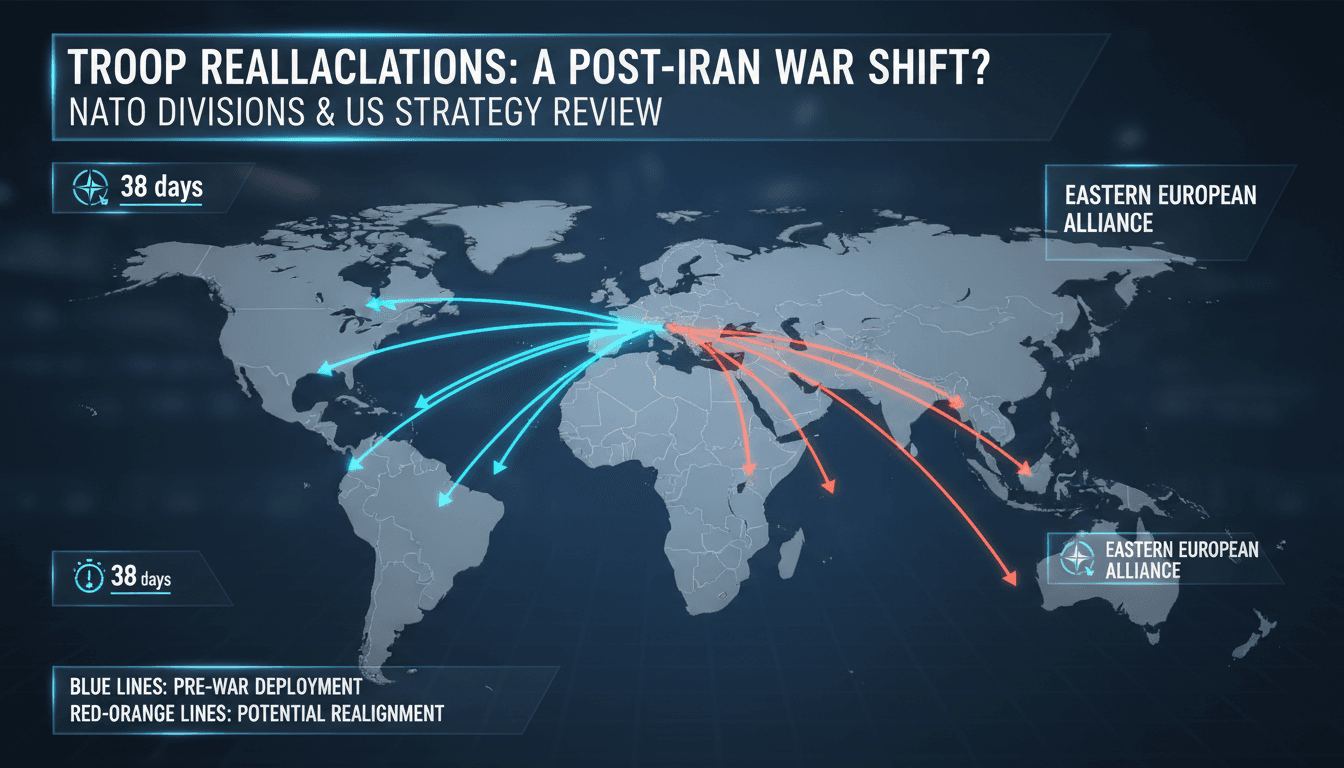
Here's what it means for you.
If you work in international relations or defense sectors, the potential troop shifts could reshape alliances and impact military contracts.
Why it matters
This proposal could redefine NATO's operational dynamics and influence global military strategies.
What happened (in 30 seconds)
- On April 8, 2026, President Trump is considering reallocating U.S. troops from NATO countries that did not support the Iran War.
- The 38-day conflict tested NATO solidarity, with many European members abstaining from military support.
- The White House claims NATO has 'failed' to meet its obligations, prompting discussions of punitive measures.
The context you actually need
- The 2026 Iran War began on February 28, triggered by U.S. and Israeli strikes following Iran's closure of the Strait of Hormuz.
- NATO's response was tepid, with only a few Eastern European countries providing limited support, highlighting fractures in the alliance.
- Post-war dynamics show volatility in oil markets, with Brent crude prices rising above $100, affecting global economies.
What's really happening
The Trump administration's consideration of troop reallocations stems from a broader narrative of frustration with NATO's commitment levels during the recent Iran War. The conflict, which lasted 38 days, was marked by significant military action from the U.S. and Israel against Iranian targets following Tehran's blockade of the Strait of Hormuz. This blockade disrupted global oil supplies, prompting urgent calls for NATO support, particularly for naval operations in the region.
However, many NATO members, particularly in Western Europe, hesitated to engage militarily, citing a lack of applicability of Article 5, which mandates collective defense. This reluctance was compounded by domestic political constraints and differing regional priorities, leading to a perception of disunity within the alliance. Countries like Poland, Romania, Lithuania, and Greece did offer some support, but the overall response was deemed insufficient by the Trump administration.
In the aftermath of the war, the White House's narrative shifted to framing NATO as having 'failed' to uphold its commitments. This rhetoric is significant as it sets the stage for potential punitive actions against non-supportive members. The proposed troop reallocations would serve as a mechanism to penalize countries that did not contribute to the military efforts, effectively redistributing U.S. military presence to nations perceived as more cooperative.
This move could have far-reaching implications for NATO's cohesion and operational effectiveness. It raises questions about the future of transatlantic relations and the balance of military power within the alliance. If implemented, troop shifts could lead to increased tensions among member states, particularly those who feel unfairly targeted or sidelined. Additionally, the prospect of U.S. military resources being concentrated in certain countries could alter defense postures across Europe, prompting nations to reassess their own military strategies and alliances.
The geopolitical landscape is further complicated by the economic ramifications of the war, particularly in oil markets. With Brent crude prices soaring, countries reliant on stable oil prices, including those in the Gulf region, are closely monitoring the situation. The potential for increased military presence in Eastern Europe could also provoke reactions from Russia, further destabilizing the region.
Who feels it first (and how)
- NATO member states: Countries like Germany and France may feel diplomatic pressure as troop reallocations could signal a shift in U.S. commitment.
- Defense contractors: Firms involved in military logistics and support may see changes in contracts based on troop movements.
- Oil-dependent economies: Nations like the UAE could experience economic fluctuations due to rising oil prices and geopolitical instability.
What to watch next
- NATO's response: Watch for official statements from NATO leadership regarding troop reallocations and member support levels, as this will indicate alliance cohesion.
- Oil market fluctuations: Monitor Brent crude prices for signs of volatility that could reflect geopolitical tensions and military actions.
- U.S.-European relations: Keep an eye on diplomatic engagements between the U.S. and European nations, particularly discussions around defense spending and military commitments.
The U.S. is considering troop reallocations as a response to NATO members' lack of support during the Iran War.
Increased tensions within NATO as member states react to potential punitive measures.
The long-term impact of these troop shifts on NATO's operational effectiveness and member solidarity.
Frequently Asked Questions
- Why it matters?
- This proposal could redefine NATO's operational dynamics and influence global military strategies.
- What happened (in 30 seconds)?
- On April 8, 2026, President Trump is considering reallocating U.S. troops from NATO countries that did not support the Iran War. The 38-day conflict tested NATO solidarity, with many European members abstaining from military support. The White House claims NATO has 'failed' to meet its obligations, prompting discussions of punitive measures.
- What's really happening?
- The Trump administration's consideration of troop reallocations stems from a broader narrative of frustration with NATO's commitment levels during the recent Iran War. The conflict, which lasted 38 days, was marked by significant military action from the U.S. and Israel against Iranian targets following Tehran's blockade of the Strait of Hormuz. This blockade disrupted global oil supplies, prompting urgent calls for NATO support, particularly for naval operations in the region. However, many NA
- Who feels it first (and how)?
- NATO member states: Countries like Germany and France may feel diplomatic pressure as troop reallocations could signal a shift in U.S. commitment. Defense contractors: Firms involved in military logistics and support may see changes in contracts based on troop movements. Oil-dependent economies: Nations like the UAE could experience economic fluctuations due to rising oil prices and geopolitical instability.
- What to watch next?
- NATO's response: Watch for official statements from NATO leadership regarding troop reallocations and member support levels, as this will indicate alliance cohesion. Oil market fluctuations: Monitor Brent crude prices for signs of volatility that could reflect geopolitical tensions and military actions. U.S.-European relations: Keep an eye on diplomatic engagements between the U.S. and European nations, particularly discussions around defense spending and military commitments.
Global political, business, and cultural coverage from WSJ international desks.
"The Wall Street Journal offers extensive international reporting with a reputation for financial insight and a center-right editorial stance."
— A47 Editor
Trump Team Explores Punishment for NATO Countries That Didn’t Support Iran War
President Trump is exploring punitive measures against NATO countries that did not support U.S. military operations in Iran, potentially shifting U.S. troops to nations that align with his administration's stance. This move reflects growing frustrati...
Pan-Arab news coverage spanning politics, business, sports, and regional affairs.
"Asharq Al-Awsat reflects a broad Arab editorial perspective with strong attention to regional geopolitics."
— A47 Editor
تقرير: ترمب يدرس معاقبة دول بـ«الناتو» لعدم دعمها حرب إيران
According to a report by the Wall Street Journal, U.S. officials have indicated that former President Trump is considering a plan to penalize certain NATO members for their insufficient support during the Iran War. This development reflects ongoing t...
Business, investment, entrepreneurship, leadership, and innovation.
"Forbes is known for its coverage of business leaders, market trends, and entrepreneurial ventures with a pro-business editorial stance."
— A47 Editor
Trump Meeting With NATO Chief About Pulling U.S. Out Of Alliance
President Donald Trump is set to meet with NATO Secretary General Mark Rutte to discuss the possibility of the United States withdrawing from the NATO alliance, following Trump's recent criticisms of several NATO members for their lack of support in ...
Macro commentary, policy analysis, growth/inflation themes, and global outlooks.
"Contextual macro coverage that complements day-to-day market headlines."
— A47 Editor
Trump team mulls troop shifts to punish NATO allies over Iran war - WSJ
The Trump administration is reportedly considering troop withdrawals from NATO countries that have opposed U.S. military actions in Iran, reflecting ongoing tensions between the U.S. and its NATO allies. This decision follows President Trump's critic...