
Brent Crude Prices Exceed WTI Amid Strait of Hormuz Disruptions
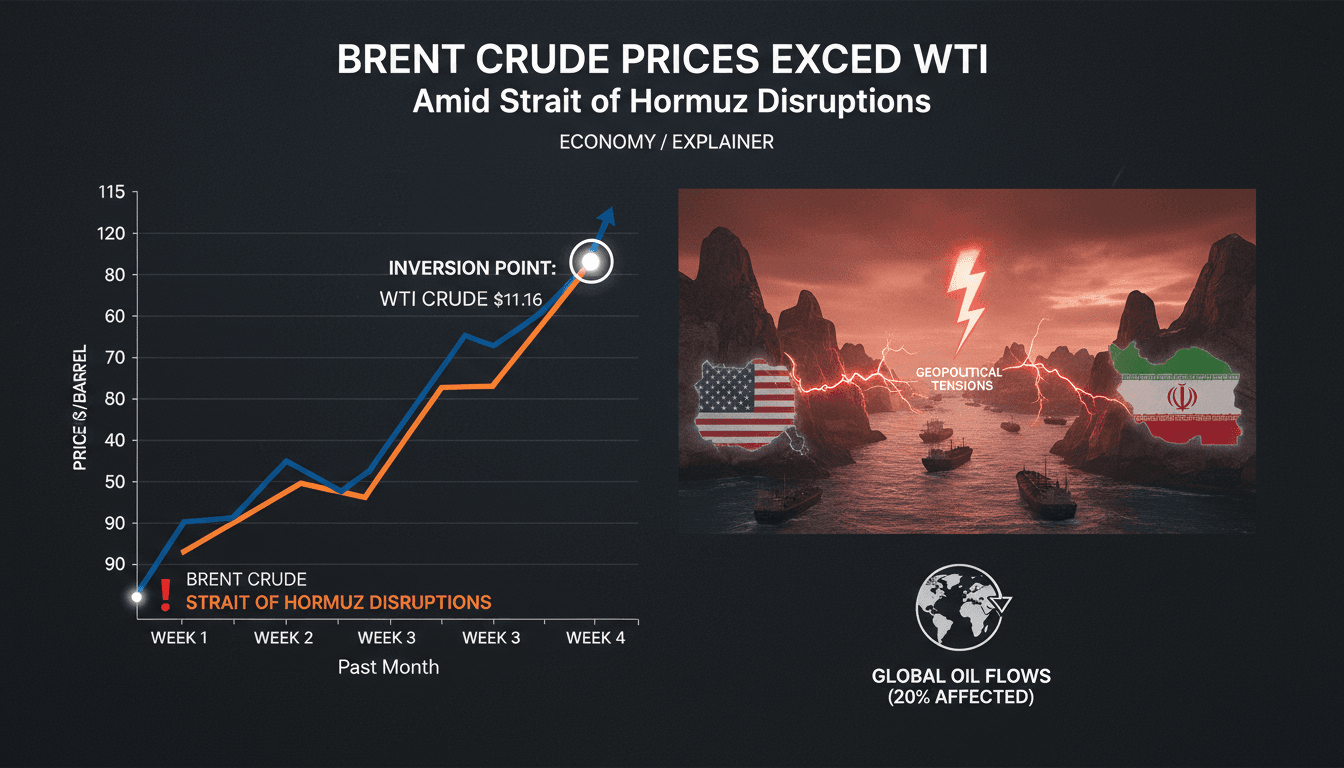
Here's what it means for you.
If you rely on oil for business or personal transportation, expect rising costs and potential supply chain disruptions.
Why it matters
This price inversion signals significant geopolitical tensions that could impact global oil supply and prices.
What happened (in 30 seconds)
- Brent crude oil futures surpassed West Texas Intermediate (WTI) prices, reaching $111.16 per barrel on April 7, 2026.
- Supply disruptions from the Strait of Hormuz, a critical chokepoint for global oil, have affected 20% of world oil flows.
- Market volatility has increased, with WTI prices showing vulnerability despite a recent premium due to US export booms.
The context you actually need
- Geopolitical tensions between the US and Iran have escalated since February 2026, leading to military actions and threats affecting oil supply routes.
- OPEC+ production cuts have compounded the supply issues, driving up prices and causing fluctuations in oil benchmarks.
- Asian and European buyers have started pivoting to US WTI exports, reflecting a shift in market dynamics amid supply fears.
What's really happening
The recent inversion of Brent over WTI crude prices is a direct consequence of escalating geopolitical tensions in the Middle East, particularly around the Strait of Hormuz. This vital waterway is crucial for global oil transportation, handling approximately 20% of the world's oil supply. The partial closure of the Strait due to US-Iran conflicts has led to significant supply disruptions, prompting traders to react swiftly to fears of further interruptions.
As of early April 2026, Brent crude futures climbed to $111.16 per barrel, marking a 1.27% increase. This price surge occurred while WTI remained vulnerable, trading around $112-115 per barrel but showing signs of weakness due to logistical challenges. The inversion is noteworthy because WTI had previously enjoyed a premium, driven by robust US oil exports. The current situation reflects a shift in market dynamics, with Brent prices responding more acutely to geopolitical risks.
The ongoing conflict has led to a reallocation of oil supplies, with Asian and European buyers increasingly seeking US crude to mitigate risks associated with Middle Eastern supplies. This shift has resulted in record export volumes for US oil producers, further complicating the market landscape. The International Energy Agency (IEA) has warned of a potential worsening supply crunch in April, indicating that the situation could escalate if tensions continue.
Additionally, OPEC+ production cuts have exacerbated the supply issues, leading to price surges in the first quarter of 2026. These cuts, combined with the geopolitical climate, have created a volatile trading environment, where traders are closely monitoring developments in the Strait of Hormuz and US-Iran relations. As a result, the oil market is experiencing heightened volatility, with prices fluctuating based on news and speculation regarding supply stability.
Who feels it first (and how)
- Oil traders: Immediate impact on trading strategies and risk assessments.
- Consumers: Higher fuel prices affecting commuting and living costs.
- Businesses reliant on oil: Increased operational costs, particularly in transportation and logistics.
- Governments: Need to implement subsidies or inflation relief measures to mitigate the impact on citizens.
- Exporters: US oil exporters benefiting from increased demand and higher prices.
What to watch next
- US-Iran negotiations: Any developments could significantly alter supply dynamics and influence oil prices.
- OPEC+ production decisions: Future cuts or adjustments will impact global supply levels and pricing trends.
- Market reactions: Watch for fluctuations in oil prices in response to geopolitical news and supply chain developments.
Brent crude has surpassed WTI prices due to geopolitical tensions.
Continued volatility in oil prices as traders react to ongoing developments.
The long-term impact of US-Iran relations on global oil supply.
Frequently Asked Questions
- Why it matters?
- This price inversion signals significant geopolitical tensions that could impact global oil supply and prices.
- What happened (in 30 seconds)?
- Brent crude oil futures surpassed West Texas Intermediate (WTI) prices, reaching $111.16 per barrel on April 7, 2026. Supply disruptions from the Strait of Hormuz, a critical chokepoint for global oil, have affected 20% of world oil flows. Market volatility has increased, with WTI prices showing vulnerability despite a recent premium due to US export booms.
- What's really happening?
- The recent inversion of Brent over WTI crude prices is a direct consequence of escalating geopolitical tensions in the Middle East, particularly around the Strait of Hormuz. This vital waterway is crucial for global oil transportation, handling approximately 20% of the world's oil supply. The partial closure of the Strait due to US-Iran conflicts has led to significant supply disruptions, prompting traders to react swiftly to fears of further interruptions. As of early April 2026, Brent crude f
- Who feels it first (and how)?
- Oil traders: Immediate impact on trading strategies and risk assessments. Consumers: Higher fuel prices affecting commuting and living costs. Businesses reliant on oil: Increased operational costs, particularly in transportation and logistics. Governments: Need to implement subsidies or inflation relief measures to mitigate the impact on citizens. Exporters: US oil exporters benefiting from increased demand and higher prices.
- What to watch next?
- US-Iran negotiations: Any developments could significantly alter supply dynamics and influence oil prices. OPEC+ production decisions: Future cuts or adjustments will impact global supply levels and pricing trends. Market reactions: Watch for fluctuations in oil prices in response to geopolitical news and supply chain developments.
Arabic-language digital news outlet covering UAE, regional, and international developments with broad general-news coverage.
"Al Ain News coverage typically blends UAE-focused reporting with wider Arab regional and international news."
— A47 Editor
سعر النفط اليوم.. خام برنت يتجاوز تكساس وسط تعطل الإمدادات
Oil prices rose on Tuesday as markets awaited the end of the deadline set by U.S. President Donald Trump for Iran to reopen the Strait of Hormuz or face strikes targeting critical infrastructure. This increase in prices reflects heightened tensions i...
Sports reporting with a focus on Saudi and regional competitions.
"Okaz sports coverage is broad and audience-friendly, with strong attention to Saudi teams and leagues."
— A47 Editor
ارتفاع ثالث للنفط.. برنت يتجاوز 110 دولارات وغرب تكساس فوق 113
Oil prices continued to rise for the third consecutive session, with Brent crude surpassing $110 per barrel and West Texas Intermediate reaching over $113. This increase is attributed to heightened tensions following U.S. President Donald Trump's thr...
Arabic-language UAE newspaper coverage focused on domestic affairs, public institutions, business, society, and regional developments.
"Al Khaleej coverage generally reflects a mainstream UAE editorial lens with strong attention to public affairs, institutions, and regional developments."
— A47 Editor
النفط يرتفع قبل موعد ترامب النهائي اليوم الثلاثاء.. والخام الأمريكي فوق 113 دولاراً
Oil prices continued to rise on Tuesday as President Donald Trump escalated his rhetoric against Iran, threatening to take stricter actions if Tehran does not reopen the Strait of Hormuz, a crucial passage for global oil transportation. The price of ...