
Henry Paulson Issues Warning of Imminent U.S. Treasury Market Crisis
Here's what it means for you.
If you’re invested in U.S. government bonds or rely on stable fiscal policies, this warning could signal significant shifts in your financial landscape.
Why it matters
A potential crash in the Treasury market could destabilize global financial systems, affecting interest rates and investment strategies worldwide.
What happened (in 30 seconds)
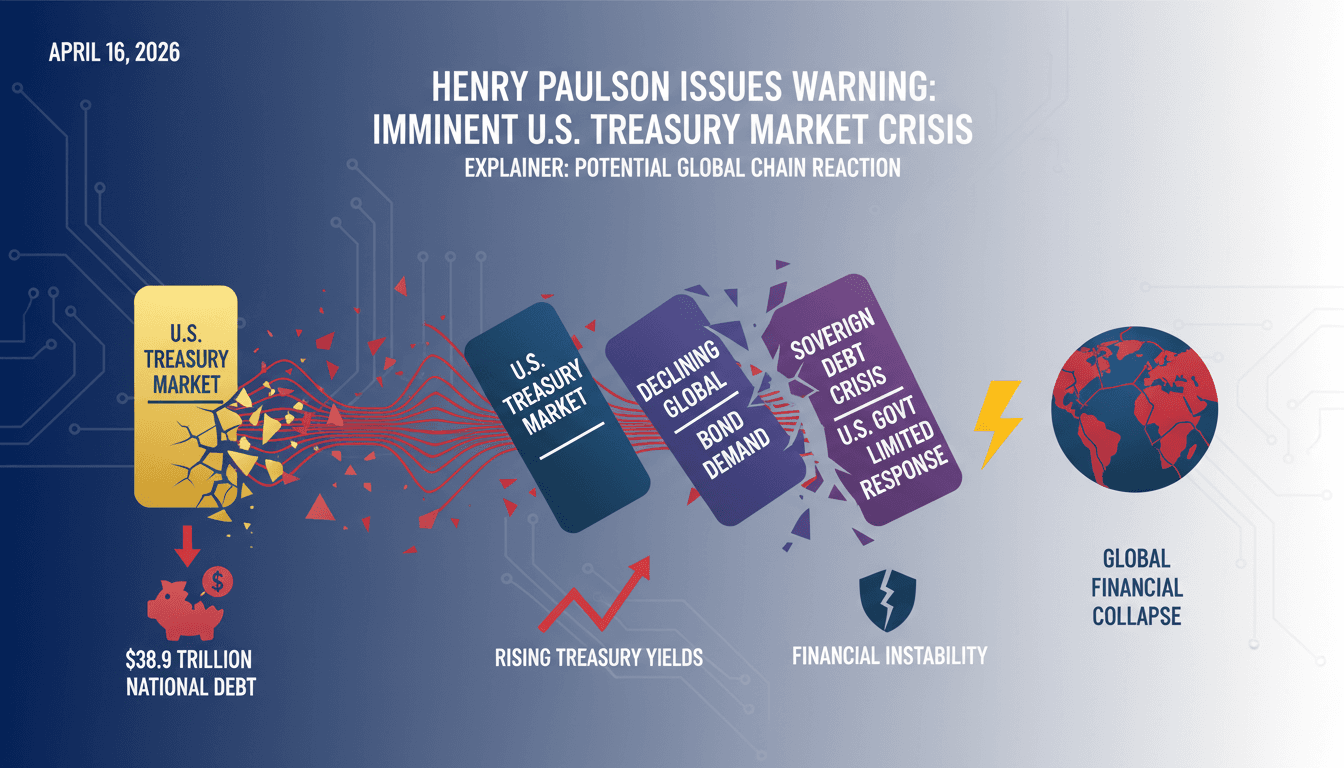
- Henry Paulson issued a warning on April 16, 2026, about a possible crash in the U.S. Treasury market due to declining bond demand.
- He called for an emergency contingency plan, emphasizing the need for a targeted, short-term response to mitigate risks.
- The U.S. national debt reached $38.9 trillion, with 10-year Treasury yields at approximately 4.3%, raising concerns about fiscal sustainability.
The context you actually need
- The U.S. faces escalating fiscal pressures from persistent deficits, which could lead to a sovereign debt doom loop.
- Unlike the 2008 financial crisis, a Treasury market breakdown would limit fiscal response options, potentially leaving the Federal Reserve as the sole buyer.
- Political challenges complicate potential solutions, as Paulson highlighted the need for bipartisan cooperation to address the looming crisis.
What's really happening
Henry Paulson's warning is rooted in a complex interplay of fiscal pressures and market dynamics. The U.S. national debt, now at $38.9 trillion, is a significant burden that raises alarms about the sustainability of government financing. With 10-year Treasury yields hovering around 4.3%, investors are increasingly demanding higher returns to compensate for perceived risks. This situation creates a precarious environment where a decline in demand for U.S. government bonds could trigger a vicious cycle: as bond prices fall, yields rise, leading to higher interest payments that widen deficits and further erode investor confidence.
Paulson's call for a "break-the-glass" emergency plan underscores the urgency of the situation. Unlike the 2008 crisis, where multiple fiscal tools were available, a Treasury market collapse today would severely limit the government's ability to respond effectively. The Federal Reserve might find itself as the only buyer of Treasuries, which could distort market dynamics and lead to further instability.
The implications of this warning extend beyond the U.S. borders. Global investors often view U.S. Treasuries as a safe haven. A significant disruption in this market could lead to a ripple effect, impacting interest rates and investment strategies worldwide. Countries and institutions that rely on U.S. debt for stability may find themselves reassessing their portfolios, potentially leading to a broader financial crisis.
Moreover, the political landscape complicates matters. Paulson pointed out that while the U.S. has the capacity to address its fiscal challenges through increased revenues and reforms, achieving bipartisan support for such measures remains a daunting task. The urgency of preparing for potential market shocks is clear, yet the path forward is fraught with political hurdles.
In summary, the warning from Paulson is not just a call to action; it is a reflection of the precarious state of U.S. fiscal health and the potential consequences for both domestic and global markets.
Who feels it first (and how)
- Bond investors: Increased volatility and potential losses in bond portfolios.
- Financial institutions: Banks and hedge funds heavily invested in Treasuries may face liquidity issues.
- Government agencies: Increased borrowing costs could strain budgets and limit fiscal flexibility.
- Taxpayers: Rising interest payments could lead to higher taxes or reduced public services.
- Global investors: A shift in U.S. Treasury stability could prompt reallocation of assets and increased market uncertainty.
What to watch next
- Treasury yield movements: Watch for fluctuations in yields, as rising rates could signal declining demand and increased risk.
- Federal Reserve actions: Any announcements regarding bond purchases or monetary policy adjustments will be critical indicators of market stability.
- Political developments: Legislative efforts to address fiscal challenges will be crucial; bipartisan cooperation could mitigate risks.
The U.S. national debt is $38.9 trillion, and 10-year Treasury yields are at 4.3%.
Increased market volatility in response to Paulson's warning and potential shifts in investor sentiment.
The effectiveness of any emergency plans or political actions taken to address the looming crisis.
Frequently Asked Questions
- Why it matters?
- A potential crash in the Treasury market could destabilize global financial systems, affecting interest rates and investment strategies worldwide.
- What happened (in 30 seconds)?
- Henry Paulson issued a warning on April 16, 2026, about a possible crash in the U.S. Treasury market due to declining bond demand. He called for an emergency contingency plan, emphasizing the need for a targeted, short-term response to mitigate risks. The U.S. national debt reached $38.9 trillion, with 10-year Treasury yields at approximately 4.3%, raising concerns about fiscal sustainability.
- What's really happening?
- Henry Paulson's warning is rooted in a complex interplay of fiscal pressures and market dynamics. The U.S. national debt, now at $38.9 trillion, is a significant burden that raises alarms about the sustainability of government financing. With 10-year Treasury yields hovering around 4.3%, investors are increasingly demanding higher returns to compensate for perceived risks. This situation creates a precarious environment where a decline in demand for U.S. government bonds could trigger a vicious
- Who feels it first (and how)?
- Bond investors: Increased volatility and potential losses in bond portfolios. Financial institutions: Banks and hedge funds heavily invested in Treasuries may face liquidity issues. Government agencies: Increased borrowing costs could strain budgets and limit fiscal flexibility. Taxpayers: Rising interest payments could lead to higher taxes or reduced public services. Global investors: A shift in U.S. Treasury stability could prompt reallocation of assets and increased market uncertainty.
- What to watch next?
- Treasury yield movements: Watch for fluctuations in yields, as rising rates could signal declining demand and increased risk. Federal Reserve actions: Any announcements regarding bond purchases or monetary policy adjustments will be critical indicators of market stability. Political developments: Legislative efforts to address fiscal challenges will be crucial; bipartisan cooperation could mitigate risks.
Stock market news, investing ideas, and trading analysis.
"TheStreet provides market news and retail-investor-focused analysis."
— A47 Editor
Henry Paulson has blunt message on potential Treasury market shock
Former Treasury Secretary Henry Paulson has issued a stark warning regarding the potential for a significant shock to the U.S. Treasury market, emphasizing the need for authorities to prepare a contingency plan to mitigate risks. In an interview on B...
Global markets, investing, and macroeconomics from a premier financial newsroom.
"Bloomberg is respected for in-depth financial reporting and data-driven analysis."
— A47 Editor
Hank Paulson on Iran War, Inflation, and Market Risk
The ongoing war in Iran is exerting significant pressure on global energy markets, with former US Treasury Secretary Hank Paulson warning that it could lead to higher inflation and sustained elevated interest rates, impacting various industries inclu...
Global markets, investing, and macroeconomics from a premier financial newsroom.
"Bloomberg is respected for in-depth financial reporting and data-driven analysis."
— A47 Editor
Wall Street Week | Paulson on Iran War, Energy Market Disruptions, Copper Supply Strain, Tax Debate
Former Treasury Secretary Hank Paulson has highlighted that the ongoing conflict in Iran poses significant economic risks, particularly as global shocks may affect US markets. He emphasized that disruptions in energy markets and supply chains could l...
Real-time updates, analysis, and reports on the blockchain and cryptocurrency sectors.
"Crypto News delivers real-time updates, analysis, and reports on the blockchain and cryptocurrency sectors."
— A47 Editor
Former Treasury Secretary warns of “vicious” fallout if U.S. Treasury demand weakens
Former Treasury Secretary Henry Paulson has warned U.S. policymakers to prepare for a potential crisis in the Treasury market, citing a possible breakdown in demand for U.S. Treasurys. In a recent Bloomberg interview, he described the potential fallo...
Covers blockchain, cryptocurrency news, project analysis, and market insights.
"Cointelegraph is a leading crypto-focused media outlet known for timely news, analysis, and educational content related to blockchain and digital assets."
— A47 Editor
Ex-Treasury chief warns of US bond crash, calls for contingency plan
Former Treasury Secretary Henry Paulson has issued a warning about a potential crisis in the US Treasury market, stating that when it occurs, it will be severe and urging the need for a contingency plan. This statement highlights concerns regarding t...