
JPMorgan Chase CEO warns Iran war could lead to oil shocks and inflation
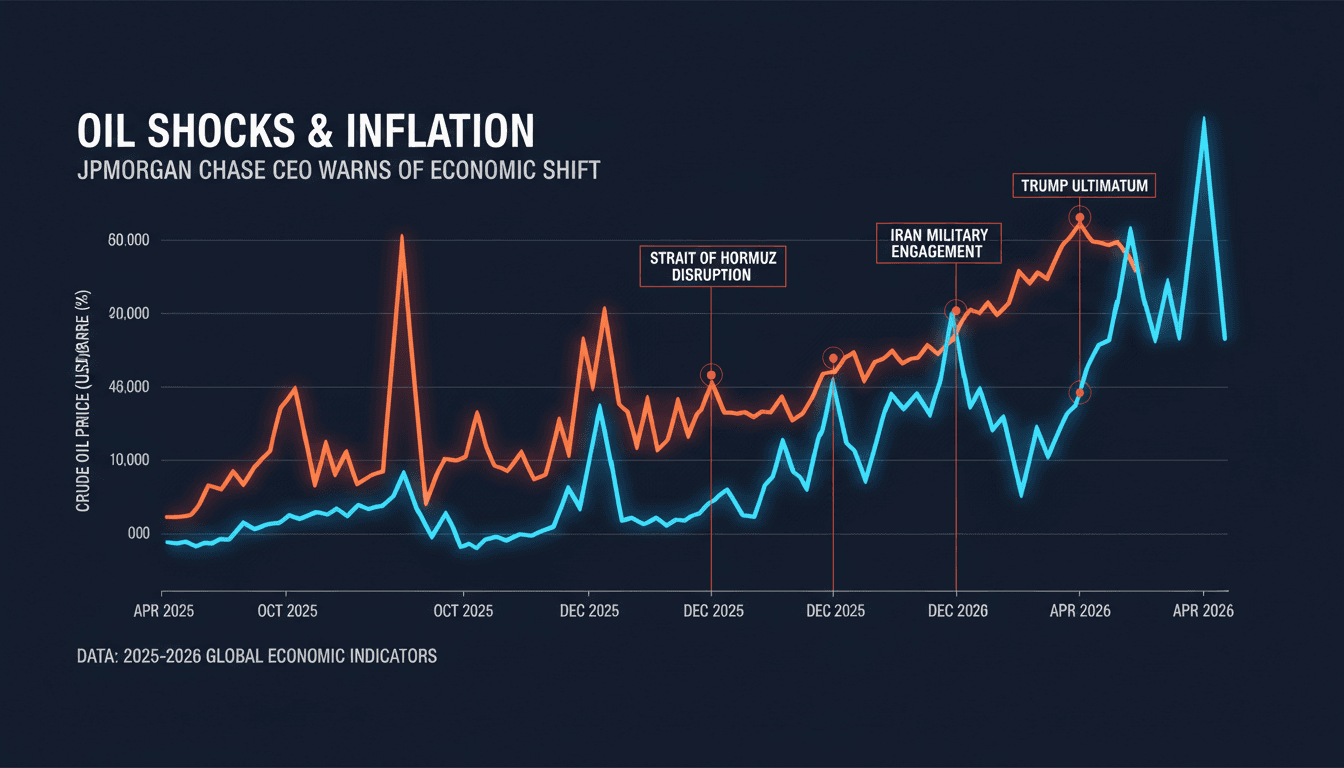
Here's what it means for you.
Rising oil prices and inflation could impact your purchasing power and borrowing costs.
Why it matters
The ongoing conflict in Iran threatens global oil supplies, which could lead to economic instability and increased costs for consumers and businesses alike.
What happened (in 30 seconds)
- Jamie Dimon, CEO of JPMorgan Chase, warned that the Iran war could lead to significant oil price shocks and persistent inflation in his annual letter to shareholders on April 6, 2026.
- The war began on February 28, 2026, with U.S. and Israeli airstrikes on Iranian targets, leading Iran to close the Strait of Hormuz, disrupting 20 million barrels of oil per day.
- As of late March 2026, Brent crude prices surged above $110 per barrel, and the S&P 500 faced its worst quarter since 2022 due to energy market volatility.
The context you actually need
- The Iran War has escalated geopolitical tensions in the Middle East, exacerbating existing conflicts such as the Russia-Ukraine war and U.S.-China relations.
- The closure of the Strait of Hormuz has significant implications for global oil supply, as it is a critical chokepoint for approximately 20% of the world's oil.
- Dubai and Abu Dhabi stock markets have already lost $120 billion in value due to investor concerns over the conflict and its economic repercussions.
What's really happening
The ongoing war in Iran is creating a ripple effect across global markets, particularly in the energy sector. As the conflict escalated, the U.S. and Israeli forces targeted Iranian military infrastructure, prompting Iran to retaliate by closing the Strait of Hormuz. This strategic waterway is crucial for the transit of oil, with about 20 million barrels per day flowing through it prior to the closure. The immediate impact has been a surge in oil prices, with Brent crude exceeding $110 per barrel, which is a significant increase from previous levels.
The closure of the Strait has disrupted global supply chains, leading to fears of persistent inflation. Jamie Dimon's warning highlights the potential for "sticky inflation," where prices remain elevated even as economic conditions change. This scenario is particularly concerning for consumers and businesses that rely on stable prices for budgeting and planning. Higher oil prices translate directly into increased transportation and production costs, which can lead to higher prices for goods and services.
Moreover, the geopolitical tensions surrounding the Iran war are compounded by the ongoing Russia-Ukraine conflict and rising U.S.-China tensions. These interconnected crises create a volatile environment that can exacerbate market fluctuations and uncertainty. Investors are reacting by pulling back from riskier assets, as evidenced by the S&P 500's performance, which recorded its worst quarter since 2022 due to energy shocks.
The Federal Reserve's response to this situation is also critical. Markets have priced out expectations for rate cuts in 2026, signaling that the central bank may need to maintain higher interest rates to combat inflationary pressures. This could further impact consumer borrowing costs, making loans and mortgages more expensive.
In the UAE, the fallout from the Iran war has led to a significant decline in stock market values, with a reported loss of $120 billion as of late March 2026. The tourism sector has also been hit hard, with a 60% drop in visitors, while port operations at Jebel Ali have been disrupted. Despite these challenges, elevated oil prices may provide some relief to UAE exports, although the shared vulnerabilities in the Strait of Hormuz remain a concern.
Who feels it first (and how)
- Consumers: Higher fuel prices will increase transportation costs, affecting everyday expenses.
- Businesses: Companies reliant on oil and commodities will face rising costs, impacting profit margins.
- Investors: Market volatility may lead to losses in stock portfolios, particularly in energy and travel sectors.
- Tourism Industry: A decline in travel to the UAE will hurt local economies dependent on tourism revenue.
- Financial Institutions: Banks may see increased default risks as consumers and businesses struggle with higher costs.
What to watch next
- Oil price fluctuations: Monitor Brent crude prices for signs of stabilization or further increases, as this will directly impact inflation.
- Federal Reserve announcements: Watch for any signals regarding interest rate adjustments, which could affect borrowing costs and economic growth.
- Geopolitical developments: Keep an eye on U.S.-Iran relations and any potential escalations that could further disrupt oil supplies.
The Iran war has disrupted oil supplies, leading to higher prices.
Inflation will remain elevated, affecting consumer purchasing power and business costs.
The long-term geopolitical implications of the Iran war and how they will shape global markets.
Frequently Asked Questions
- Why it matters?
- The ongoing conflict in Iran threatens global oil supplies, which could lead to economic instability and increased costs for consumers and businesses alike.
- What happened (in 30 seconds)?
- Jamie Dimon, CEO of JPMorgan Chase, warned that the Iran war could lead to significant oil price shocks and persistent inflation in his annual letter to shareholders on April 6, 2026. The war began on February 28, 2026, with U.S. and Israeli airstrikes on Iranian targets, leading Iran to close the Strait of Hormuz, disrupting 20 million barrels of oil per day. As of late March 2026, Brent crude prices surged above $110 per barrel, and the S&P 500 faced its worst quarter since 2022 due to ene
- What's really happening?
- The ongoing war in Iran is creating a ripple effect across global markets, particularly in the energy sector. As the conflict escalated, the U.S. and Israeli forces targeted Iranian military infrastructure, prompting Iran to retaliate by closing the Strait of Hormuz. This strategic waterway is crucial for the transit of oil, with about 20 million barrels per day flowing through it prior to the closure. The immediate impact has been a surge in oil prices, with Brent crude exceeding $110 per barre
- Who feels it first (and how)?
- Consumers: Higher fuel prices will increase transportation costs, affecting everyday expenses. Businesses: Companies reliant on oil and commodities will face rising costs, impacting profit margins. Investors: Market volatility may lead to losses in stock portfolios, particularly in energy and travel sectors. Tourism Industry: A decline in travel to the UAE will hurt local economies dependent on tourism revenue. Financial Institutions: Banks may see increased default risks as consumers an
- What to watch next?
- Oil price fluctuations: Monitor Brent crude prices for signs of stabilization or further increases, as this will directly impact inflation. Federal Reserve announcements: Watch for any signals regarding interest rate adjustments, which could affect borrowing costs and economic growth. Geopolitical developments: Keep an eye on U.S.-Iran relations and any potential escalations that could further disrupt oil supplies.
Macro commentary, policy analysis, growth/inflation themes, and global outlooks.
"Contextual macro coverage that complements day-to-day market headlines."
— A47 Editor
JPMorgan’s Dimon warns Iran war may drive inflation and interest rates higher
Jamie Dimon, CEO of JPMorgan Chase, has issued a warning that the ongoing conflict in Iran could lead to increased inflation and rising interest rates, which may destabilize financial markets. He emphasized the economic risks associated with a prolon...
Markets desk coverage, trading insights, and investor updates.
"WSJ’s markets reporting provides in-depth analysis and context for investors."
— A47 Editor
Jamie Dimon Warns of Higher Inflation, Interest Rates From Iran War
Jamie Dimon, CEO of JPMorgan Chase, has issued a warning regarding the potential for higher inflation and interest rates stemming from the ongoing conflict in Iran. He emphasized that the economic risks associated with a prolonged war must be address...
Markets desk coverage, trading insights, and investor updates.
"WSJ’s markets reporting provides in-depth analysis and context for investors."
— A47 Editor
Jamie Dimon Warns of Higher Inflation, Interest Rates From Iran War
Jamie Dimon, CEO of JPMorgan Chase, has issued a warning regarding the potential for higher inflation and interest rates due to the ongoing conflict in Iran, emphasizing the need to address economic risks associated with prolonged warfare.