
Afreximbank Launches US$10 Billion Programme to Mitigate Economic Impact of Middle East Conflict on Africa and Caribbean
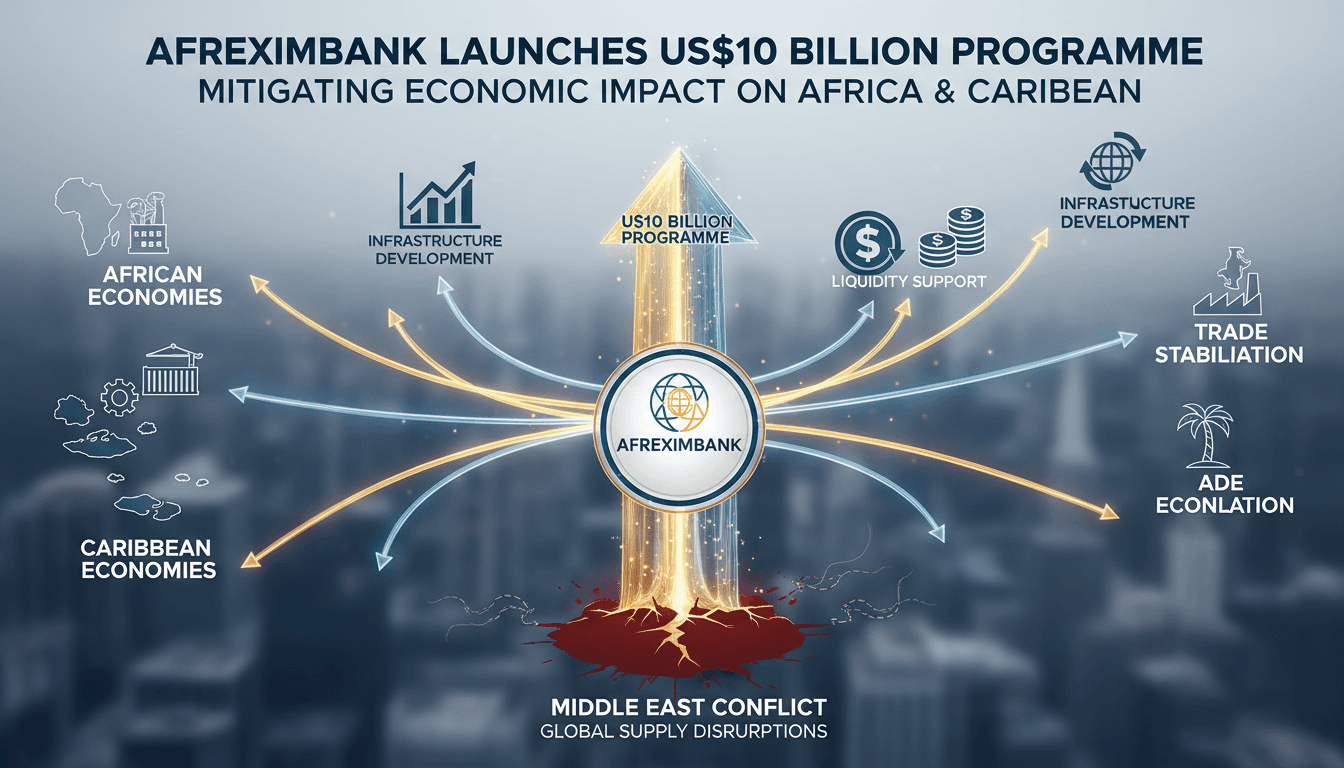
Here's what it means for you.
If you’re involved in trade or investment in Africa or the Caribbean, this initiative could stabilize markets and supply chains that directly impact your operations.
Why it matters
This US$10 billion initiative aims to mitigate economic shocks from the Gulf crisis, which could influence global trade dynamics and commodity prices.
What happened (in 30 seconds)
- Afreximbank approved a US$10 billion Gulf Crisis Response Programme on April 7, 2026, to support African and Caribbean economies.
- The initiative focuses on sustaining essential imports and providing liquidity to banks and companies affected by the Middle East conflict.
- Collaborative efforts include partnerships with regional bodies like the African Union and CARICOM to ensure effective implementation.
The context you actually need
- The Gulf crisis escalated on February 28, 2026, disrupting global supplies of oil, gas, and food, which are critical for import-dependent economies in Africa and the Caribbean.
- Afreximbank has a history of crisis interventions, including support during the Ukraine crisis and the COVID-19 pandemic, showcasing its role as a stabilizing force in times of economic distress.
- The programme aims to provide immediate relief while also investing in long-term infrastructure, enhancing resilience in energy, logistics, and tourism sectors.
What's really happening
The Gulf Crisis Response Programme initiated by Afreximbank is a strategic response to the escalating conflict in the Middle East, which has significant ramifications for global supply chains. Since the crisis began on February 28, 2026, it has disrupted vital imports of oil, liquefied natural gas, fertilizers, and food, particularly affecting economies in Africa and the Caribbean that rely heavily on these imports.
Afreximbank's US$10 billion allocation is designed to provide immediate liquidity to banks and businesses, ensuring that essential goods can continue to flow into these regions despite the ongoing disruptions. This includes short-term foreign exchange provisions and financing options for energy and mineral exporters, who are facing heightened prices and supply chain rerouting.
Additionally, the programme targets sectors like tourism and aviation, which have been severely impacted by the crisis. By offering relief and support for infrastructure projects, Afreximbank aims to not only address immediate needs but also to foster long-term economic resilience. The partnerships with organizations such as the African Union Commission and CARICOM Secretariat are crucial for coordinating regional responses and ensuring that the funds are effectively utilized.
The structural implications of this initiative extend beyond immediate financial support. By stabilizing essential imports and supporting local industries, Afreximbank is helping to mitigate inflationary pressures that could arise from supply shortages. This, in turn, can help maintain consumer confidence and economic stability in these regions. Furthermore, the focus on infrastructure development in energy, ports, and logistics is a forward-looking strategy that aims to enhance the overall economic framework, making these economies more robust against future shocks.
Who feels it first (and how)
- Import-dependent businesses in Africa and the Caribbean that rely on essential goods like fuel and food.
- Energy and mineral exporters who will benefit from pre-export financing and liquidity support.
- Tourism and aviation sectors that are receiving targeted relief to recover from the impacts of the crisis.
- Local governments that will see improved economic stability and potential for growth through infrastructure investments.
What to watch next
- Implementation progress: Monitoring how quickly and effectively the US$10 billion is disbursed will indicate the programme's impact on stabilizing economies.
- Commodity price fluctuations: Changes in oil and gas prices could signal the effectiveness of the programme in mitigating supply chain disruptions.
- Regional economic indicators: Keep an eye on GDP growth rates and inflation in affected regions as they will reflect the programme's success in fostering economic resilience.
The Gulf Crisis Response Programme has been approved and implementation has begun.
The programme will stabilize essential imports and support local businesses in the short term.
The long-term effectiveness of the infrastructure investments and their impact on future economic resilience remains to be seen.
Frequently Asked Questions
- Why it matters?
- This US$10 billion initiative aims to mitigate economic shocks from the Gulf crisis, which could influence global trade dynamics and commodity prices.
- What happened (in 30 seconds)?
- Afreximbank approved a US$10 billion Gulf Crisis Response Programme on April 7, 2026, to support African and Caribbean economies. The initiative focuses on sustaining essential imports and providing liquidity to banks and companies affected by the Middle East conflict. Collaborative efforts include partnerships with regional bodies like the African Union and CARICOM to ensure effective implementation.
- What's really happening?
- The Gulf Crisis Response Programme initiated by Afreximbank is a strategic response to the escalating conflict in the Middle East, which has significant ramifications for global supply chains. Since the crisis began on February 28, 2026, it has disrupted vital imports of oil, liquefied natural gas, fertilizers, and food, particularly affecting economies in Africa and the Caribbean that rely heavily on these imports. Afreximbank's US$10 billion allocation is designed to provide immediate liquid
- Who feels it first (and how)?
- Import-dependent businesses in Africa and the Caribbean that rely on essential goods like fuel and food. Energy and mineral exporters who will benefit from pre-export financing and liquidity support. Tourism and aviation sectors that are receiving targeted relief to recover from the impacts of the crisis. Local governments that will see improved economic stability and potential for growth through infrastructure investments.
- What to watch next?
- Implementation progress: Monitoring how quickly and effectively the US$10 billion is disbursed will indicate the programme's impact on stabilizing economies. Commodity price fluctuations: Changes in oil and gas prices could signal the effectiveness of the programme in mitigating supply chain disruptions. Regional economic indicators: Keep an eye on GDP growth rates and inflation in affected regions as they will reflect the programme's success in fostering economic resilience.
Pan-Arab news coverage spanning politics, business, sports, and regional affairs.
"Asharq Al-Awsat reflects a broad Arab editorial perspective with strong attention to regional geopolitics."
— A47 Editor
البنك الأفريقي للتصدير يطلق خطة بـ10 مليارات دولار لمواجهة تحديات الأزمة الحالية
The African Export-Import Bank has approved a $10 billion program aimed at assisting economies and businesses across Africa in addressing the challenges posed by the current crisis. This initiative reflects the bank's commitment to supporting the con...
Arabic-language UAE newspaper coverage focused on domestic affairs, public institutions, business, society, and regional developments.
"Al Khaleej coverage generally reflects a mainstream UAE editorial lens with strong attention to public affairs, institutions, and regional developments."
— A47 Editor
«الإفريقي للتصدير والاستيراد» يطلق خطة لتخفيف تداعيات الحرب
The African Export-Import Bank announced a $10 billion program aimed at addressing the economic shocks resulting from the ongoing conflict in the Middle East. This initiative is designed to support economies, banks, and businesses in Africa and the C...