
European Stock Markets Stabilize Amid U.S. Ultimatum to Iran
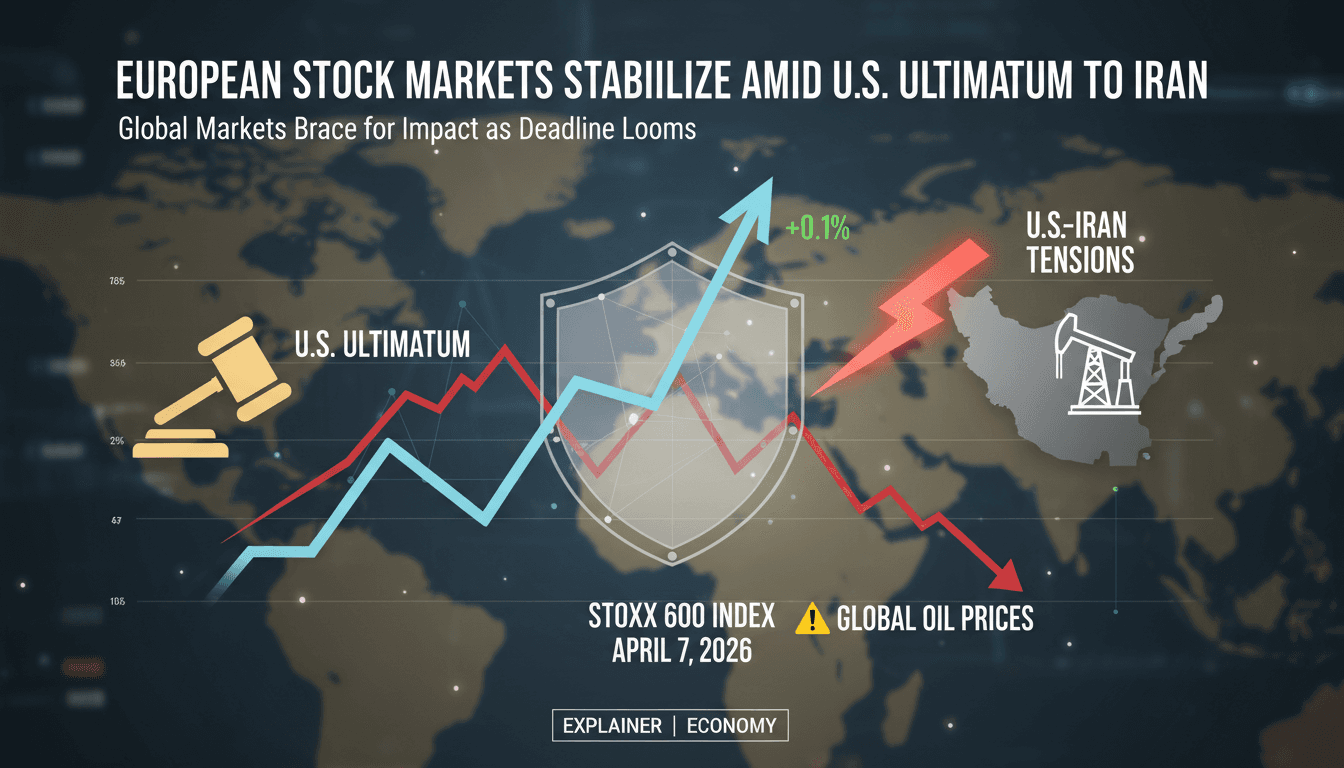
Here's what it means for you.
Your investment strategies may need to adapt to geopolitical tensions that could impact market stability and oil prices.
Why it matters
The ongoing U.S.-Iran conflict threatens global oil supplies, which can lead to inflation and economic instability across Europe.
What happened (in 30 seconds)
- European stock markets stabilized on April 7, 2026, with the STOXX 600 index rising 0.1% to 597.24 points.
- Investors are cautious ahead of U.S. President Trump's ultimatum to Iran regarding the Strait of Hormuz, a critical oil transit route.
- Oil prices surged above $110 per barrel, reflecting heightened risk and potential supply disruptions.
The context you actually need
- The Strait of Hormuz is vital for global oil transport, accounting for nearly 20% of the world's oil supply.
- Iran's closure of the Strait since late February 2026 has led to significant price increases and inflation fears in Europe.
- Diplomatic negotiations have stalled, with President Trump threatening military action if Iran does not comply by the deadline.
What's really happening
On April 7, 2026, European stock markets opened after the Easter holiday, showing signs of stability amid investor caution. The pan-European STOXX 600 index saw a slight increase of 0.1%, closing at 597.24 points. This modest uptick occurred against a backdrop of heightened geopolitical tension due to the ongoing U.S.-Iran conflict, which began in late February 2026. The conflict escalated when Iran effectively closed the Strait of Hormuz, a critical maritime passage for oil, resulting in significant disruptions to global oil supplies.
As a result, oil prices surged, with futures exceeding $110 per barrel, raising inflation concerns across Europe. Investors are closely monitoring the situation, particularly the impending 8:00 p.m. ET deadline set by President Trump for Iran to agree to terms that would allow for the reopening of the Strait. The stakes are high: failure to reach an agreement could lead to military strikes on Iranian infrastructure, further escalating tensions and potentially destabilizing the global oil market.
The European markets reacted with mixed sentiments. While the banking sector gained 0.7% and energy stocks rose by 0.8% due to the strength in oil prices, the information technology sector lagged behind. Notably, Universal Music Group shares surged by 15.4% following a significant takeover proposal, while ASML shares dropped by 4.2% amid discussions of U.S. export curbs on China.
Investors are not only focused on the geopolitical landscape but are also awaiting key manufacturing data that could provide insights into the economic impact of the six-week conflict. The overall market sentiment reflects a cautious optimism, with many hoping for a peaceful resolution to the U.S.-Iran standoff.
Who feels it first (and how)
- Institutional investors in Europe are closely monitoring market fluctuations and geopolitical developments.
- Energy sector companies are directly impacted by oil price volatility and supply chain disruptions.
- Consumers in Europe may face rising prices due to inflation driven by increased oil costs.
- UAE residents are experiencing financial pressures, with significant market value losses in Dubai and Abu Dhabi due to the conflict.
What to watch next
- Trump's ultimatum deadline at 8:00 p.m. ET on April 7, 2026, will be crucial in determining the immediate market response and potential military actions.
- Oil price movements will indicate market sentiment and could signal broader economic implications if prices remain elevated.
- Upcoming manufacturing data will provide insights into the economic toll of the conflict, influencing investor confidence and market direction.
The STOXX 600 index closed at 597.24 points with minor fluctuations.
Continued volatility in oil prices and European markets as the geopolitical situation evolves.
The long-term economic impact of the U.S.-Iran conflict on European markets and consumer prices.
Frequently Asked Questions
- Why it matters?
- The ongoing U.S.-Iran conflict threatens global oil supplies, which can lead to inflation and economic instability across Europe.
- What happened (in 30 seconds)?
- European stock markets stabilized on April 7, 2026, with the STOXX 600 index rising 0.1% to 597.24 points. Investors are cautious ahead of U.S. President Trump's ultimatum to Iran regarding the Strait of Hormuz, a critical oil transit route. Oil prices surged above $110 per barrel, reflecting heightened risk and potential supply disruptions.
- What's really happening?
- On April 7, 2026, European stock markets opened after the Easter holiday, showing signs of stability amid investor caution. The pan-European STOXX 600 index saw a slight increase of 0.1%, closing at 597.24 points. This modest uptick occurred against a backdrop of heightened geopolitical tension due to the ongoing U.S.-Iran conflict, which began in late February 2026. The conflict escalated when Iran effectively closed the Strait of Hormuz, a critical maritime passage for oil, resulting in signif
- Who feels it first (and how)?
- Institutional investors in Europe are closely monitoring market fluctuations and geopolitical developments. Energy sector companies are directly impacted by oil price volatility and supply chain disruptions. Consumers in Europe may face rising prices due to inflation driven by increased oil costs. UAE residents are experiencing financial pressures, with significant market value losses in Dubai and Abu Dhabi due to the conflict.
- What to watch next?
- Trump's ultimatum deadline at 8:00 p.m. ET on April 7, 2026, will be crucial in determining the immediate market response and potential military actions. Oil price movements will indicate market sentiment and could signal broader economic implications if prices remain elevated. Upcoming manufacturing data will provide insights into the economic toll of the conflict, influencing investor confidence and market direction.
Market-moving headlines impacting equities, bonds, and related risk assets.
"Real-time catalysts and volatility drivers across indices and sectors."
— A47 Editor
European stocks open slightly higher as Trump’s Iran deadline looms
European stocks opened slightly higher as investors reacted to the looming deadline set by President Trump for negotiations with Iran, which is critical for geopolitical stability. This deadline is set for 8:00 p.m. ET on Tuesday, intensifying market...
Arabic-language UAE newspaper coverage focused on domestic affairs, public institutions, business, society, and regional developments.
"Al Khaleej coverage generally reflects a mainstream UAE editorial lens with strong attention to public affairs, institutions, and regional developments."
— A47 Editor
أسهم أوروبا تستقر مع حذر المستثمرين قبيل انتهاء مهلة ترامب لإيران
European stocks stabilized on Tuesday as investors remained cautious amid rising tensions in the Middle East and the impending deadline set by U.S. President Donald Trump for Iran to reach an agreement. The Stoxx 600 index rose by 0.1% to 597.24 poin...