
Keir Starmer Leads Multinational Initiative to Secure Strait of Hormuz Navigation
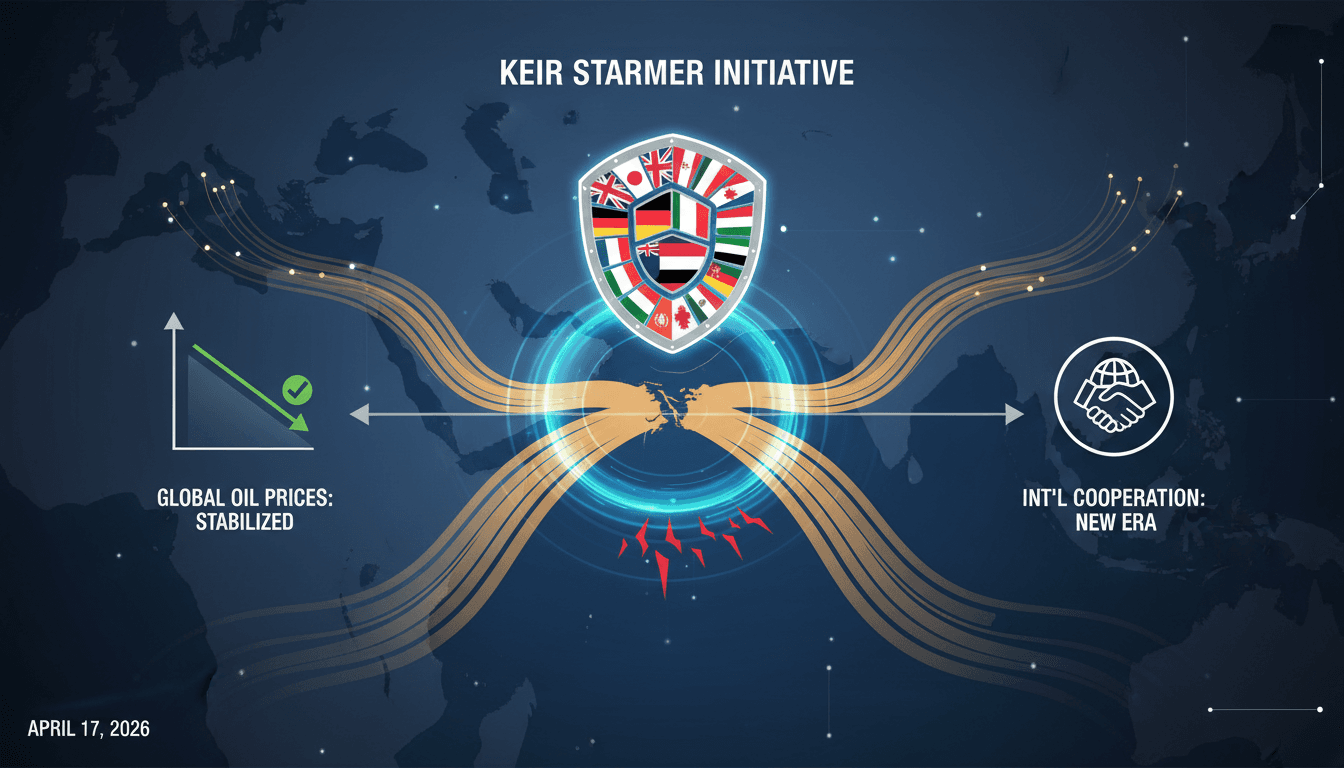
Here's what it means for you.
If you rely on global oil markets, the security of the Strait of Hormuz could directly impact your energy costs and economic stability.
Why it matters
The Strait of Hormuz is a critical chokepoint for global oil and gas supplies, affecting energy prices worldwide.
What happened (in 30 seconds)
- On April 17, 2026, British Prime Minister Keir Starmer announced that over 12 countries are ready to contribute to a multinational defensive mission for the Strait of Hormuz.
- This initiative follows a virtual summit in Paris, co-chaired by Starmer and French President Macron, aimed at restoring navigation freedom after Iran's blockade.
- The mission is intended to protect commercial shipping once regional hostilities cease, separate from the ongoing US naval blockade of Iranian ports.
The context you actually need
- The Strait of Hormuz handles approximately 20% of global seaborne oil trade and one-fifth of liquefied natural gas, making it vital for energy security.
- Iran's blockade of the strait, initiated in late February 2026, caused significant spikes in global energy prices, impacting economies reliant on oil imports.
- Diplomatic efforts have intensified, with multiple countries collaborating to ensure safe passage through this critical waterway, reflecting a shift towards multilateral security initiatives.
What's really happening
The recent announcement by Prime Minister Keir Starmer marks a significant escalation in international efforts to secure the Strait of Hormuz, a vital artery for global energy supplies. Following a series of military actions by the US and Israel against Iran, the Iranian government responded by effectively blocking the strait, which led to a sharp increase in oil prices and heightened tensions in the region. The Strait of Hormuz is crucial, as it facilitates the transit of about 20% of the world's oil and a significant portion of liquefied natural gas.
The multinational mission proposed by Starmer is framed as a peaceful and defensive initiative, aiming to protect commercial shipping once hostilities in the region subside. This initiative is distinct from the ongoing US naval blockade of Iranian ports, which has been criticized for its unilateral approach and lack of NATO support. The involvement of over 12 countries indicates a collective recognition of the strait's importance and a willingness to collaborate on security measures that could stabilize global energy markets.
The backdrop of this initiative includes a series of diplomatic engagements, such as a joint statement from several European nations and Japan on March 19, and a UK-hosted meeting of 35 countries earlier in April. These efforts reflect a growing consensus on the need for a coordinated response to ensure freedom of navigation in the face of regional hostilities. The upcoming military planning conference in London, scheduled for the week of April 24, 2026, will be crucial in determining the operational details of this multinational mission.
As the situation evolves, the implications for global oil markets are significant. The temporary reopening of the strait by Iran, coinciding with a ceasefire, suggests a complex interplay of military and diplomatic strategies. However, the US's continued blockade of Iranian ports indicates that tensions are far from resolved. The volatility in oil prices, which have already exceeded $100 per barrel, underscores the fragility of the current situation and the potential for further economic repercussions.
In summary, the multinational mission represents a strategic pivot towards multilateralism in addressing security challenges in the Strait of Hormuz. The success of this initiative could stabilize energy markets and mitigate the economic pressures felt by countries dependent on oil imports.
Who feels it first (and how)
- Energy companies: Fluctuations in oil prices directly impact profitability and operational costs.
- Consumers: Rising fuel prices affect transportation costs and household budgets, particularly in oil-dependent regions.
- Governments: Nations reliant on oil imports may face economic instability and inflationary pressures due to price volatility.
- Shipping industries: Increased security measures could alter shipping routes and costs, impacting logistics and trade.
What to watch next
- Military planning outcomes: The details from the London conference will clarify the mission's scope and readiness, influencing market confidence.
- Iran's response: Any changes in Iran's stance on the blockade could significantly impact oil supply and prices.
- Global oil price trends: Monitoring fluctuations in Brent crude prices will provide insights into market reactions to geopolitical developments.
The Strait of Hormuz is critical for global oil and gas supplies, affecting energy prices.
The multinational mission will proceed post-hostilities, with operational details emerging from the upcoming conference.
The long-term effectiveness of the mission in stabilizing the region and its impact on US-Iran relations remains uncertain.
Frequently Asked Questions
- Why it matters?
- The Strait of Hormuz is a critical chokepoint for global oil and gas supplies, affecting energy prices worldwide.
- What happened (in 30 seconds)?
- On April 17, 2026, British Prime Minister Keir Starmer announced that over 12 countries are ready to contribute to a multinational defensive mission for the Strait of Hormuz. This initiative follows a virtual summit in Paris, co-chaired by Starmer and French President Macron, aimed at restoring navigation freedom after Iran's blockade. The mission is intended to protect commercial shipping once regional hostilities cease, separate from the ongoing US naval blockade of Iranian ports.
- What's really happening?
- The recent announcement by Prime Minister Keir Starmer marks a significant escalation in international efforts to secure the Strait of Hormuz, a vital artery for global energy supplies. Following a series of military actions by the US and Israel against Iran, the Iranian government responded by effectively blocking the strait, which led to a sharp increase in oil prices and heightened tensions in the region. The Strait of Hormuz is crucial, as it facilitates the transit of about 20% of the world
- Who feels it first (and how)?
- Energy companies: Fluctuations in oil prices directly impact profitability and operational costs. Consumers: Rising fuel prices affect transportation costs and household budgets, particularly in oil-dependent regions. Governments: Nations reliant on oil imports may face economic instability and inflationary pressures due to price volatility. Shipping industries: Increased security measures could alter shipping routes and costs, impacting logistics and trade.
- What to watch next?
- Military planning outcomes: The details from the London conference will clarify the mission's scope and readiness, influencing market confidence. Iran's response: Any changes in Iran's stance on the blockade could significantly impact oil supply and prices. Global oil price trends: Monitoring fluctuations in Brent crude prices will provide insights into market reactions to geopolitical developments.
Arabic-language coverage of international news and geopolitics.
"RT Arabic is a Russian state-funded outlet often criticized for promoting Kremlin-aligned narratives."
— A47 Editor
ستارمر: أكثر من من 12 دولة عرضت المشاركة في فتح هرمز
British Prime Minister Keir Starmer announced that over 12 countries have expressed their willingness to participate in a multinational maritime mission led by Britain and France to secure navigation in the Strait of Hormuz. This initiative aims to e...
Arabic-language political and world news coverage for UAE readers.
"Emarat Al Youm world coverage usually presents international developments through a UAE and Arab audience lens."
— A47 Editor
رئيس الوزراء البريطاني: أكثر من 12 دولة مستعدة لتأمين هرمز رئيس الوزراء البريطاني: أكثر من 12 دولة مستعدة لتأمين هرمز
British Prime Minister Keir Starmer announced that more than 12 countries are willing to contribute to a multinational mission aimed at securing the Strait of Hormuz. This initiative reflects a collaborative effort to enhance maritime security in a s...
Arabic-language UAE newspaper coverage focused on domestic affairs, public institutions, business, society, and regional developments.
"Al Khaleej coverage generally reflects a mainstream UAE editorial lens with strong attention to public affairs, institutions, and regional developments."
— A47 Editor
ستارمر: 12 دولة مستعدة لتأمين مضيق هرمز
British Prime Minister Keir Starmer announced on Friday that more than twelve countries have offered to contribute to a multinational mission aimed at securing the Strait of Hormuz. This initiative highlights the growing international concern over ma...