
US-Iran War Triggers Inflation Surge and Record Low Consumer Sentiment
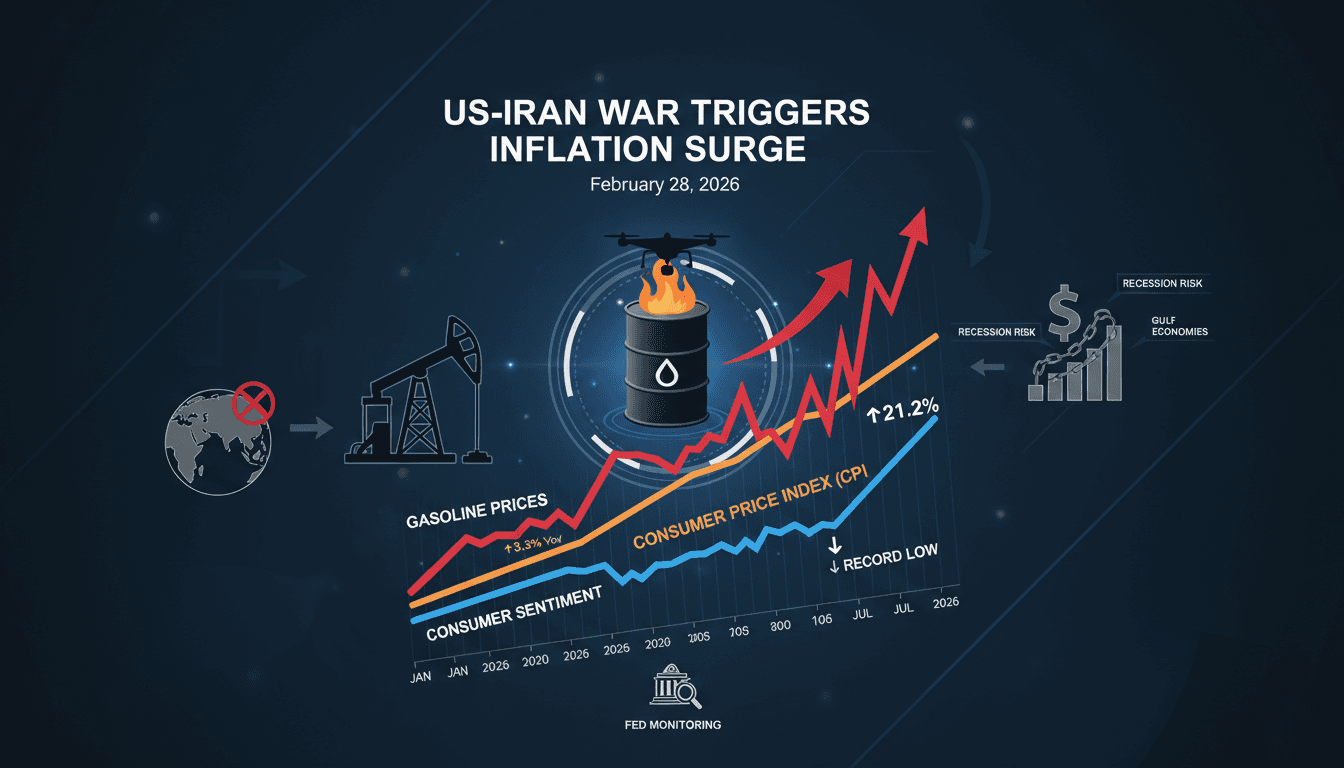
Here's what it means for you.
Rising inflation and consumer sentiment declines are likely to impact your purchasing power and financial planning.
Why it matters
The US-Iran conflict has triggered significant economic repercussions, affecting global oil prices and consumer confidence.
What happened (in 30 seconds)
- February 28, 2026: US and Israeli airstrikes initiate the Iran War, leading to immediate geopolitical instability.
- March 4, 2026: Iran retaliates by closing the Strait of Hormuz, causing a 21.2% spike in gasoline prices.
- April 10, 2026: March CPI data shows a 3.3% year-over-year increase, while consumer sentiment drops to a record low of 47.6.
The context you actually need
- Escalating tensions: The conflict arose from long-standing US-Iran tensions, exacerbated by Israeli security concerns.
- Oil supply disruptions: The closure of the Strait of Hormuz stranded oil exports, pushing Brent crude prices above $120 per barrel.
- Consumer impact: Rising fuel prices and market volatility have led to a significant decline in consumer sentiment, reflecting broader economic fears.
What's really happening
The initiation of the US-Iran War on February 28, 2026, marked a pivotal moment in global geopolitics, with immediate and profound economic implications. The coordinated airstrikes by the US and Israel aimed not only at military targets but also at destabilizing the Iranian regime. This aggressive move was met with swift retaliation from Iran, which strategically closed the Strait of Hormuz, a critical chokepoint for global oil shipments. This closure caused a dramatic surge in oil prices, with Brent crude soaring above $120 per barrel and global oil production disruptions exceeding 6 million barrels per day by mid-March.
As a result, the US Consumer Price Index (CPI) recorded a month-over-month increase of 0.9% and a year-over-year rise of 3.3% by April 10, 2026. The energy index alone rose by 10.9%, with gasoline prices spiking 21.2%. This inflationary shock is not merely a transient spike; it reflects deeper structural issues in the economy, particularly concerning energy dependence and supply chain vulnerabilities.
Consumer sentiment, as measured by the University of Michigan, plunged to a record low of 47.6, down from 53.3. This decline in sentiment is indicative of broader economic anxiety, with consumers citing the Iran War as a primary factor for their pessimism. The rising costs of living, particularly in energy, are squeezing household budgets, leading to a heightened sense of uncertainty about future financial stability.
Economists are warning of a protracted inflationary environment, where the effects of the conflict may linger even after a ceasefire is established. The Federal Reserve is closely monitoring these developments, with no immediate policy shifts announced, but the potential for sticky inflation remains a concern. The economic landscape is further complicated by the fragile ceasefire that emerged shortly before the CPI release, leaving many to wonder how long the repercussions of this conflict will last.
Who feels it first (and how)
- Consumers: Households facing higher fuel prices and increased living costs.
- Businesses: Companies reliant on stable oil prices and consumer spending are likely to see reduced margins and sales.
- Investors: Market volatility may lead to cautious investment strategies, particularly in energy and consumer sectors.
- Low-income households: These groups are disproportionately affected by rising prices, as a larger portion of their income goes toward essential goods.
What to watch next
- Inflation trends: Monitor CPI data for signs of sustained inflationary pressures, which could influence consumer spending and economic growth.
- Geopolitical developments: Watch for updates on the ceasefire and any further military actions that could exacerbate oil supply issues.
- Consumer sentiment: Keep an eye on sentiment indices as they can provide insight into consumer confidence and spending behavior moving forward.
The US-Iran War has led to significant increases in oil prices and inflation.
Consumer sentiment will remain low as economic uncertainty persists.
The long-term economic impact of the conflict on global markets and inflation rates.
Frequently Asked Questions
- Why it matters?
- The US-Iran conflict has triggered significant economic repercussions, affecting global oil prices and consumer confidence.
- What happened (in 30 seconds)?
- February 28, 2026: US and Israeli airstrikes initiate the Iran War, leading to immediate geopolitical instability. March 4, 2026: Iran retaliates by closing the Strait of Hormuz, causing a 21.2% spike in gasoline prices. April 10, 2026: March CPI data shows a 3.3% year-over-year increase, while consumer sentiment drops to a record low of 47.6.
- What's really happening?
- The initiation of the US-Iran War on February 28, 2026, marked a pivotal moment in global geopolitics, with immediate and profound economic implications. The coordinated airstrikes by the US and Israel aimed not only at military targets but also at destabilizing the Iranian regime. This aggressive move was met with swift retaliation from Iran, which strategically closed the Strait of Hormuz, a critical chokepoint for global oil shipments. This closure caused a dramatic surge in oil prices, with
- Who feels it first (and how)?
- Consumers: Households facing higher fuel prices and increased living costs. Businesses: Companies reliant on stable oil prices and consumer spending are likely to see reduced margins and sales. Investors: Market volatility may lead to cautious investment strategies, particularly in energy and consumer sectors. Low-income households: These groups are disproportionately affected by rising prices, as a larger portion of their income goes toward essential goods.
- What to watch next?
- Inflation trends: Monitor CPI data for signs of sustained inflationary pressures, which could influence consumer spending and economic growth. Geopolitical developments: Watch for updates on the ceasefire and any further military actions that could exacerbate oil supply issues. Consumer sentiment: Keep an eye on sentiment indices as they can provide insight into consumer confidence and spending behavior moving forward.
Global markets, investing, and macroeconomics from a premier financial newsroom.
"Bloomberg is respected for in-depth financial reporting and data-driven analysis."
— A47 Editor
Iran War Hits US Economy With More Inflation, Record-Low Sentiment
The ongoing conflict in Iran has triggered a significant rise in U.S. inflation, marking the largest increase in nearly four years, while consumer sentiment has plummeted to a record low. Economists warn that these economic pressures are likely just ...
Editor-curated FT homepage stories spanning markets, business, world, and opinion.
"The Financial Times is a globally respected business publication with a centrist/center-left tone and strong markets focus."
— A47 Editor
US inflation jumps to two-year high as Iran war ripples across economy
U.S. inflation has surged to a two-year high, reaching 3.3% in March 2026, largely driven by skyrocketing energy prices amid the ongoing conflict in Iran. This inflationary spike has coincided with a significant drop in consumer sentiment, which has ...
Capitol Hill news, legislation, and policy insight.
"The Hill specializes in U.S. politics and policy, with a focus on Capitol Hill developments and a reputation for insider reporting."
— A47 Editor
Inflation climbs to 4-year high as Iran war drives up energy prices
Inflation in the United States has surged to a four-year high, driven primarily by escalating energy prices amid ongoing conflicts in Iran. This economic shift has raised concerns about the potential impact on consumer spending and overall economic s...