
Ceasefire Negotiations Stalled in US-Israel-Iran Conflict Ahead of Trump's Deadline
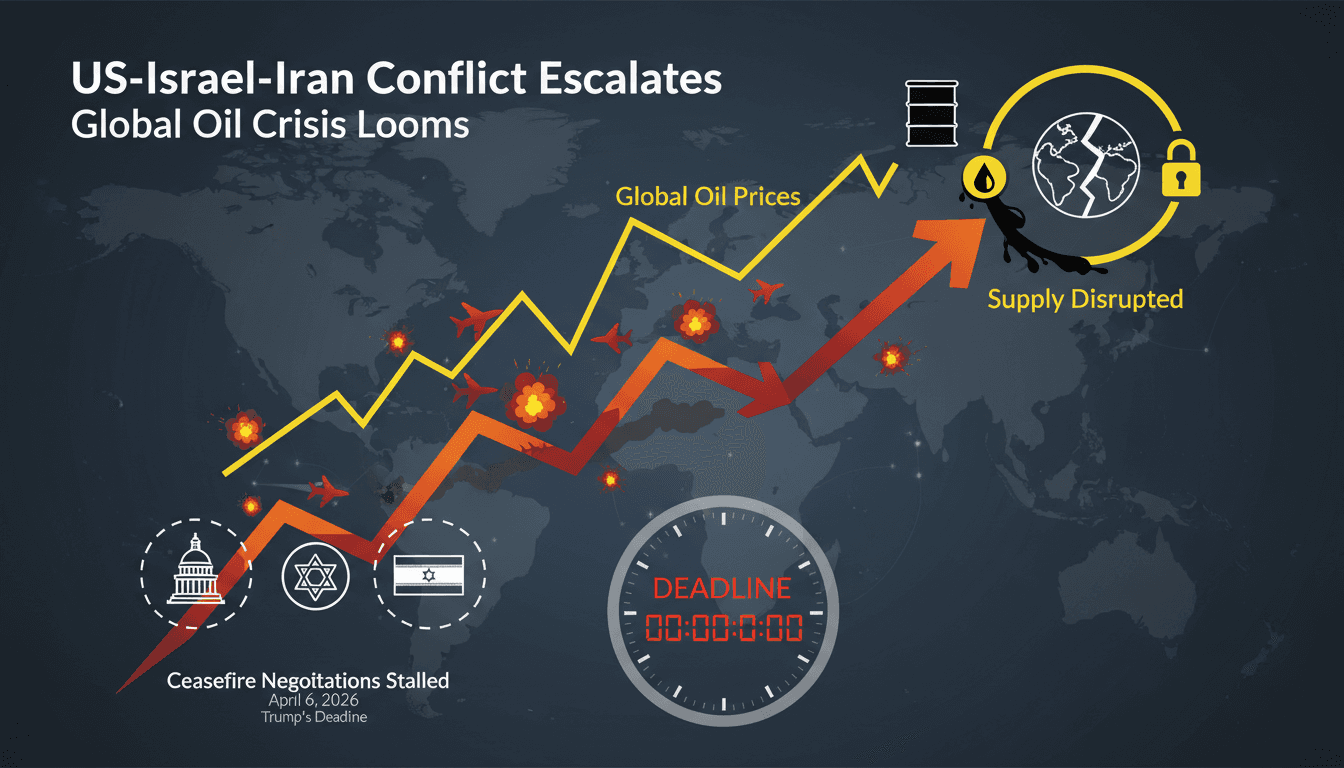
Here's what it means for you.
Global markets are bracing for volatility as diplomatic efforts to stabilize the Middle East falter.
Why it matters
The ongoing conflict and failed ceasefire negotiations threaten to disrupt global oil supplies and heighten geopolitical tensions.
What happened (in 30 seconds)
- Diplomatic talks stalled on April 6, 2026, one day before a deadline set by President Trump for Iran to reopen the Strait of Hormuz.
- Iran proposed a 10-point peace plan for permanent cessation of hostilities, which was deemed insufficient by the US.
- Escalating military actions continued, with US and Israeli strikes targeting Iranian sites, prompting Iranian missile retaliations.
The context you actually need
- The US-Israel-Iran war began in late February 2026, following claims of Iranian violence against protesters, leading to coordinated military strikes.
- Iran's closure of the Strait of Hormuz has already disrupted global oil supplies, impacting prices and economic stability.
- The conflict has escalated to include attacks on civilian infrastructure, raising international legal and humanitarian concerns.
What's really happening
The faltering ceasefire negotiations reflect a complex interplay of military strategy, political posturing, and economic incentives. The US, under President Trump, has taken a hardline approach, demanding Iran reopen the Strait of Hormuz by a specific deadline or face severe military consequences. This ultimatum is not merely a tactical maneuver but a reflection of the US's broader strategy to exert pressure on Iran and its allies, aiming to curb their influence in the region.
Iran's response has been to propose a 10-point peace plan, which they view as a legitimate pathway to de-escalation. However, the US administration has dismissed this proposal as inadequate, signaling a lack of willingness to engage in meaningful dialogue. This dismissal is compounded by ongoing military actions, including significant strikes on Iranian military and civilian targets, which further entrench hostilities.
The economic implications are profound. Brent crude oil prices have already risen to $110.34 per barrel, reflecting market anxiety over potential supply disruptions. The ongoing conflict is straining Dubai's economy, with revised GDP growth forecasts indicating a slowdown to 1.5% for 2026. This economic pressure is exacerbated by the volatility of oil prices and the geopolitical instability surrounding the Strait of Hormuz, a critical chokepoint for global oil transport.
As military actions escalate, the risk of broader regional conflict increases. Iran has vowed to retaliate against US and Israeli strikes, while the US Defense Secretary has indicated that more strikes are planned. This cycle of retaliation and military escalation creates a precarious situation, where diplomatic solutions become increasingly difficult to achieve.
The international community is also watching closely, as the EU has condemned attacks on civilian infrastructure as illegal, and the IMF has warned of potential global inflation and slower economic growth. The interconnectedness of global markets means that any escalation in the conflict could have far-reaching consequences, affecting not just the Middle East but economies worldwide.
Who feels it first (and how)
- Energy sector professionals: Increased oil prices impact profitability and operational costs.
- Expatriates in Dubai: Economic instability may affect job security and living conditions.
- Global investors: Heightened geopolitical risks could lead to market volatility and investment hesitancy.
What to watch next
- Iran's military response: Monitoring Iran's retaliation could indicate the potential for further escalation or a shift towards negotiations.
- Oil price fluctuations: Continued volatility in oil prices will signal market reactions to the conflict's developments.
- International diplomatic efforts: Watch for any new mediation attempts by global powers that could influence the trajectory of the conflict.
The US and Israel are conducting extensive military operations against Iranian targets.
Continued volatility in oil prices and economic strain in Dubai and the broader region.
The potential for a breakthrough in diplomatic negotiations or further escalation of military actions.
Frequently Asked Questions
- Why it matters?
- The ongoing conflict and failed ceasefire negotiations threaten to disrupt global oil supplies and heighten geopolitical tensions.
- What happened (in 30 seconds)?
- Diplomatic talks stalled on April 6, 2026, one day before a deadline set by President Trump for Iran to reopen the Strait of Hormuz. Iran proposed a 10-point peace plan for permanent cessation of hostilities, which was deemed insufficient by the US. Escalating military actions continued, with US and Israeli strikes targeting Iranian sites, prompting Iranian missile retaliations.
- What's really happening?
- The faltering ceasefire negotiations reflect a complex interplay of military strategy, political posturing, and economic incentives. The US, under President Trump, has taken a hardline approach, demanding Iran reopen the Strait of Hormuz by a specific deadline or face severe military consequences. This ultimatum is not merely a tactical maneuver but a reflection of the US's broader strategy to exert pressure on Iran and its allies, aiming to curb their influence in the region. Iran's response h
- Who feels it first (and how)?
- Energy sector professionals: Increased oil prices impact profitability and operational costs. Expatriates in Dubai: Economic instability may affect job security and living conditions. Global investors: Heightened geopolitical risks could lead to market volatility and investment hesitancy.
- What to watch next?
- Iran's military response: Monitoring Iran's retaliation could indicate the potential for further escalation or a shift towards negotiations. Oil price fluctuations: Continued volatility in oil prices will signal market reactions to the conflict's developments. International diplomatic efforts: Watch for any new mediation attempts by global powers that could influence the trajectory of the conflict.
International coverage from The Guardian's global desks.
"The Guardian is known for its progressive editorial stance and in-depth analysis."
— A47 Editor
Talks to end Iran war appear to falter a day before Trump deadline
Diplomatic negotiations to end the ongoing war in the Middle East are struggling as U.S. President Donald Trump has issued a stark ultimatum to Iran, demanding the reopening of the strategic Strait of Hormuz within 48 hours or face severe military ac...
Focused political reporting and governmental affairs.
"NBC News is a mainstream media outlet known for comprehensive national and international news coverage with a centrist to slightly left-leaning editorial tone."
— A47 Editor
Iran and US Receive Proposal for 45-Day Ceasefire: Report
Iran and the United States have received a proposal for a 45-day ceasefire and the reopening of the Strait of Hormuz, sent by mediators from Egypt, Pakistan, and Turkey. This proposal comes amid escalating tensions, with President Trump imposing a de...
Comprehensive coverage of Middle Eastern and global issues.
"Al Jazeera is a prominent voice from the Global South, especially the Middle East, with an emphasis on underreported stories."
— A47 Editor
Trump’s ‘Bridge Day’ threat: Can a last-ditch ceasefire plan work?
Mediators from Pakistan, Turkiye, and Egypt have proposed a 45-day ceasefire plan amid escalating tensions involving Iran, which has shown reluctance to engage in the proposed truce. President Trump has issued threats of military action against Irani...