
Investor Capital Shifts from Bitcoin to Defense and Energy Stocks Amid Iran War Escalation
Here's what it means for you.
If you're invested in cryptocurrencies or energy stocks, the ongoing conflict could significantly impact your portfolio.
Why it matters
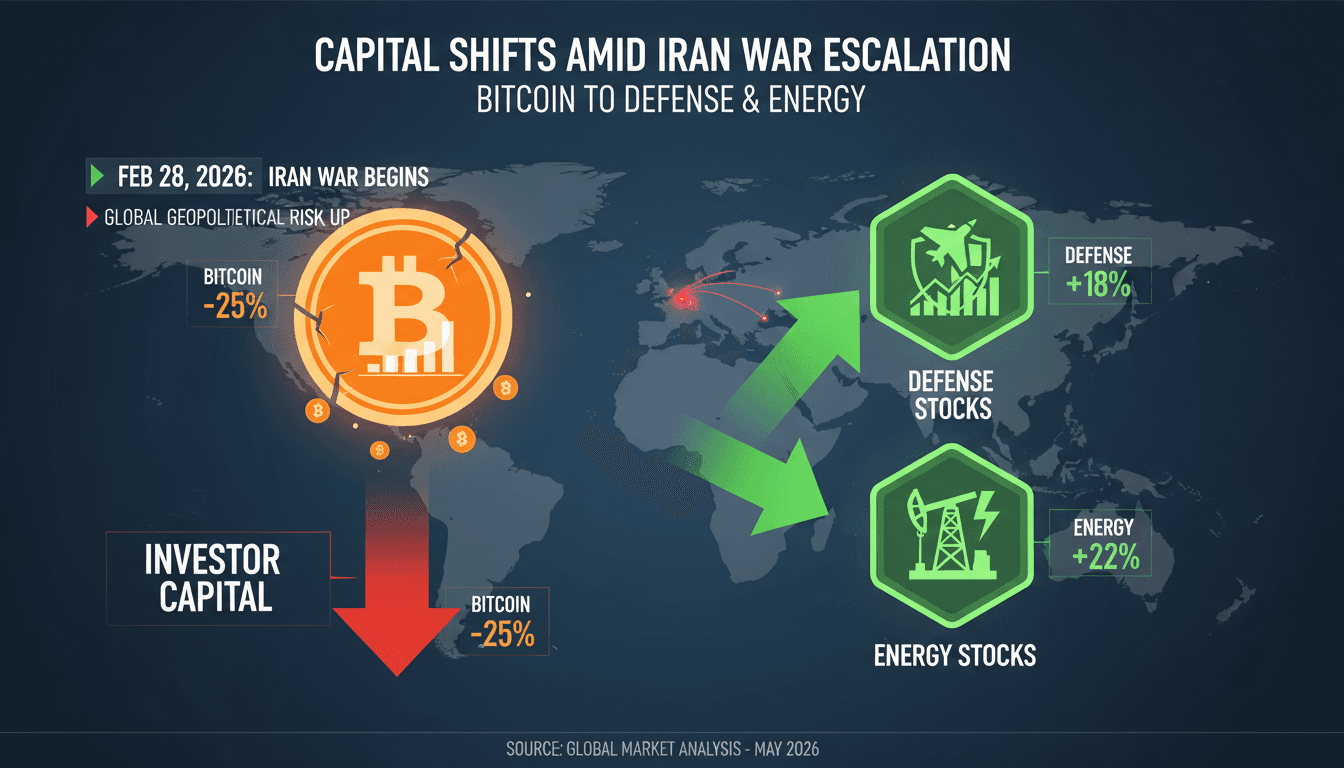
The 2026 Iran War has triggered a substantial reallocation of global investment capital, favoring defense and energy sectors over cryptocurrencies.
What happened (in 30 seconds)
- February 28, 2026: The US and Israel launched approximately 900 airstrikes on Iran, igniting a war and causing oil prices to surge.
- March 1-3, 2026: UAE stock exchanges closed due to Iranian retaliatory strikes, resulting in a rally for defense stocks.
- April 20, 2026: Bitcoin's value dipped below $68,000 as investors shifted focus to defense and energy amid geopolitical tensions.
The context you actually need
- Tensions escalated between Iran, Israel, and the US through proxy conflicts, culminating in preemptive strikes in February 2026.
- Investor behavior shifted dramatically as traditional sectors became more appealing due to rising oil prices and increased defense spending.
- Dubai's financial markets faced significant losses, with $120 billion erased since the onset of the war, highlighting the conflict's economic repercussions.
What's really happening
The 2026 Iran War, which began with coordinated US and Israeli airstrikes on February 28, has fundamentally altered the landscape of global investment. As geopolitical risks in the Middle East intensified, investors began to reassess their portfolios, moving away from high-risk assets like Bitcoin and toward more stable sectors such as defense and energy. This shift is driven by several factors.
First, the immediate impact of the conflict has been a surge in oil prices, which reached new highs as fears of supply disruptions loomed. With oil being a critical commodity, its price increase directly benefits energy companies, making them attractive investment options. As a result, energy stocks have seen significant gains, reflecting heightened demand and investor confidence in the sector's resilience amid geopolitical turmoil.
Second, defense spending is expected to rise as nations respond to the conflict. Companies like Lockheed Martin and Northrop Grumman have already begun to outperform broader market indices, as governments prioritize military readiness in light of the escalating situation. This trend is likely to continue, as increased defense budgets become a norm in response to perceived threats, further driving investor interest in defense equities.
In contrast, Bitcoin and other cryptocurrencies have experienced volatility as investors adopt a risk-off approach. The initial spike in Bitcoin's value following the onset of the war quickly reversed, with prices dipping below $68,000 by April 2026. This decline reflects a broader trend of capital flight from cryptocurrencies, which are viewed as less stable during periods of geopolitical uncertainty. The Polymarket odds of Bitcoin dropping to $60,000 have risen to 3.1%, indicating a growing consensus among investors that the cryptocurrency market may struggle in the current environment.
Moreover, the economic implications extend beyond mere stock prices. The UAE's financial markets faced a significant blow, with $120 billion wiped off the Dubai and Abu Dhabi exchanges due to the conflict. This has raised concerns about the region's status as a safe haven for investors, especially as affluent expatriates began to evacuate amid fears of further escalations. The closure of stock exchanges during critical trading days further exacerbated the situation, leading to a bear market in the region.
Overall, the ongoing conflict is reshaping investment strategies, with a clear pivot toward sectors that promise stability and growth in uncertain times. As the war continues, the long-term implications for both the cryptocurrency market and traditional sectors will become increasingly evident.
Who feels it first (and how)
- Investors in cryptocurrencies: Facing volatility and potential losses as capital shifts to safer assets.
- Defense contractors: Benefiting from increased government spending and stock price appreciation.
- Energy sector stakeholders: Gaining from rising oil prices and heightened demand for energy resources.
- Expatriates in the UAE: Experiencing economic instability and potential relocation due to safety concerns.
- Financial markets in the Middle East: Suffering significant losses and facing challenges in maintaining investor confidence.
What to watch next
- Oil price fluctuations: Continued volatility in oil prices will indicate the ongoing impact of the conflict on global markets.
- Defense spending announcements: Look for government budgets and contracts that may signal sustained investment in defense sectors.
- Cryptocurrency market trends: Monitor Bitcoin's performance and investor sentiment to gauge the potential for recovery or further declines.
The conflict has led to a significant reallocation of investment capital from cryptocurrencies to defense and energy sectors.
Defense and energy stocks will continue to outperform as geopolitical tensions persist.
The long-term effects on the cryptocurrency market and the overall stability of the UAE as a financial hub remain uncertain.
Frequently Asked Questions
- Why it matters?
- The 2026 Iran War has triggered a substantial reallocation of global investment capital, favoring defense and energy sectors over cryptocurrencies.
- What happened (in 30 seconds)?
- February 28, 2026: The US and Israel launched approximately 900 airstrikes on Iran, igniting a war and causing oil prices to surge. March 1-3, 2026: UAE stock exchanges closed due to Iranian retaliatory strikes, resulting in a rally for defense stocks. April 20, 2026: Bitcoin's value dipped below $68,000 as investors shifted focus to defense and energy amid geopolitical tensions.
- What's really happening?
- The 2026 Iran War, which began with coordinated US and Israeli airstrikes on February 28, has fundamentally altered the landscape of global investment. As geopolitical risks in the Middle East intensified, investors began to reassess their portfolios, moving away from high-risk assets like Bitcoin and toward more stable sectors such as defense and energy. This shift is driven by several factors. First, the immediate impact of the conflict has been a surge in oil prices, which reached new highs
- Who feels it first (and how)?
- Investors in cryptocurrencies: Facing volatility and potential losses as capital shifts to safer assets. Defense contractors: Benefiting from increased government spending and stock price appreciation. Energy sector stakeholders: Gaining from rising oil prices and heightened demand for energy resources. Expatriates in the UAE: Experiencing economic instability and potential relocation due to safety concerns. Financial markets in the Middle East: Suffering significant losses and facing ch
- What to watch next?
- Oil price fluctuations: Continued volatility in oil prices will indicate the ongoing impact of the conflict on global markets. Defense spending announcements: Look for government budgets and contracts that may signal sustained investment in defense sectors. Cryptocurrency market trends: Monitor Bitcoin's performance and investor sentiment to gauge the potential for recovery or further declines.
Research, news, and analysis on blockchain startups, DeFi, and regulations.
"Crypto Briefing provides research, news, and analysis on blockchain startups, DeFi, and crypto regulations with investor-focused coverage."
— A47 Editor
Middle East conflict drives investors to defense, energy stocks over Bitcoin
The ongoing conflict in the Middle East has prompted a shift in investor focus, with many turning to defense and energy stocks rather than Bitcoin, highlighting the cryptocurrency's vulnerability to geopolitical instability.
Global markets, investing, and macroeconomics from a premier financial newsroom.
"Bloomberg is respected for in-depth financial reporting and data-driven analysis."
— A47 Editor
A Stock Trader’s Guide to a Fractured Economic World
Investors are increasingly directing funds into defense, energy, and technology stocks as the ongoing conflict in the Middle East compels governments to prioritize security and self-reliance. This shift reflects a broader trend in market behavior ami...