
Aave Token Price Drops to $89 After Kelp DAO Exploit Causes $293 Million Losses
Here's what it means for you.
If you're involved in decentralized finance (DeFi), this incident highlights the interconnected risks that can impact your investments and liquidity.
Why it matters
This exploit underscores vulnerabilities in DeFi protocols, potentially shaking investor confidence and liquidity across the sector.
What happened (in 30 seconds)
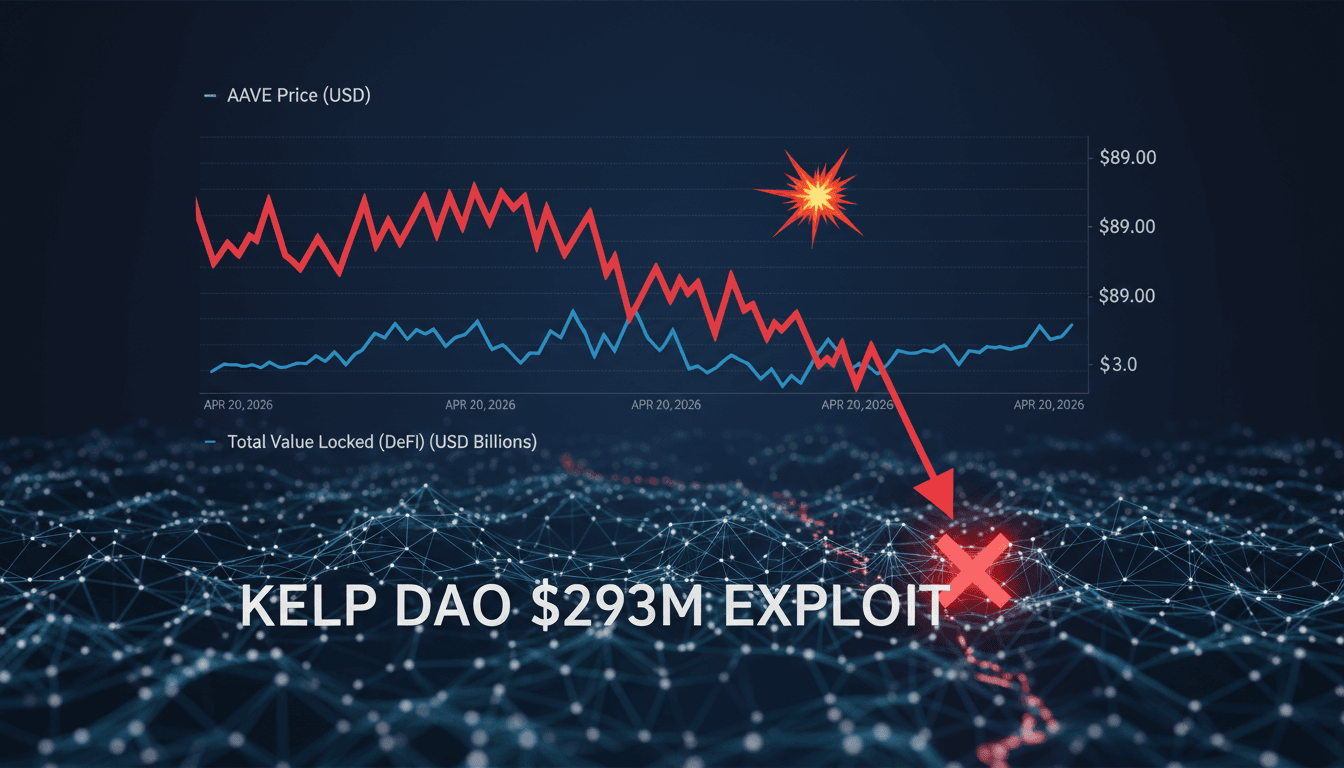
- AAVE token price fell to an intraday low of $89 after a $293 million exploit at Kelp DAO.
- Aave's total value locked (TVL) dropped from $26.4 billion to $17.5 billion, reflecting significant outflows.
- Market freezes were implemented on Aave's rsETH markets to contain bad debt risks estimated at $195 million.
The context you actually need
- Kelp DAO operates a liquid restaking protocol that was exploited due to a bridge configuration flaw, minting unbacked rsETH tokens.
- Attackers leveraged these tokens on Aave, pushing ETH pool utilization to 100%, leading to panic withdrawals from major players.
- Broader DeFi TVL declined over $13 billion in just 48 hours, indicating systemic risk across the ecosystem.
What's really happening
The exploit at Kelp DAO, which occurred over the weekend of April 18-19, 2026, reveals critical vulnerabilities in the decentralized finance landscape. Kelp DAO's liquid restaking protocol, which allows users to mint and transfer rsETH tokens across multiple networks, was compromised due to a flaw in its LayerZero-powered cross-chain bridge. Attackers exploited this vulnerability to mint 116,500 unbacked rsETH tokens valued at $293 million. These tokens were then used as collateral on Aave to borrow Wrapped Ether (WETH), effectively draining liquidity from the platform.
As the exploit unfolded, Aave's ETH pool utilization surged to 100%, indicating that all available liquidity was being utilized, which triggered a wave of panic withdrawals. Major players like MEXC and Abraxas Capital withdrew hundreds of millions of dollars, contributing to a rapid contraction of Aave's total value locked (TVL) from $26.4 billion to $17.5 billion. This drastic drop in TVL not only affected Aave but also sent ripples through the broader DeFi ecosystem, leading to a decline of over $13 billion in total locked value across various protocols.
In response to the exploit, Aave's team took immediate action by freezing the rsETH markets on both its V3 and V4 deployments. This was a necessary step to contain the bad debt risks, which were estimated at around $195 million. The swift action aimed to stabilize the platform and prevent further losses, but it also highlighted the fragility of interconnected DeFi systems where a single exploit can lead to widespread liquidity issues.
Despite the turmoil, derivatives markets showed signs of potential recovery, with futures open interest rising by 17% to $316.5 million. Negative funding rates indicated a possible short squeeze, suggesting that some traders were positioning for a rebound. Technical indicators, such as a positive MACD and elevated Aroon Up, supported this bullish momentum, hinting that while the immediate aftermath was chaotic, there could be opportunities for recovery in the near future.
Who feels it first (and how)
- DeFi investors: Those holding AAVE or involved in liquidity provision face immediate financial impacts due to price volatility.
- Traders on centralized exchanges: Participants in derivatives markets may experience shifts in trading strategies and liquidity.
- Developers of DeFi protocols: Increased scrutiny and pressure to enhance security measures in light of systemic vulnerabilities.
What to watch next
- Market recovery indicators: Watch for signs of stabilization in AAVE's price and total value locked, which could signal renewed investor confidence.
- Security audits: Increased focus on security audits and improvements across DeFi protocols may emerge as a response to this exploit.
- Regulatory developments: Keep an eye on potential regulatory responses to DeFi vulnerabilities, especially in regions like Dubai where crypto is regulated.
AAVE's price dropped significantly due to the exploit, and major withdrawals occurred from the platform.
There will be increased scrutiny on DeFi protocols and a push for enhanced security measures.
The long-term impact on investor confidence and liquidity in the DeFi sector remains uncertain.
Frequently Asked Questions
- Why it matters?
- This exploit underscores vulnerabilities in DeFi protocols, potentially shaking investor confidence and liquidity across the sector.
- What happened (in 30 seconds)?
- AAVE token price fell to an intraday low of $89 after a $293 million exploit at Kelp DAO. Aave's total value locked (TVL) dropped from $26.4 billion to $17.5 billion, reflecting significant outflows. Market freezes were implemented on Aave's rsETH markets to contain bad debt risks estimated at $195 million.
- What's really happening?
- The exploit at Kelp DAO, which occurred over the weekend of April 18-19, 2026, reveals critical vulnerabilities in the decentralized finance landscape. Kelp DAO's liquid restaking protocol, which allows users to mint and transfer rsETH tokens across multiple networks, was compromised due to a flaw in its LayerZero-powered cross-chain bridge. Attackers exploited this vulnerability to mint 116,500 unbacked rsETH tokens valued at $293 million. These tokens were then used as collateral on Aave to bo
- Who feels it first (and how)?
- DeFi investors: Those holding AAVE or involved in liquidity provision face immediate financial impacts due to price volatility. Traders on centralized exchanges: Participants in derivatives markets may experience shifts in trading strategies and liquidity. Developers of DeFi protocols: Increased scrutiny and pressure to enhance security measures in light of systemic vulnerabilities.
- What to watch next?
- Market recovery indicators: Watch for signs of stabilization in AAVE's price and total value locked, which could signal renewed investor confidence. Security audits: Increased focus on security audits and improvements across DeFi protocols may emerge as a response to this exploit. Regulatory developments: Keep an eye on potential regulatory responses to DeFi vulnerabilities, especially in regions like Dubai where crypto is regulated.
Real-time updates, analysis, and reports on the blockchain and cryptocurrency sectors.
"Crypto News delivers real-time updates, analysis, and reports on the blockchain and cryptocurrency sectors."
— A47 Editor
Aave price drops to $90 after Kelp DAO exploit, derivatives hint at potential rebound
Aave's price has fallen nearly 20% to approximately $90 following a significant exploit at Kelp DAO, which resulted in around $196 million in bad debt for the protocol. This incident has raised concerns about the security and stability of decentraliz...
Covers blockchain, cryptocurrency news, project analysis, and market insights.
"CoinDesk is a well-established cryptocurrency and blockchain news provider, offering comprehensive insights, market data, and industry research."
— A47 Editor
A $300 million borrowing spike on Aave signals liquidity crunch after KelpDAO exploit
Aave has experienced a significant liquidity crunch, marked by a $300 million spike in borrowing, following the KelpDAO exploit that drained approximately $292 million from its reserves. This incident has caused widespread instability in the stableco...