
US Consumer Price Index Rises 0.9 Percent in March 2026 Amid Energy Price Surge
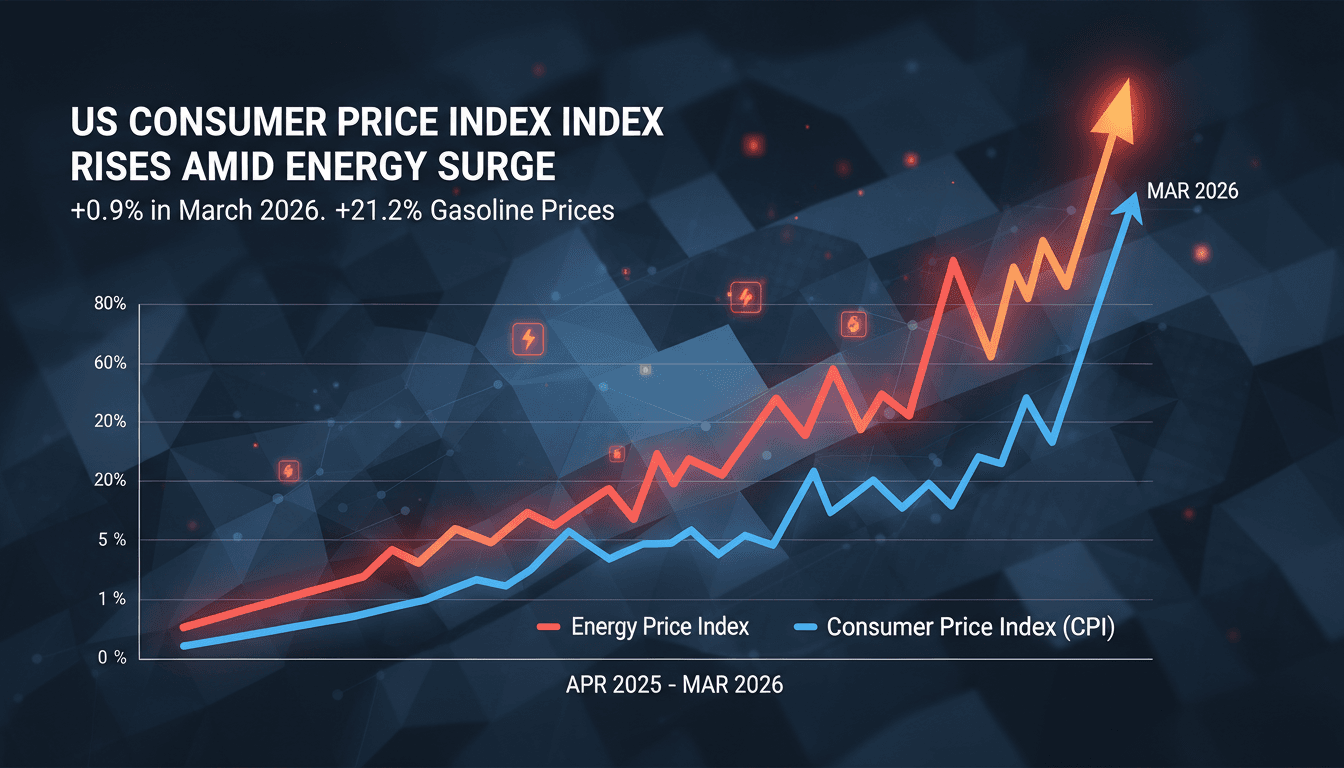
Here's what it means for you.
Rising energy prices in the U.S. could lead to higher costs for consumers and businesses globally.
Why it matters
The increase in the Consumer Price Index (CPI) signals potential inflationary pressures that could impact economic stability and consumer spending.
What happened (in 30 seconds)
- CPI rose by 0.9 percent in March 2026, marking the steepest monthly increase since June 2022.
- Energy prices surged by 10.9 percent, with gasoline prices alone jumping 21.2 percent—the largest monthly gain since 1967.
- Core CPI (excluding food and energy) increased by 0.2 percent monthly, reaching an annual rate of 2.6 percent.
The context you actually need
- February 2026 CPI recorded a modest 0.3 percent monthly increase, indicating a sudden shift in inflation dynamics.
- Geopolitical tensions between the U.S. and Iran have disrupted oil supplies, contributing to volatility in energy prices.
- Federal Reserve Chair Jerome Powell has indicated that while inflation expectations remain anchored, the central bank is closely monitoring energy price fluctuations.
What's really happening
The recent spike in the U.S. Consumer Price Index (CPI) for March 2026 is primarily driven by a significant surge in energy prices, particularly gasoline. The CPI rose by 0.9 percent on a seasonally adjusted basis, reflecting heightened inflationary pressures that have not been seen since mid-2022. This increase is largely attributed to geopolitical tensions between the U.S. and Iran, which have disrupted oil supplies and led to a dramatic 21.2 percent increase in gasoline prices—the largest monthly gain since 1967.
The energy index's 10.9 percent rise is noteworthy, as it marks the steepest monthly increase since September 2005. This surge is not just a domestic issue; it has global implications, particularly for countries that import energy. The U.S. economy is particularly sensitive to energy price fluctuations, as they directly impact transportation and production costs, which can ripple through to consumer prices.
Additionally, while food prices remained stable, the core CPI, which excludes food and energy, still saw a modest increase of 0.2 percent. This indicates that inflation is not solely driven by energy costs but is also influenced by broader economic factors. The Federal Reserve's response to these inflationary pressures will be crucial. Chair Jerome Powell has emphasized that long-term inflation expectations remain anchored, but the Fed is likely to remain vigilant in monitoring these developments.
The implications of this CPI increase extend beyond the U.S. borders. For instance, in Dubai, residents may experience indirect pressures from U.S. inflation due to the UAE dirham's peg to the U.S. dollar. This linkage constrains the Central Bank's ability to ease monetary policy, potentially leading to sustained high interest rates. Moreover, the regional conflict in the Middle East has fueled fears regarding energy supply chains, which could further elevate inflation expectations in the UAE.
Who feels it first (and how)
- Consumers: Higher gasoline and energy prices lead to increased transportation and utility costs.
- Businesses: Companies reliant on energy for production may face rising operational costs, impacting profit margins.
- Investors: Volatility in the stock market may affect investment strategies, particularly in energy sectors.
- Middle-income households: These groups are often more sensitive to rising energy costs, impacting their disposable income.
What to watch next
- Federal Reserve policy announcements: Any changes in interest rates in response to inflation could signal broader economic shifts.
- Energy price trends: Continued fluctuations in oil prices will be critical for understanding future CPI movements.
- Geopolitical developments: Ongoing tensions in the Middle East could further impact energy supply and pricing.
The CPI rose by 0.9 percent in March 2026, driven by energy prices.
Continued monitoring by the Federal Reserve may lead to adjustments in monetary policy based on inflation trends.
The long-term impact of geopolitical tensions on energy prices and inflation remains uncertain.
Frequently Asked Questions
- Why it matters?
- The increase in the Consumer Price Index (CPI) signals potential inflationary pressures that could impact economic stability and consumer spending.
- What happened (in 30 seconds)?
- CPI rose by 0.9 percent in March 2026, marking the steepest monthly increase since June 2022. Energy prices surged by 10.9 percent, with gasoline prices alone jumping 21.2 percent—the largest monthly gain since 1967. Core CPI (excluding food and energy) increased by 0.2 percent monthly, reaching an annual rate of 2.6 percent.
- What's really happening?
- The recent spike in the U.S. Consumer Price Index (CPI) for March 2026 is primarily driven by a significant surge in energy prices, particularly gasoline. The CPI rose by 0.9 percent on a seasonally adjusted basis, reflecting heightened inflationary pressures that have not been seen since mid-2022. This increase is largely attributed to geopolitical tensions between the U.S. and Iran, which have disrupted oil supplies and led to a dramatic 21.2 percent increase in gasoline prices—the largest mon
- Who feels it first (and how)?
- Consumers: Higher gasoline and energy prices lead to increased transportation and utility costs. Businesses: Companies reliant on energy for production may face rising operational costs, impacting profit margins. Investors: Volatility in the stock market may affect investment strategies, particularly in energy sectors. Middle-income households: These groups are often more sensitive to rising energy costs, impacting their disposable income.
- What to watch next?
- Federal Reserve policy announcements: Any changes in interest rates in response to inflation could signal broader economic shifts. Energy price trends: Continued fluctuations in oil prices will be critical for understanding future CPI movements. Geopolitical developments: Ongoing tensions in the Middle East could further impact energy supply and pricing.
Corporate news, economic trends, and markets with UK and global scope.
"BBC News is widely regarded as reputable and impartial, with a public service mandate."
— A47 Editor
Soaring pump prices drive US inflation to highest level in almost two years
A surge in pump prices, driven by the ongoing conflict in Iran, has propelled U.S. inflation to 3.3%, marking the highest rate in nearly two years. This increase reflects significant economic pressures as energy costs rise sharply due to geopolitical...
Covers Bitcoin plus altcoin news, market updates, and educational resources.
"Bitcoin.com provides news, market data, and guides focused on Bitcoin and the wider crypto industry."
— A47 Editor
March US Inflation Rises 0.9% to 3.3% Led by Energy Prices
In March 2026, U.S. inflation rose by 0.9%, reaching a rate of 3.3%, primarily driven by increasing energy prices. This uptick in inflation reflects ongoing economic pressures and has raised concerns among consumers and investors alike.
Social/economic commentary and analysis relevant to business and markets.
"WSJ blends data-driven economic insight with commentary on policy and society."
— A47 Editor
Consumer prices soared in March, pushed higher by skyrocketing gasoline prices
Consumer prices in the U.S. surged in March, marking the highest inflation rate in two years, primarily driven by soaring gasoline prices amid the ongoing conflict in Iran. This inflation report is the first significant indicator of the economic impa...
Pan-Arab news coverage spanning politics, business, sports, and regional affairs.
"Asharq Al-Awsat reflects a broad Arab editorial perspective with strong attention to regional geopolitics."
— A47 Editor
الحرب ترفع التضخم الأميركي إلى أعلى وتيرة في 4 سنوات خلال مارس
In March, consumer prices in the United States experienced their largest increase in nearly four years, primarily driven by rising oil prices due to the ongoing conflict with Iran. This surge in inflation reflects the economic impact of geopolitical ...
Capitol Hill news, legislation, and policy insight.
"The Hill specializes in U.S. politics and policy, with a focus on Capitol Hill developments and a reputation for insider reporting."
— A47 Editor
Inflation rate rises to 3.3 percent in March amid hiked energy costs from Iran war
The U.S. inflation rate has risen to 3.3 percent in March, marking the highest increase in nearly four years, driven primarily by escalating energy costs linked to the ongoing military operations in Iran. Consumer prices increased by 0.9 percent in M...
Business, investment, entrepreneurship, leadership, and innovation.
"Forbes is known for its coverage of business leaders, market trends, and entrepreneurial ventures with a pro-business editorial stance."
— A47 Editor
Iran War’s Inflation Impact: Energy Prices Surged In Largest Gain Since 2005
The ongoing conflict in Iran has led to a significant surge in energy prices, marking the largest increase since 2005, as Wall Street analysts await insights into the economic ramifications of the war. This inflationary pressure is reflected in recen...
International coverage from The Guardian's global desks.
"The Guardian is known for its progressive editorial stance and in-depth analysis."
— A47 Editor
US inflation soars in March as war on Iran drives economy into uncertainty
US inflation surged by 3.3% in March, driven by rising consumer prices amid the ongoing conflict involving Iran, which has disrupted oil supplies and heightened economic uncertainty. This increase marks the largest inflation spike in nearly two years...
News from the United States including domestic politics, society, and culture.
"The Guardian is known for its progressive editorial stance and in-depth analysis, often advocating for social justice, environmental issues, and liberal values."
— A47 Editor
US inflation soars in March as war on Iran drives economy into uncertainty
US inflation surged by 3.3% in March, driven by rising consumer prices amid the ongoing conflict involving Iran and Israel, marking the largest increase in nearly two years. This inflation spike reflects the economic uncertainty stemming from the war...
UK and international business news, economics, and corporate coverage.
"The Guardian’s business section covers finance and markets with a progressive editorial tone."
— A47 Editor
US inflation soars in March as war on Iran drives economy into uncertainty
US inflation surged by 3.3% in March, driven by rising consumer prices amid the ongoing conflict involving Iran and Israel, marking the largest increase in nearly two years. This inflation spike reflects the economic uncertainty stemming from the war...